2026 AI Tools Guide: Practical Usage and Recommended List
AI tools have become central to both our daily lives and work.
According to recent statistics,
78% of global companies have adopted AI tools to boost efficiency,
resulting in an average productivity increase of 35%.
When I first encountered AI tools,
I felt overwhelmed too.
But after setting some criteria and trying them out,
I quickly saw changes in my workflow.
In this article, I'll share what I've learned—
from the basics of AI tools to the recommended list for 2026,
practical usage tips,
and an essential checklist.
What are AI Tools? Understanding the Basic Concepts
AI tools are software or platforms built on artificial intelligence
that automate repetitive tasks or assist users.
For example, technologies like machine learning, natural language processing,
computer vision, and predictive analytics are combined
to support data analysis, content creation, and workflow automation
in real workplaces.
The most notable feature of AI tools is their ability to learn
and become smarter over time.
For instance, an AI coding assistant learns your coding habits
to suggest tailored code,
while an AI video tool incorporates your feedback
to create more natural videos.

Latest AI Tools Recommendations and Comparison for 2026
As of 2026,
these are the three AI tools most frequently mentioned in the field.
automatically creating various texts such as marketing content and technical documents. Its ability to adjust outputs to user style stands out.
bug diagnosis,
and optimization suggestions. It supports multiple languages and has robust collaboration features.
with real-time editing and voice synthesis.
These tools are spreading rapidly thanks to their technical maturity,
ease of use,
and proven real-world applications.
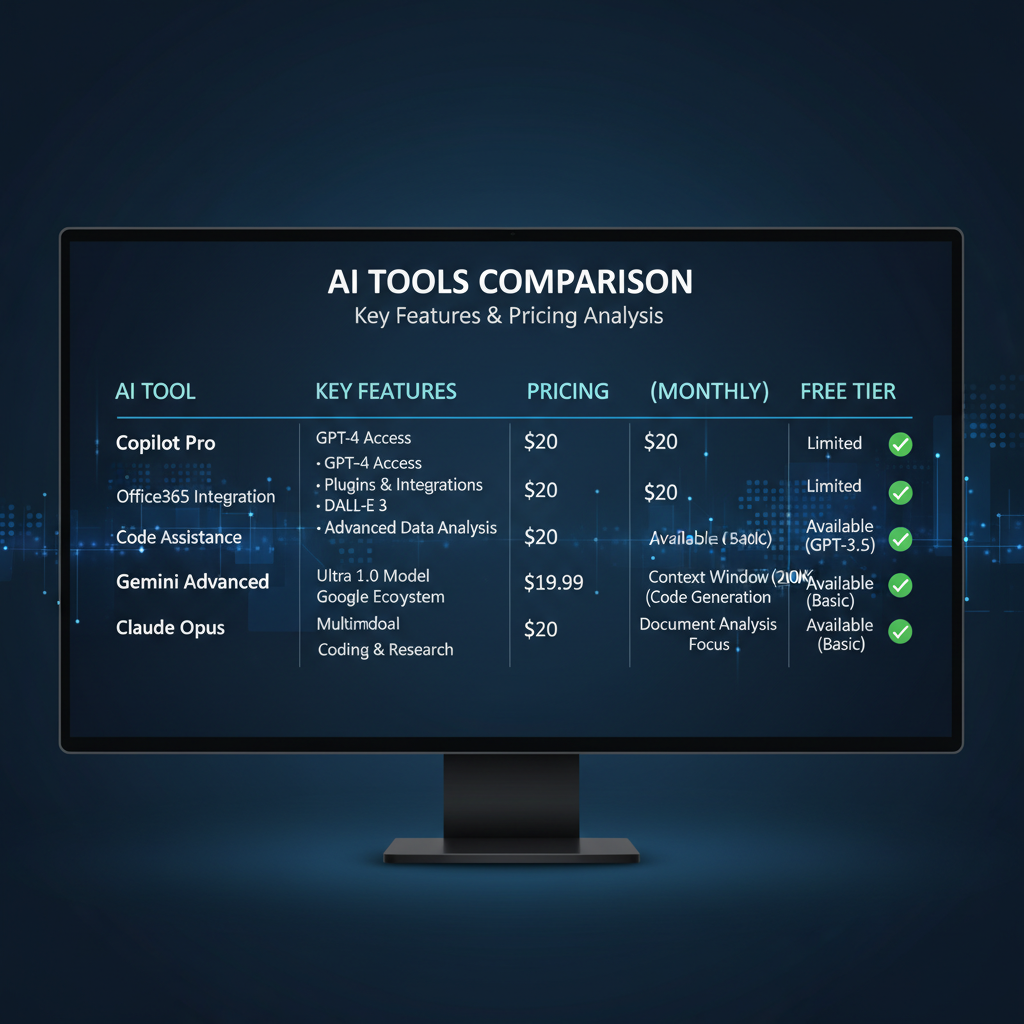
| Tool | Key Features | Price | Best For |
|------|--------------|-------|----------|
| NeuraWrite | NLG, style tuning | $30~100/mo | Content, marketing |
| CodeSensei | Code completion, bug diagnosis | $40~150/mo | Software dev |
| VisionForge | Video generation, voice synthesis | $50~200/mo | Video content, ads |
How to Use AI Tools: Practical Application Cases in the Workplace
AI tools aren't just new technologies—
they genuinely change how we work.
Marketing teams use NeuraWrite to automatically generate
social media posts and email campaigns,
reducing repetitive work time significantly.
Development teams have shortened coding and review times with CodeSensei
and caught bugs early in new projects.
Video production teams use VisionForge to quickly create prototype videos
and immediately reflect client feedback,
reducing the number of revisions needed.
In this way, AI tools efficiently solve
repetitive and time-consuming tasks.

AI Tool Usage Checklist: Starting Effectively
When adopting AI tools, referring to the checklist below
can reduce trial and error.
This process made tool adoption much smoother for me.
Just following this checklist makes AI tool adoption much easier.

Expert Utilization Strategies and Alternative Tool Comparison
Rather than using AI tools as standalone solutions,
integrating several tools is more effective.
For example, you can link drafts from NeuraWrite
with CodeSensei's documentation features for automatic updates,
or connect VisionForge videos with marketing automation tools
for multi-channel expansion.
Common mistakes include over-reliance on tools leading to quality issues,
lack of user training causing confusion,
and overlooking data security.
Step-by-step validation, thorough training,
and security policies are essential.
Below is a comparison of major AI tools' features,
pricing, and suitable use cases.
| Tool | Features | Price | Best For |
|------|----------|-------|----------|
| NeuraWrite | High-quality NLG, customization | $30~100/mo | Marketing, content |
| CodeSensei | Code completion, bug detection | $40~150/mo | Dev, code review |
| VisionForge | Text-to-video, voice synthesis | $50~200/mo | Video, ad campaigns |
| Jasper AI | Multi-language, SEO-optimized | $25~90/mo | SMB marketing, blogs |
| GitHub Copilot | AI code suggestions, collaboration | $10~50/mo | Dev individuals & teams |
An integrated and systematic AI tool strategy
will determine future competitiveness.

Summary and Recommended For
In 2026, AI tools are no longer optional—they're essential.
This guide covered the basics, the latest recommendations,
practical applications, checklists, and strategies for AI tools,
all based on real experience.
If you're a practitioner, tech expert, or startup founder
looking to boost work efficiency with AI tools,
this is a solid starting point.
— Botonglee
Services by Botonglee