The Wave of AI Innovation: Tech Trend Analysis for Practitioners
The Wave of AI Innovation: Tech Trend Analysis for Practitioners
The Wave of AI Innovation: Tech Trend Analysis for Practitioners
Recently, AI and IT technologies have been rapidly advancing,
driving innovation across industries.
This article analyzes the latest trends that practitioners should pay attention to,
presents practical use cases and considerations,
and aims to help readers successfully adopt technology.

Generative AI is a technology that automatically generates various forms of content,
including text,
images, audio, and video.
Examples include OpenAI's GPT series,
Google's Gemini,
and Stability AI's Stable Diffusion.
AI can automatically write advertising copy,
social media posts,
and blog posts,
increasing marketing efficiency.
Tools like Jasper and Copy.ai can be used to easily create high-quality marketing content.
You can quickly create images or videos in the desired style using DALLE-3,
Midjourney, and RunwayML.
This is especially useful for creating short promotional videos or social media content.
GitHub Copilot and Tabnine provide auto-completion and code suggestion features while developers write code,
improving productivity.
Generative AI can shorten content creation time and help generate creative ideas,
but there are some considerations.
It is necessary to clearly verify who owns the copyright of the generated content and whether commercial use is possible.
Content generated by AI may not be perfect,
so it must be reviewed and edited by a person.
Ethical aspects must also be considered,
as there is a possibility of generating false or biased content.

Low-code/no-code platforms are tools that help people with no coding experience easily develop applications.
They provide a drag-and-drop interface that allows you to visually build applications.
You can automate repetitive tasks to improve productivity.
You can automate workflows by connecting various applications using Zapier and Integromat (Make).
You can quickly develop simple websites or mobile apps.
Platforms such as Bubble,
Adalo, and AppGyver provide user-friendly interfaces that simplify the development process.
It can be used to collect,
analyze, and visualize data to help with decision making.
You can easily visualize data and gain insights using tools such as Tableau and Power BI.
Low-code/no-code platforms can increase development speed and reduce costs,
but there are some limitations.
There may be limitations in implementing complex features or custom user interfaces.
Security considerations are necessary as they may be vulnerable to attacks exploiting platform security vulnerabilities.
If you are dependent on a specific platform,
difficulties may arise when changing platforms.
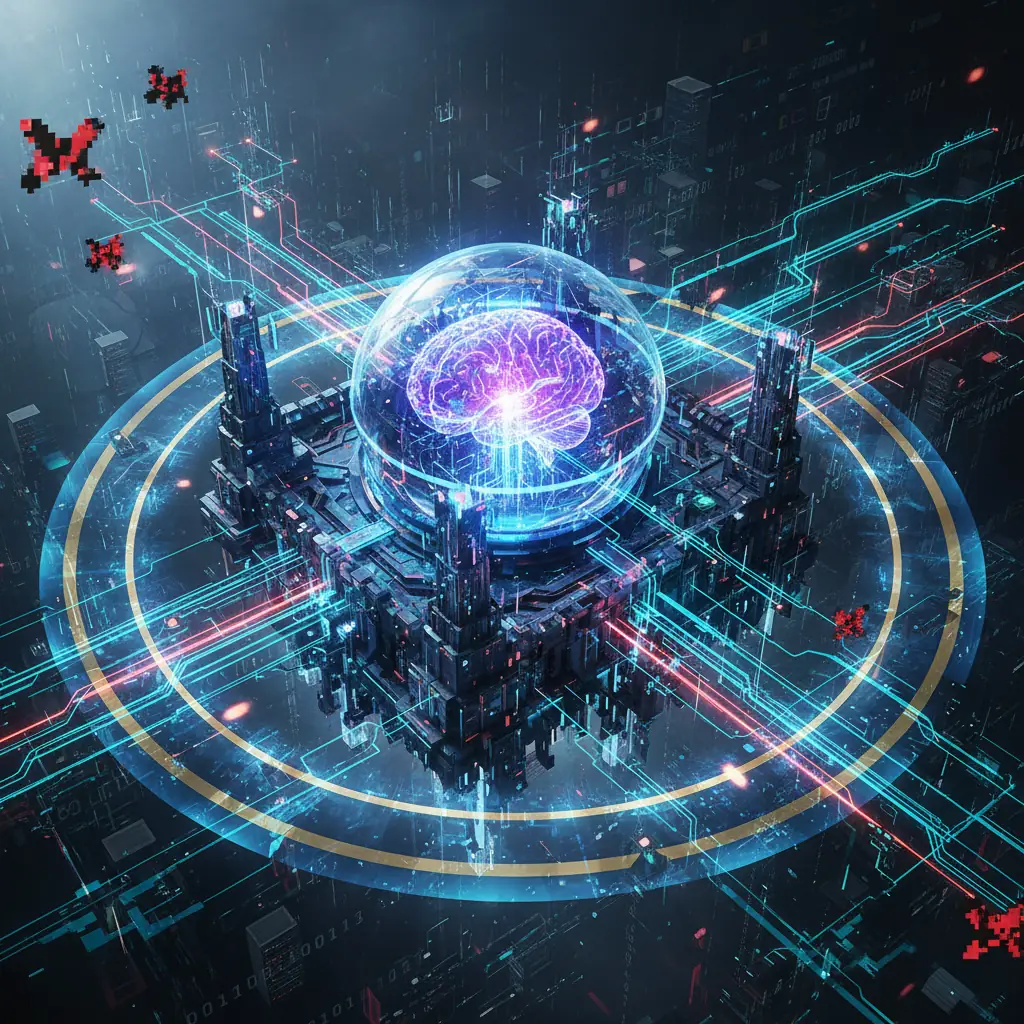
As cyberattacks become increasingly sophisticated,
AI-based security systems are becoming more important.
AI can be used to detect abnormal activity,
predict threats,
and respond automatically.
AI analyzes network traffic,
user behavior patterns,
etc., to detect and alert to anomalies.
Solutions such as Darktrace and Vectra AI provide AI-based real-time threat detection and response capabilities.
AI quickly analyzes new malware and identifies similarities with existing malware to suggest countermeasures.
Solutions such as Cylance and CrowdStrike block malware execution and protect systems based on AI.
AI automatically identifies and isolates threats and takes necessary security measures to reduce response time.
Solutions such as Palo Alto Networks and Fortinet provide AI-based automated security response capabilities.
AI-based security systems can improve security efficiency and reduce human error,
but there are some limitations.
AI can misinterpret normal activity as a threat or over-warn about minor threats.
The performance of AI systems depends on the learning data,
so it is important to secure high-quality data.
Attackers can bypass security by identifying weaknesses in AI systems.
AI and IT technologies will continue to develop rapidly in the future,
fundamentally changing our lives and the way we work.
Practitioners need to actively respond to these changes,
learn new technologies,
and apply them to their work.
In particular,
we must strive to use AI to increase productivity,
generate creative ideas,
and make better decisions.
Key Summary: AI and IT technologies are rapidly evolving, and practitioners must actively respond to these changes and apply them to their work.
Services by Botonglee