Building a Healthy Routine and Wellness Lifestyle with 7,000 Steps a Day
In today’s fast-paced world, maintaining a consistent health routine can be challenging. However, walking 7,000 steps a day is a practical and accessible core habit for anyone looking to embrace a wellness lifestyle. Walking is more than just a physical activity—it helps balance both body and mind, and naturally connects with other wellness elements such as morning routines, sleep quality, mental health, and digital detox. Drawing on recent research and real-life experiences, this article offers a detailed guide to building healthy habits centered around walking.
By incorporating walks into different parts of your day—morning, lunch, or evening—you can see positive changes in sleep quality, stress relief, and improved focus, all of which benefit your mental well-being. In this post, we’ll cover the science behind walking 7,000 steps a day, actionable routines, the synergy between walking and meditation, how walking complements digital detox, and strategies for building sustainable habits.
The Science and Wellness Benefits of Walking 7,000 Steps
Health Benefits of 7,000 Steps a Day
Recent studies have shown that walking 7,000 steps daily can significantly improve cardiovascular health, weight management, and mental well-being. According to the American Heart Association (AHA), people who walk more than 7,000 steps a day have a much lower risk of heart disease, along with meaningful improvements in blood pressure and blood sugar control. As a low-intensity aerobic exercise, regular walking helps stabilize blood flow and heart rate, positively impacting your cardiovascular system overall.
On the mental health side, walking reduces the production of the stress hormone cortisol, while boosting serotonin and endorphin levels, which promote emotional well-being. A 2025 study from the International Society for Mental Health found that groups who walked 7,000 steps daily experienced a reduction of over 20% in feelings of depression and anxiety. The benefits are even greater when walking in natural environments, which further enhance psychological stability and concentration.
In short, walking is a health routine that supports not only physical health but also mental wellness and is easy to integrate into daily life. Its simplicity makes it an essential part of a sustainable wellness lifestyle.
> Related research: The Benefits of Cold Showers — Finding Balance for Mind and Body in Your Wellness Routine

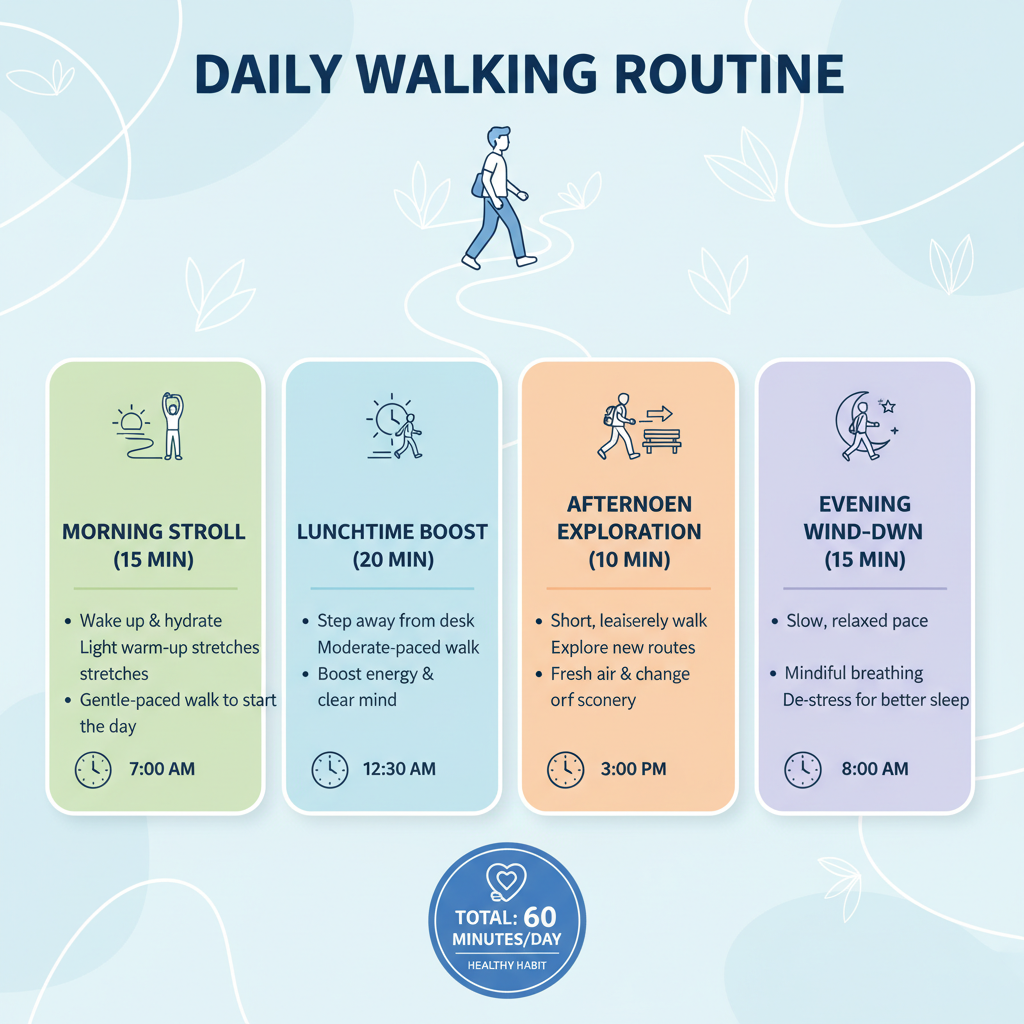
6 Practical Walking Routines
1. Morning Walk (30 Minutes)
2. Lunch Break Walk (10 Minutes)
3. Short Break Walks During Work
4. Evening Walk & Stretch
5. Social Walks with Friends or Family
6. Mindful Walking with Breath Meditation
> Tip: For morning walks, turn off smartphone notifications and immerse yourself in the sounds of nature for deeper relaxation.
> Note: If you have knee or ankle pain, stretch thoroughly before walking, and consult a medical professional if pain persists.
The Connection Between Walking and Mental Health: Psychological Benefits
Walking is more than just moving your body—it also nurtures your mind. While walking in nature, your brain balances the sympathetic and parasympathetic nervous systems, and the prefrontal cortex (crucial for emotional regulation) becomes more active. This effect is similar to meditation, which is why walking meditation is widely practiced.
When you focus on the present moment during walking meditation, distracting thoughts fade and inner peace grows. The reason you feel better after a walk is that your brain releases more endorphins and dopamine, sending positive signals throughout your body. In fact, a 2023 wellness study found that walking in nature reduced anxiety scores by more than 30%.
In this way, walking acts as a bridge between body and mind, and making it a regular habit can greatly enhance emotional stability and resilience. Combining simple breathing or meditation techniques with your walks can amplify these benefits.
> Related post: The Dual Nature of Caffeine: Coffee’s Positive and Negative Health Effects and How to Integrate It Into Your Wellness Routine

Personal Experience: Changes Brought by Walking
After consistently walking 7,000 steps a day for over three months, I noticed a variety of physical and mental changes. At first, it was difficult to carve out time for walking between work and household chores, but making a 30-minute morning walk part of my routine gradually made both my body and mind feel lighter. During periods of high stress, I combined a 10-minute lunchtime walk with simple breathing meditation, which greatly helped with emotional regulation and regaining focus.
Once walking became a habit, my sleep quality improved noticeably. I used to have trouble falling asleep and often woke up during the night, but on days when I finished with an evening walk and light stretching, I enjoyed deeper, more restful sleep. Achieving the daily goal of 7,000 steps gave me a sense of self-efficacy, motivating me to adopt other healthy habits as well.
Friends and family also started joining me for walks, turning these moments into valuable opportunities for conversation and connection. Through these experiences, I truly realized how much walking can positively influence all aspects of a wellness lifestyle.

The Synergy of Walking and Digital Detox
As digital device use continues to rise, digital detox has become a key pillar of wellness. Combining walking with digital detox can maximize psychological rest and recharge. By leaving your smartphone behind and spending time in nature, your brain gets a break from constant information overload, helping you regain mental calm.
Focusing on meditation or breathing while walking is also an effective digital detox strategy. Turning off notifications and concentrating on your body and mind helps stabilize your heart rate and breathing, quickly relieving mental fatigue. Weekend walks with family not only provide exercise but also foster communication and relationship-building, supporting the social dimension of wellness.
By reducing digital device use alongside your walking routine, you can effectively manage daily stress and fatigue. Especially in the evenings or on weekends, try walking without your phone for a more refreshing experience.
> Related post: Intermittent Fasting 16:8 — A Practical Health Routine for Busy Professionals

How to Build a Sustainable Walking Habit
1. Set Weekly Goals and Track Progress
Aim for a weekly goal of 35,000 steps (7,000 steps × 5 days) or 49,000 steps (7 days). Use a smartphone app or pedometer to record your steps and monitor your progress, which can boost your motivation.
2. Walk with Friends or Family
Social support is essential for forming lasting habits. Find a walking partner to encourage each other, or add a bit of friendly competition for extra fun.
3. Keep a Walking Journal
Briefly record your walking time, mood, and physical responses. Noticing even small changes can help you stay consistent.
4. Connect Walking with Other Healthy Habits
Link walking with stretching, meditation, or sleep preparation routines to make it the centerpiece of your wellness lifestyle.
5. Create a Supportive Environment
Prepare comfortable walking routes, shoes, and clothing for an enjoyable experience. Planning for the weather is also important.
6. Notice Changes Over Time
After 2–3 weeks, you’ll likely feel improvements in stamina and mood. By weeks 8–12, you may see visible results like weight loss and better sleep quality. Consistency is key.
> Tip: Change up your walking routine to avoid boredom and explore new routes to stay motivated.

Start your daily 7,000-step walk today! Experience firsthand the changes and joy that come with walking, and build a wellness lifestyle that nurtures both body and mind. For more practical health routines and mental wellness tips, subscribe to our newsletter.
References and Further Reading
Services by Botonglee