Comparing KOSPI and S&P500: The Optimal Asset Allocation Strategy for Korean Investors
If you're interested in stock investing, you've probably wondered whether you should focus more on the KOSPI or the S&P500. Both markets have distinct strengths and weaknesses, making it difficult to draw clear conclusions based solely on historical returns. With recent fluctuations in global interest rates and shifting economic indicators, the two markets are moving differently, so a more nuanced analysis and strategic approach are required.
By reading this article, you'll gain insights into the latest trends in both the KOSPI and S&P500, discover promising sectors and themes, understand key investment principles, and learn practical portfolio strategies and risk management techniques you can apply. Grounded in market structure and sound investment principles, this guide aims to help you develop your own optimal asset allocation strategy.
The article is structured as follows: 1) Recent market trends comparison, 2) Key sectors and themes to watch, 3) Insights from investment principles, and 4) Practical portfolio strategies for individuals.
Go to guideCompare NowExplore the strengths and weaknesses of KOSPI and S&P500.Recent Market Trends: Comparing KOSPI and S&P500
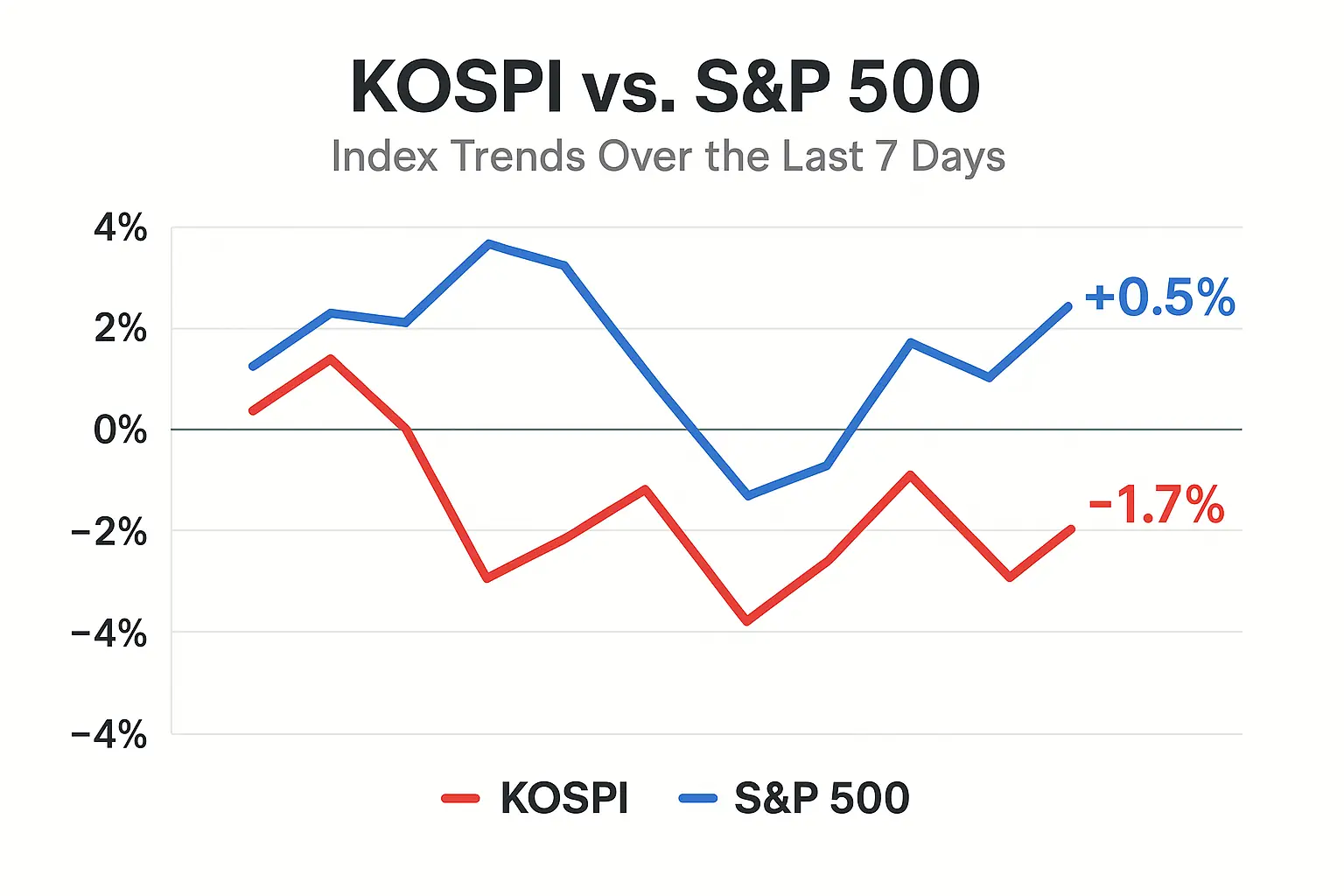
Over the past week, the KOSPI has declined by about 2.04%, entering a short-term correction phase. This was driven by concerns over domestic interest rate hikes, geopolitical risks, and profit-taking by foreign investors in response to changes in US monetary policy. The rising KRW/USD exchange rate is also putting pressure on the profitability of Korean exporters.
In contrast, the S&P500 has remained relatively stable with low volatility. Signals that the US Federal Reserve may have ended its rate-hiking cycle, combined with continued momentum in tech stocks, have kept short-term correction risks low. Notably, the 'Magnificent 7' large-cap tech stocks have recently reached their lowest valuations in a decade, highlighting their undervalued appeal.
Interest rate hikes and currency fluctuations, both domestically and globally, have a direct impact on investor sentiment, so differentiated approaches to each market are necessary. Some analysts now suggest that the KOSPI is moving beyond a period of stagnation and entering a long-term growth trajectory, which is bringing renewed attention to value investing opportunities in Korea (for context, KOSPI is Korea's main stock index, and such shifts are significant for local investors) [Korea Economic Daily].
Therefore, instead of just looking at past returns or index growth, it's important to consider factors such as undervaluation relative to intrinsic value, market momentum, and core asset allocation principles.
Key Sectors and Themes: Differentiated Opportunities in Korea and the US
In the Korean market, sectors like semiconductors, secondary batteries, and healthcare are attracting significant investor attention. The successful US listing of SK Hynix has raised expectations for Korea's semiconductor industry, while battery materials and EV parts suppliers are in the spotlight due to global green policies. The healthcare sector is also expected to play a stable growth role, especially as Korea's population ages.
In the US market, tech stocks remain a dominant force within the S&P500. Growth themes such as artificial intelligence (AI), cloud computing, and semiconductor design are showing strong momentum, and ESG (Environmental, Social, and Governance) investing has become a major trend. ESG is closely linked to value investing from the perspective of corporate sustainability and risk management, making it a worthwhile addition to any investment portfolio.
From an investment principles perspective, Peter Lynch's emphasis on 'investing in what you know' and 'finding growth stocks in everyday life' remains highly relevant. For example, if you are a consumer of IT and electronics, focusing on Korea's semiconductor and electronic components sectors is a natural strategy.
For momentum investing, it's important to quickly capture uptrends in strong sectors and cut losses swiftly when volatility increases. Keeping an eye on sector earnings schedules, policy changes, and global supply chain developments is also crucial for timely decision-making.

Insights from Investment Principles: Balancing Value and Momentum
If you're seeking undervalued stocks in the KOSPI, focus on large-cap blue chips in sectors like semiconductors and battery materials, where a margin of safety is more likely. For example, SK Hynix's US listing has increased the likelihood of its intrinsic value being re-evaluated. Given the risks of short-term rate hikes and currency fluctuations, diversification and careful position sizing are also important.
In the S&P500, using Peter Lynch's PEG (Price/Earnings to Growth) ratio to identify tech stocks with stable growth and following them from a momentum perspective is an effective strategy. The valuation corrections among the 'Magnificent 7' tech giants may present attractive entry points for long-term investors. When conviction is lacking, it's wise to stay on the sidelines or apply strict stop-loss rules in line with Jesse Livermore's momentum investing principles.
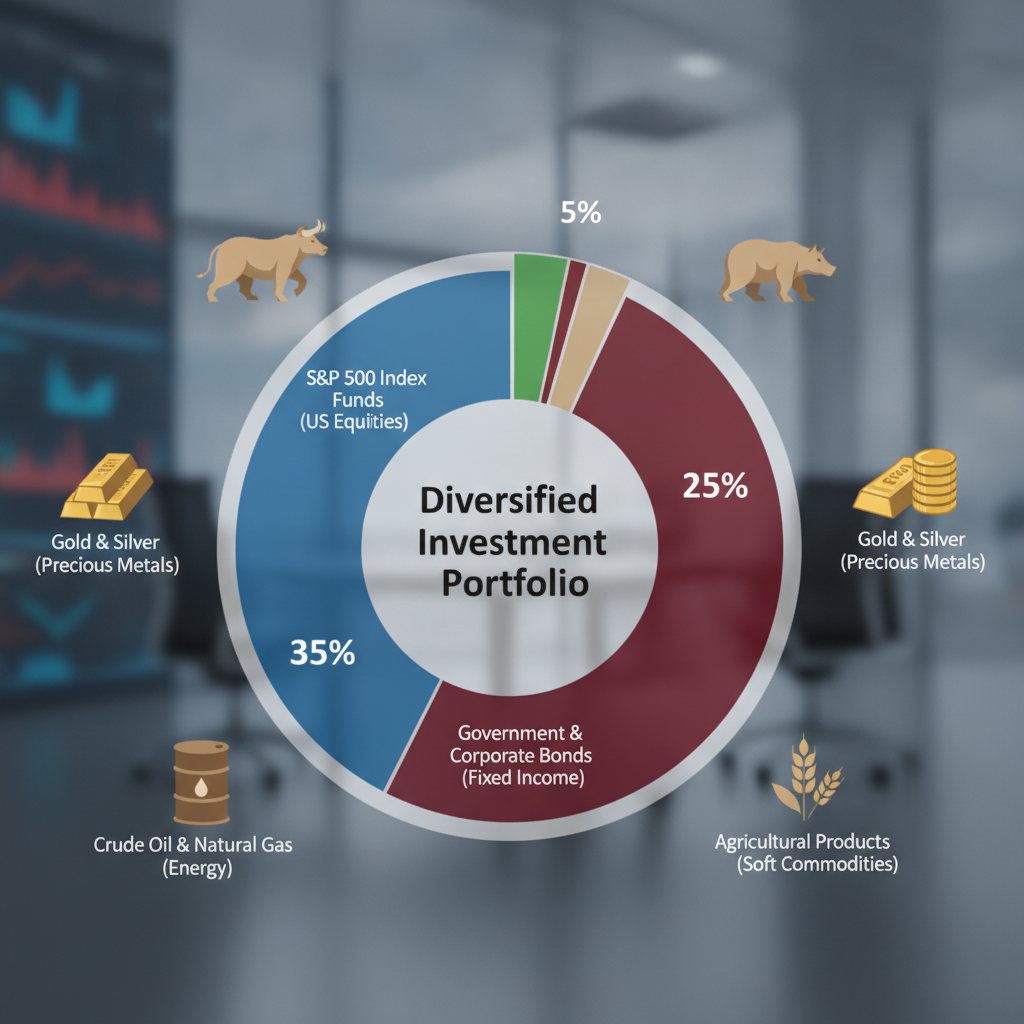
Ray Dalio's asset allocation principles are also essential. Building a portfolio based on asset allocation and risk parity is key to minimizing losses and achieving stable returns in volatile markets. For example, an 'All Weather Portfolio' that combines undervalued KOSPI value stocks, S&P500 growth stocks, bonds, and commodities is well-suited to the current environment.
Maintaining a balance between value investing, momentum strategies, and asset allocation—while adapting to the unique characteristics of each market and current economic indicators—is the key to long-term investment success.
Personal Investment Strategy: Portfolio Allocation Using KOSPI and S&P500
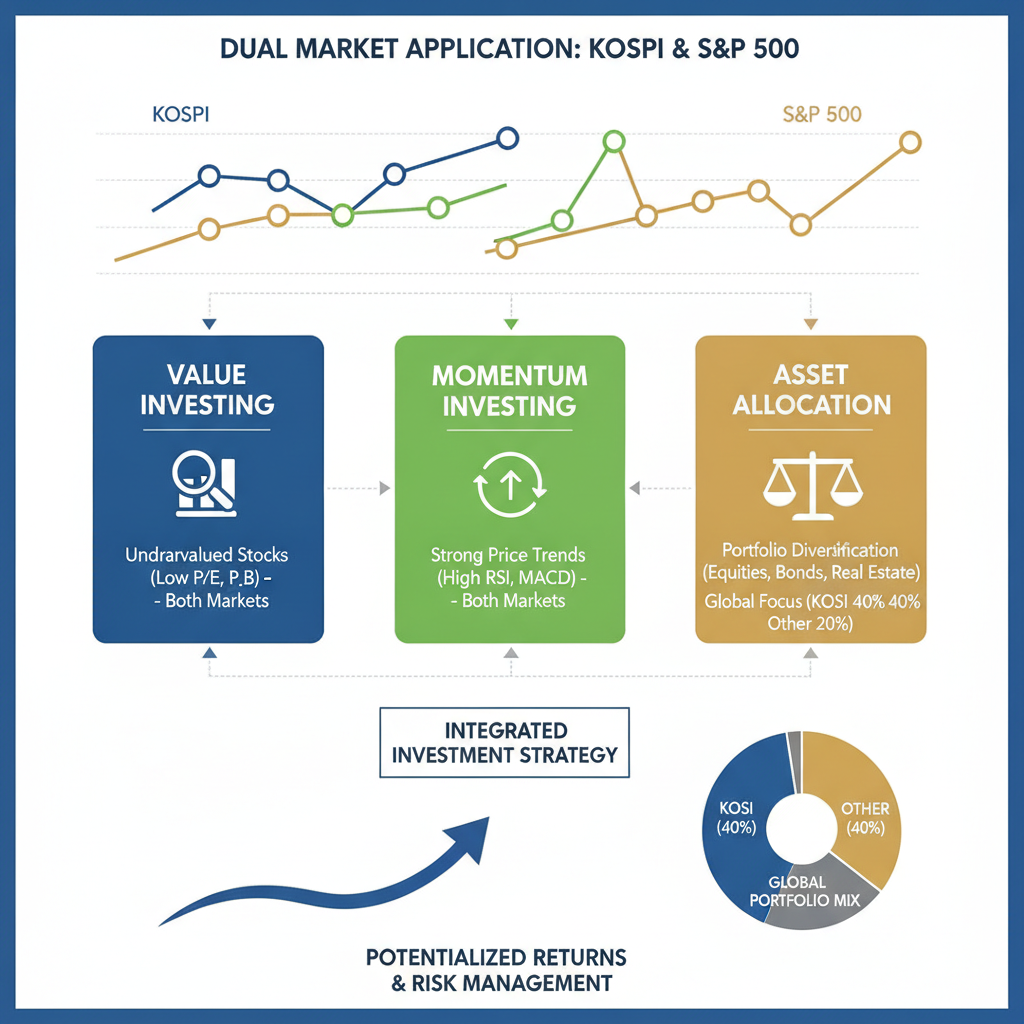
My current portfolio is focused on a balanced allocation between the KOSPI and S&P500. For the KOSPI, I maintain about 40% in large-cap blue chips with both growth and stability, such as semiconductors, batteries, and healthcare. During periods of rising interest rates, I reduce some exposure during short-term corrections and increase cash or bond holdings to manage risk.
For the S&P500, over 50% is held with a long-term perspective, with periodic buying and selling based on quarterly earnings and shifts in tech stock momentum. I focus on identifying undervalued growth stocks within the tech sector using the PEG ratio, and apply strict stop-loss rules to manage risk during periods of increased volatility.
The remaining 10% is diversified into bonds and commodities, following Dalio's All Weather Portfolio principles, to help reduce overall portfolio risk during periods of high equity market volatility.
I adhere to Livermore's principle of 'waiting on the sidelines when conviction is low,' and recommend a flexible and responsive approach depending on market conditions. For more details on asset allocation and portfolio adjustment, see Value Investing vs. Growth Investing: Finding the Right Style for You.
Additionally, analyzing historical patterns between interest rate cuts and stock markets can be very helpful in preparing for future changes in the interest rate environment, so I recommend reading Interest Rate Cuts and the Stock Market: How to Analyze Historical Patterns for Investment Insights as well.
In Conclusion
Comparing the strengths and weaknesses of the KOSPI and S&P500 is not a simple choice, but a necessary process for building an asset allocation strategy that aligns with your investment philosophy and goals. Analyzing recent trends and promising themes in each market, and maintaining a balance between value investing, momentum strategies, and asset allocation, are critical for long-term success.
If you combine risk management, a margin of safety, and the discipline to wait when conviction is low, you can build a resilient investment strategy even in rapidly changing global markets. I hope that ongoing market analysis and regular review of your investment principles will support your growth as an individual investor.
For more investment strategies and analysis, check out the Investment Insight Articles Collection.
References
I hope this comparison of KOSPI and S&P500 investment value helps you develop an optimal portfolio strategy that fits your needs. Wishing you success on your investment journey through continuous market analysis and disciplined investing.
Go to guideCompare NowExplore the strengths and weaknesses of KOSPI and S&P500.Services by Botonglee