Does AI Reduce Your Workload? For Solo Business Owners, It Widens It Instead
When people start using AI tools, they usually expect one thing: hand off the repetitive work, and the hours will come back. Finish earlier, take more days off. Then they actually use the tools and notice the opposite. The days feel shorter. I'm one of them.
I run a rental photo studio and wedding photography, a meditation platform, and a few online services, all by myself, from Seoul. A recent day of mine went like this: I had a mentoring session, revised a business plan, edited a follow-along practice video, and worked on getting a meditation app ready for release. All in one day, all on my own.
For someone working alone, each of those jobs normally means finding another person. Someone to polish the document, someone to cut the video, someone to handle the app store side. If you can't find or afford that person, the job sits on a list for weeks. AI tools let me get all four done in a single day, and I'm genuinely grateful for that.
But there was another side to it. As the range of things I could do grew, the days started passing faster, and I got busier. The strange thing is that the busyness feels less like a burden and more like something new and fun.
This post is for solo business owners and freelancers who picked up AI tools and somehow ended up with fuller days. It covers why AI tends to widen a solo worker's job instead of shrinking it, and what you can decide in advance so that the extra work stays enjoyable rather than wearing you down.
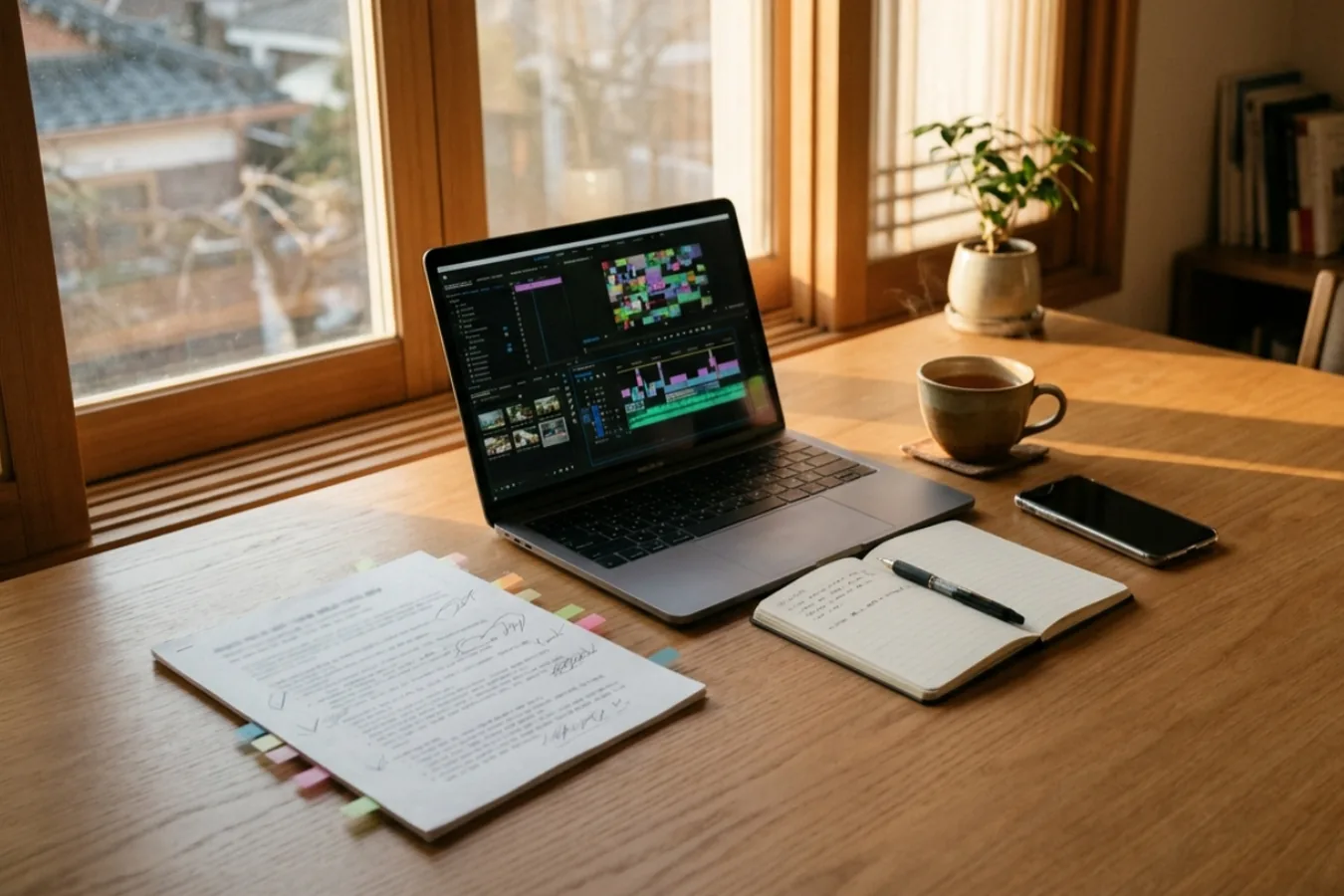
AI gives you more things you can do, not more free time
"AI saves you time" is only half true. The time it takes to do any single task really does go down. But people rarely leave the saved time empty. They fill it with the next thing they can now do.
For solo workers, this shift hits harder. In a company, video goes to the video person and documents go to the planning team. When you work alone there is no "video person," so anything outside your skills gets outsourced or postponed. Once AI arrives, you can suddenly reach that postponed list.
So the work doesn't shrink. The boundary of what you can handle moves outward, and the new territory fills up with tasks. The day gets denser, not lighter.
The same pattern showed up inside a company
This isn't just a solo-business quirk. Researchers spent eight months closely observing a US tech company of about 200 employees. The company didn't require anyone to use AI. It simply provided the tools. What the researchers saw was not people going home early. They saw work expanding in three directions.
- The job got wider. People started taking on tasks that used to belong to someone else, or that nobody would have attempted before.
- Work leaked into the pauses. Because starting a task with AI is so easy, people sent off a quick request over lunch, right before a meeting, or in the evening.
- People held more threads at once. While doing one thing, they kept AI running on another, juggling several streams in parallel.
The most telling part was how people felt. In the moment of prompting and iterating, they described momentum and a sense of expanded capability. Looking back on their days, though, they described feeling busier, more stretched, and less able to fully switch off. The fun and the busyness grew in the same place.
That matches my day almost exactly. Every finished piece felt new and satisfying, and the hours slipped away just as quickly.
The researchers warned that without deliberate habits, AI-assisted work tends not to contract but to intensify, with burnout and weaker decisions waiting at the end. Feeling energized is fine for a while. It becomes a different story when that state never ends.
Five rules that keep the wider workload fun
What follows is a mix of habits I actually use and the practices the researchers recommended, adapted for people who work alone.
1. Pick one must-do task for the day
When the range of possible work grows, plans tend to grow with it. I tried planning my days as a tight hour-by-hour schedule and simply couldn't keep it. These days, even the daily plan my AI assistant prepares each morning is cut down to one must-do task and one light task. Once those two are done, the day counts as a good day.
With AI around, the thought "I could get this done today too" keeps coming back. Being able to do something and needing to do it today are not the same. Having one fixed task is what lets you treat everything else as a bonus. If you want an AI to help plan your days, I wrote about what to tell it first.
2. Keep the pauses as pauses
Sending a task to AI takes a few seconds. That's exactly why it creeps into meals and the minutes before sleep: "Let me just set this one going." Those few seconds quietly turn rest time into work time.
I keep my evenings free by default and only work then on days when I genuinely have energy to spare. I don't schedule anything over meals, either. It's easier to decide in advance that certain hours are not for launching tasks than to defend them with willpower each time. Deliberate pauses were also the first practice the researchers recommended.
3. Let schedules run parallel work, not you
Once you can run several things at once, it's tempting to keep hopping between them yourself: check the result in this window, type the next instruction in that one. You end up doing more while your attention gets chopped into small pieces.
I put work that needs to run in parallel on a schedule instead. Blog posts go out at set times, and video and image jobs run overnight. On a day I had decided to rest completely, video production kept running, and my only job was to review what came out. When I check finished results in one sitting instead of bouncing between windows, the work can branch out while my attention stays on one thing at a time.
The researchers' second recommendation says much the same: batch non-urgent check-ins, protect blocks of focus time, and move through work in clear phases set by you, not at the AI's pace. For how to tell whether your scheduled work actually runs without you, see automation shows its quality on your day off.
4. Write two lines before you start something new
Because starting is so easy with AI, new tasks multiply faster than you expect. Before you begin anything new, try writing two lines:
- Which goal of my business does this connect to?
- If there is a reason not to do it, what is it?
This adapts a pause the researchers suggested before major decisions: write down one link to your goals and one counterargument first. If the first line comes easily, go ahead. If you get stuck on the first line, there's a good chance you want to do it because you can, not because you need to. Put it on a list and let it go for today.
Whatever survives can then be sorted into work for other people, work for AI, and work you keep yourself. The questions for that sort are in write a hand-off list before your to-do list.
5. The more time you spend alone with AI, the more you need people
Working with AI means long stretches of asking and answering on your own. The researchers' final recommendation was human connection: check-ins with colleagues and time to reflect together.
One of the things I did on that busy day was a mentoring session. The more you can do on your own, the fewer chances you get to see your work through someone else's eyes, so that time has to be put in on purpose. For a solo business owner, it might be a mentor, a small group, or a short conversation with someone who does similar work.
So, does AI reduce your workload?
For people who work alone, usually not. Each task takes less time, but the time you save gets filled by new things you're now able to do. What you gain is range. Jobs you once had to hire for, or kept putting off, are suddenly within reach.
That wider range is good news. It also makes the day denser, so it helps to decide what you will not do today before deciding what you will. A short list to keep:
- One must-do task
- Hours where you don't start new work
- Checking results in batches
- Two lines before anything new
- Time to hear from people
With those five in place, the extra busyness is much more likely to stay fun instead of turning into a burden. AI has widened what you can do. Choosing which of those things gets a place in your day is still your job.
Services by Botonglee