Eliminate Mental Noise with Sound Meditation: How to Start Practicing Today
Are you looking for ways to calm your mind when you're overwhelmed by inner noise, anxiety, or stress? While many people are interested in meditation, it can often feel daunting to know where to begin. In these moments, sound meditation offers an effective and accessible mindfulness practice that anyone can try.
By the end of this article, you'll understand the concept of sound meditation, step-by-step practice methods, scientific evidence, and even real-life experiences. We'll also introduce the unique features of modern sound meditation as it blends with K-meditation and wellness culture in Korea—a helpful guide for those seeking a healing routine suited to local environments.
Let's walk through five sections: how to start sound meditation, its scientifically proven benefits, practical tips for daily life, and more.
Go to guideSee More Sound Meditation MethodsDiscover more information about sound meditation.What is Sound Meditation?
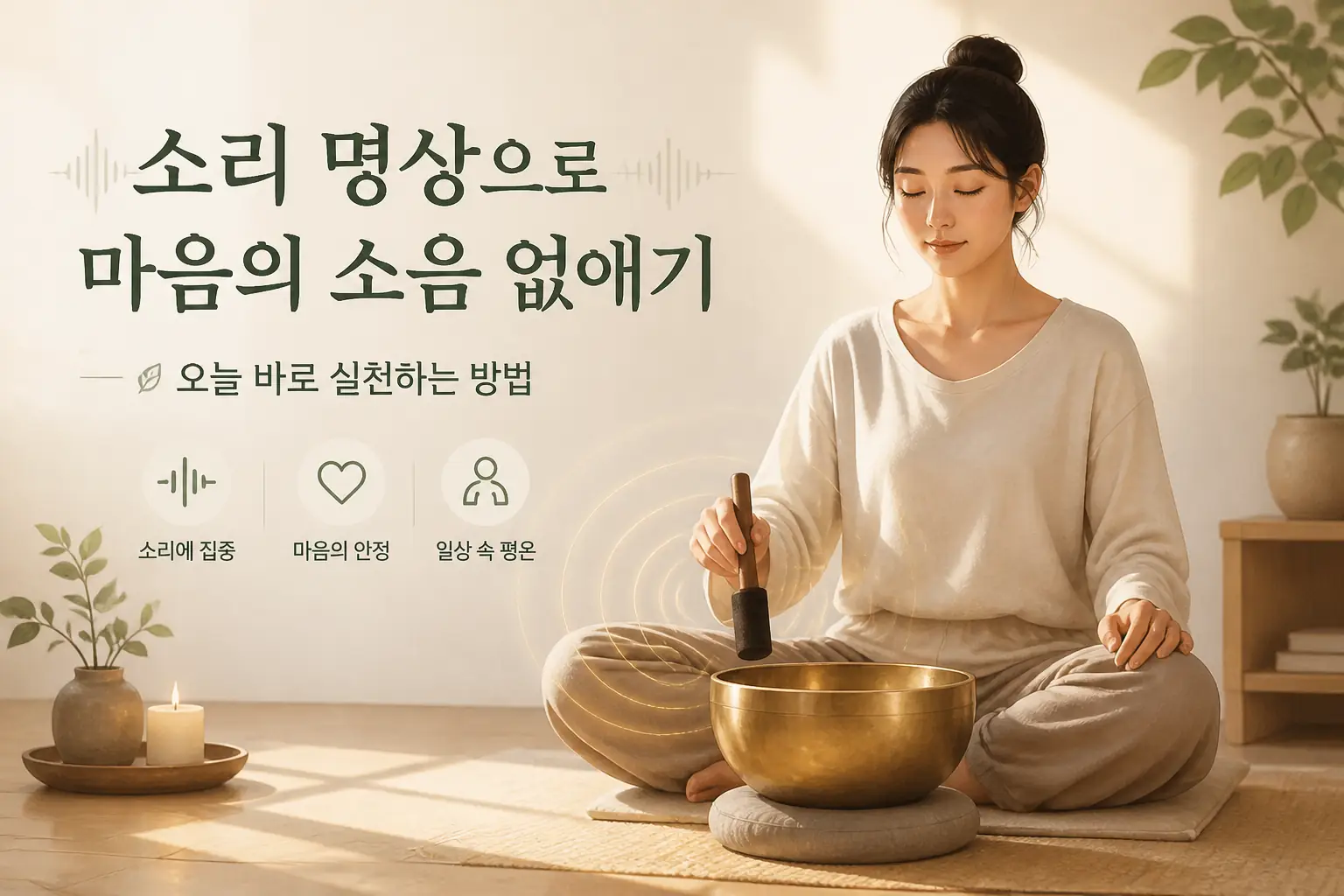
Sound meditation is a practice that uses the vibrations of sound to calm the mind and regulate the body's rhythms. Traditional instruments like the singing bowl are often used to create resonant sounds that help induce deep relaxation. As a branch of mindfulness meditation, sound meditation has been shown to help manage stress and improve sleep quality.
Definition and Importance of Sound Meditation
Sound meditation goes beyond simple auditory stimulation and has a positive effect on the nervous system. The vibrations produced by singing bowls spread throughout the body, relaxing tense muscles and stabilizing brainwaves. It's especially beginner-friendly, making it easy for anyone to immerse themselves in the practice.
The Impact of Sound Vibrations on Body and Mind
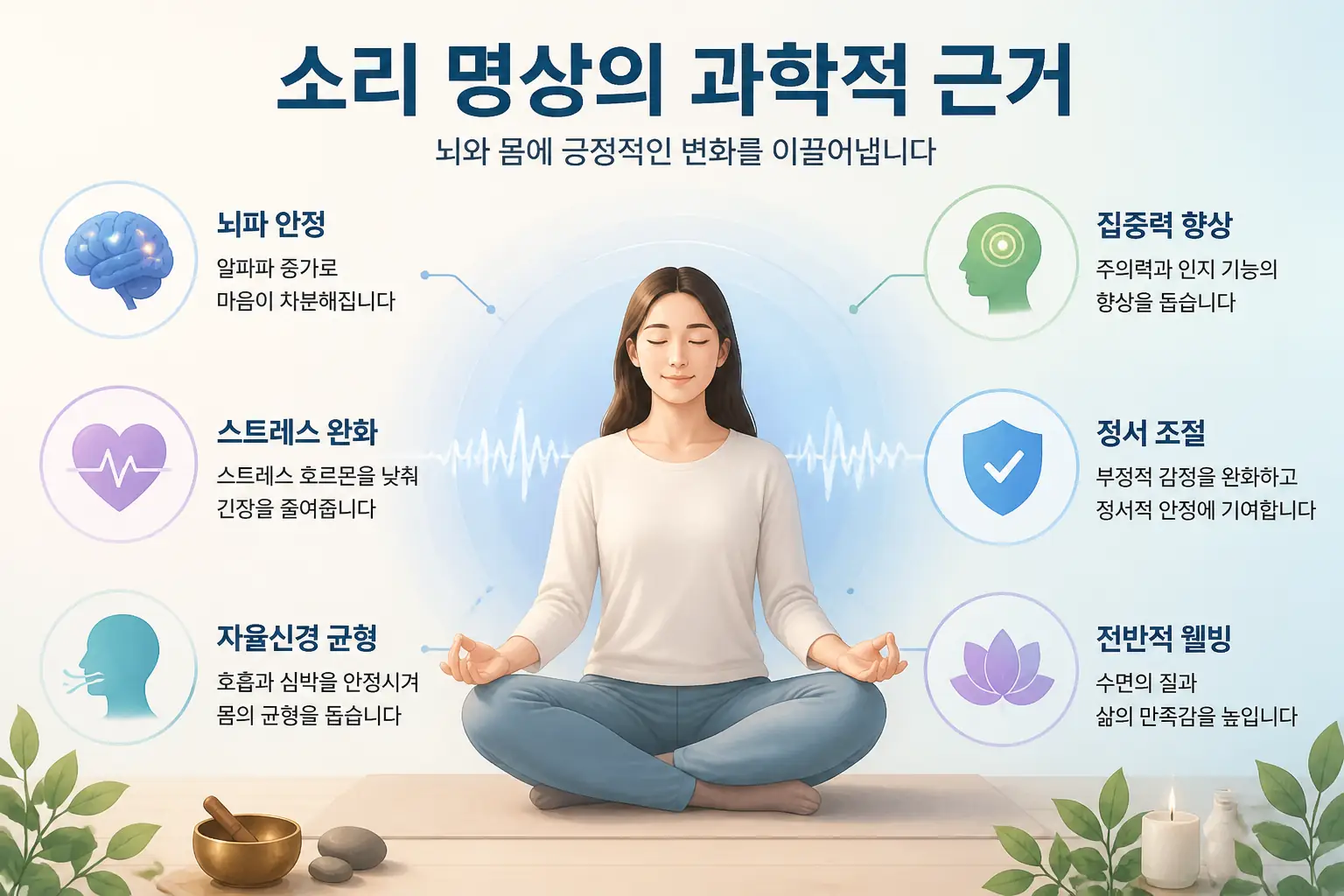
A 2023 study found that the vibrations from singing bowls help calm the sympathetic nervous system and activate the parasympathetic nervous system, effectively reducing stress levels (ScienceDirect article). Focusing on sound during meditation also enhances attention and naturally deepens mindfulness.
Sound Meditation from a K-Meditation Perspective
With the fusion of traditional Korean yin-yang and five elements philosophy and modern wellness culture, sound meditation has become a central pillar of K-meditation. Sound therapy methods that incorporate traditional bell tones or the melodies of the gayageum (a Korean zither) help restore balance to body and mind. Recently, meditation cafes and centers in Korea have seen a surge in popularity for sound meditation programs using singing bowls and traditional instruments.
How to Practice Sound Meditation
Here’s a guide to the essentials you’ll need and the specific steps to follow when starting sound meditation. Each step includes tips and notes on maximizing the benefits, so you can try it right away.
1. What You’ll Need
2. Preparing Your Space (5 minutes)
3. Getting Comfortable (5 minutes)
4. Regulating Your Breath (3 minutes)
5. Playing the Singing Bowl (10–15 minutes)
6. Finishing Up (3 minutes)
> Tip: If you strike the singing bowl too forcefully, it may actually increase tension. Start gently and gradually find the right touch.
> Note: If you feel dizzy or uncomfortable during meditation, stop immediately and take a break.
Benefits of Practicing Sound Meditation

The Science Behind Sound Meditation
There is a growing body of research supporting the effects of sound meditation on the human body. Clinical data especially highlights its benefits for stress management and sleep improvement.
How Sound and Vibration Affect the Nervous System
The 1–20Hz frequency range of singing bowl vibrations matches alpha and theta brainwaves, leading the brain into a relaxed state. This brainwave entrainment can also help improve memory and creativity. According to studies by the U.S. National Institutes of Health (NIH), regular sound meditation increases parasympathetic activity and lowers cortisol (the stress hormone) levels.
Research on Mental Stability and Stress Reduction
A 2025 clinical trial with 60 adults compared a singing bowl meditation group to a regular rest group. The sound meditation group showed anxiety levels that were, on average, 25% lower. There were also significant improvements in mood and sleep quality.
Effects of Sound Meditation on Sleep
Studies show that using singing bowls alongside sleep meditation can shorten the time it takes to fall asleep and increase the proportion of deep sleep (N3 stage). In research with insomnia patients, four weeks of sound meditation improved sleep efficiency by 15% (More on Mindful.org).
My Experience with Sound Meditation
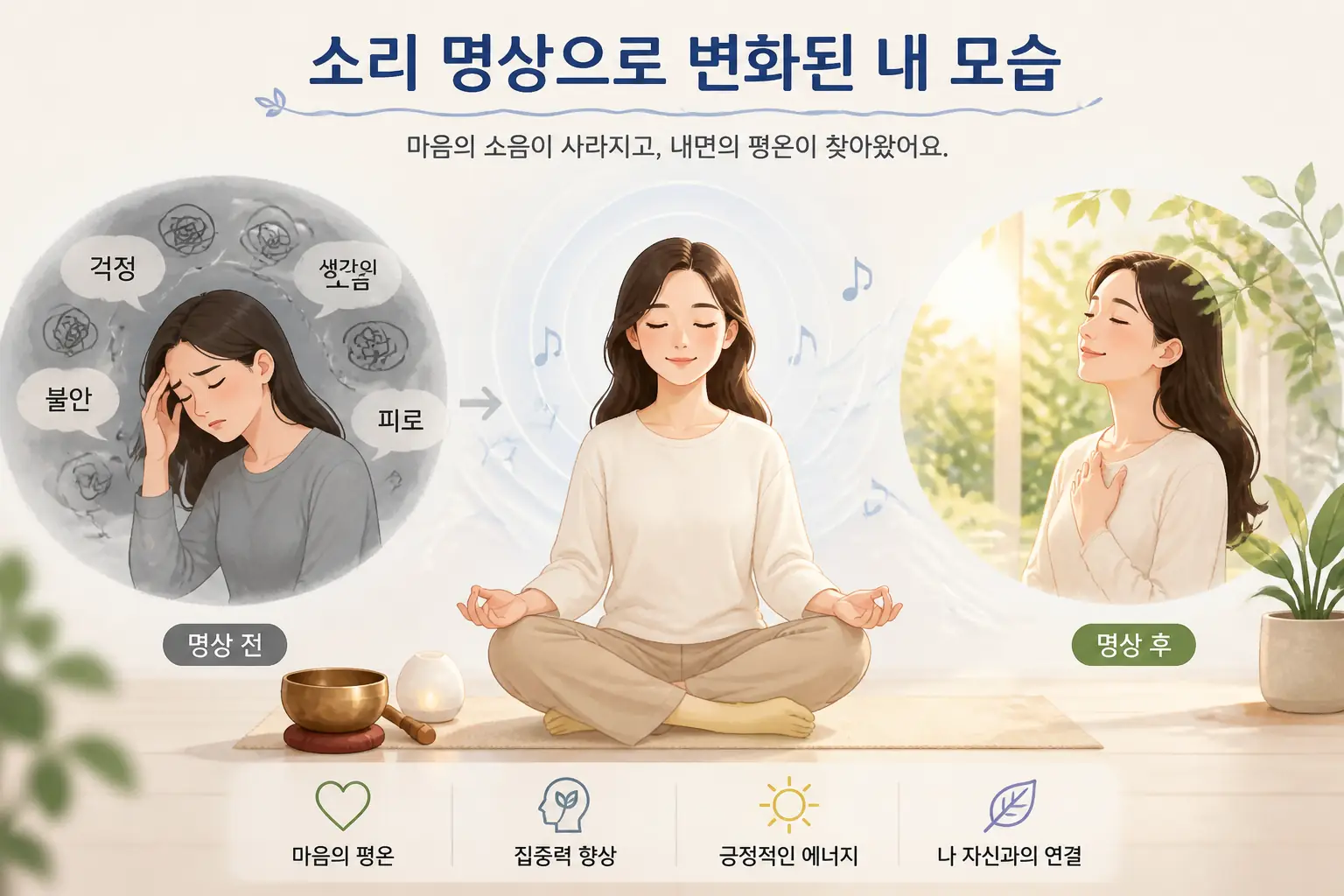
When I first tried sound meditation, I simply thought, “The sound is pleasant.” But as I practiced regularly, I noticed a real reduction in mental chatter and a definite decrease in stress. Especially during tense moments at work, just five minutes of focused listening to a singing bowl would clear my mind and stabilize my emotions.
The Difference Before and After Starting Sound Meditation
Before meditation, I was easily anxious and had trouble falling asleep. With regular sound meditation, I gained greater psychological stability and my sleep patterns improved naturally. Even when exposed to stressful situations in the news or on social media, I found myself less affected than before.
Personal Experience of Mental Calm and Stress Relief
After practicing sound meditation for 10 minutes every morning and evening for a month, I was able to manage my emotions without burning out, even during busy periods. I especially remember being able to stay calm and communicate effectively during conflicts with friends.
Enhancing Mindfulness Through Sound Meditation
Focusing on breath and sound helped me naturally stay present, which led to greater mindfulness in all areas of life. Combining this with Mindful Eating Practice brought more healing moments to my daily routine.
Tips and Precautions for Sound Meditation
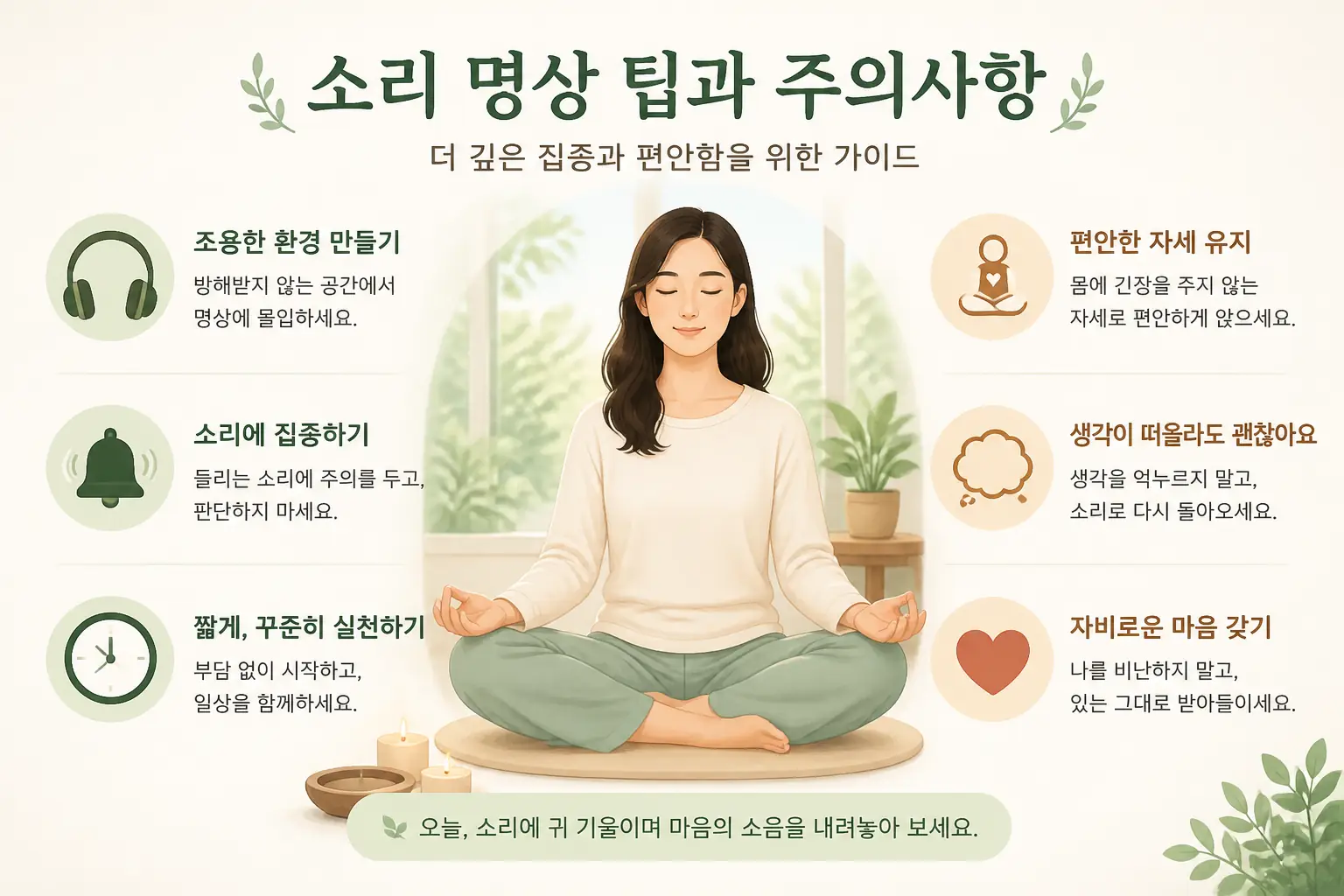
Here are some helpful tips and important precautions to keep in mind as you start and maintain your sound meditation practice.
Common Beginner Mistakes and Solutions
Recommended Times for Meditation
> Tip: For evening meditation, reduce unnecessary lighting and try combining it with the 4-7-8 breathing technique (Sleep Meditation Article) for even better sleep quality.
Special Precautions
Sound meditation is an essential tool for modern wellness, supporting mindfulness, stress management, and better sleep. Try following the steps outlined above and make sound meditation a regular part of your healing routine. With consistent practice, you can reduce mental noise and find inner peace.
If you’re interested in exploring mindfulness and meditation further, check out other methods like Mindful Eating Practice for more ways to bring healing into your everyday life.
Reference Links
Services by Botonglee