Experience Deep Relaxation with Yoga Nidra: A Step-by-Step Guide for Beginners
In today’s fast-paced world, it can be challenging to calm the mind and release physical tension. Among various meditation and mindfulness techniques, Yoga Nidra stands out for its remarkable ability to improve sleep quality and manage stress. Even beginners can easily follow its step-by-step process, making it a practical way to restore both mind and body.
Yoga Nidra, which translates to “conscious sleep,” is a form of meditation that allows you to experience deep rest and inner calm while remaining awake. In this article, you’ll find a detailed introduction to Yoga Nidra, how to practice it, the scientific evidence behind its benefits, and its connection to K-meditation.
What is Yoga Nidra?
Yoga Nidra is a traditional yogic meditation technique designed to guide the body and mind into a deeply relaxed state. Unlike regular sleep, you remain consciously aware while your body enters profound rest.
The main benefits include:
Because it is practiced lying down, Yoga Nidra is highly accessible and low-pressure, making it especially recommended for beginners or busy modern individuals.

Preparing for Yoga Nidra
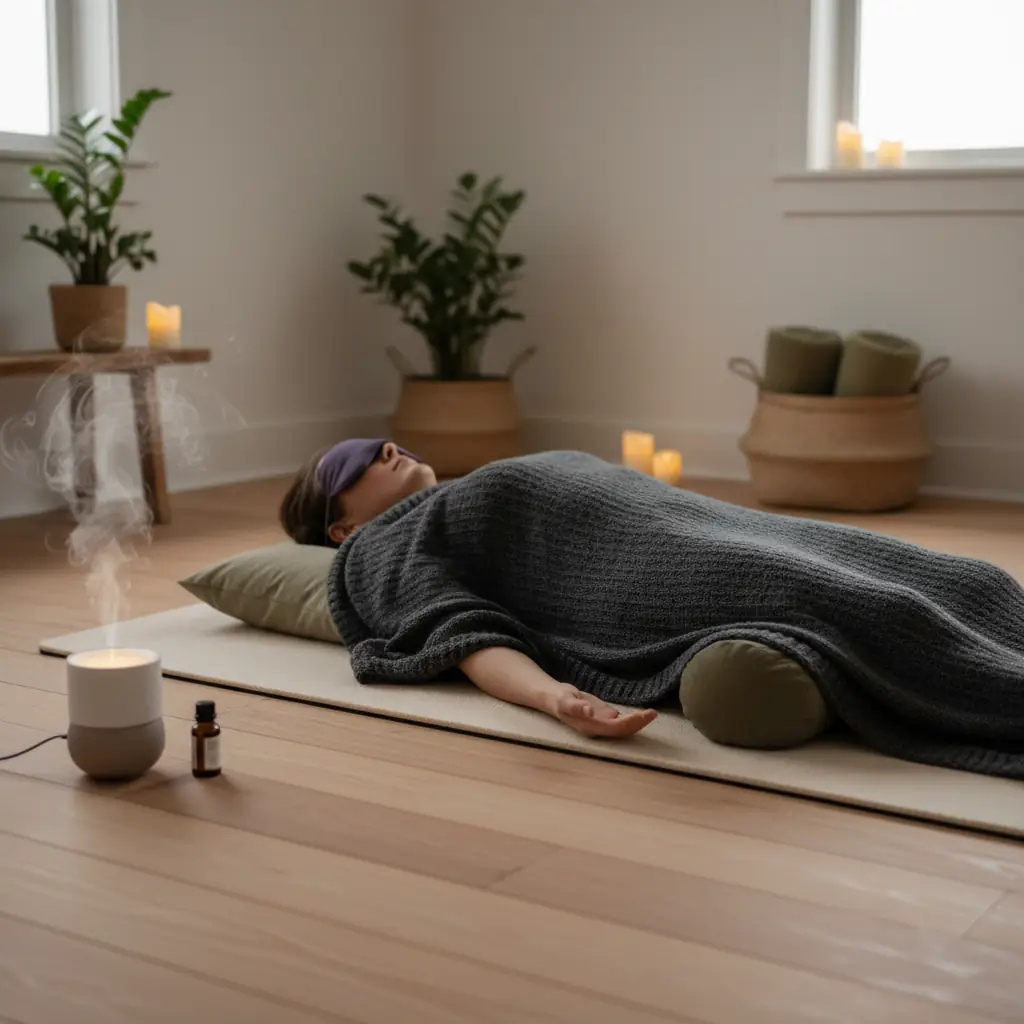
Before you begin, it’s important to create a comfortable environment and find a relaxing posture.
Select a place with minimal external noise and interruptions. Soft, gentle lighting is ideal.
Opt for loose-fitting clothes that don’t constrict your body, and avoid anything that might cause tension.
Lie down on a yoga mat or bed with your legs slightly apart and your arms resting naturally at your sides. If your neck or lower back feels uncomfortable, use a pillow or blanket for support.
Even this simple preparation will help your body start to relax, enhancing the effects of meditation.
Step-by-Step Yoga Nidra Practice
Yoga Nidra can be practiced by anyone by calmly following these five steps. At each stage, observe your body and mind, and gently guide yourself into deeper relaxation.
Step 1: Lie Down Comfortably and Release Physical Tension
Step 2: Focus on Your Breath and Clear Your Mind
Step 3: Body Scan – Check in with Each Part of Your Body
Step 4: Positive Visualization for Mindfulness
Step 5: Gradually Return to the Present
By practicing these five steps for 20–30 minutes at least three times a week, you’ll gradually notice reduced stress and improved sleep quality.

Scientific Evidence
The benefits of Yoga Nidra are supported by scientific research. For example, a study at Harvard Medical School found that Yoga Nidra can significantly lower levels of the stress hormone cortisol. It also increases parasympathetic nervous system activity, which helps stabilize heart rate and blood pressure.
The U.S. National Institutes of Health (NIH) has reported that Yoga Nidra can greatly improve sleep quality in people with insomnia, and also supports mental recovery and enhanced concentration. These positive changes become more pronounced with consistent practice over 8–12 weeks, and Yoga Nidra is widely used in clinical settings.
For more scientific background on mindfulness and meditation techniques, see Enhancing Quality of Life with Meditation and Mindfulness: A Step-by-Step Guide for Beginners.

Sharing My Personal Experience
I have personally experienced noticeable changes since practicing Yoga Nidra regularly.
Initially, it was difficult to remain fully awake while entering a deep state of relaxation, but by the third week, I began to feel lighter both physically and mentally. My chronic insomnia improved, and by the sixth week, I was sleeping longer and waking up feeling refreshed.
Even on stressful workdays, a short Yoga Nidra session helped me release tension and stabilize my emotions. As a result, I gained greater mental clarity and focus, which improved my work efficiency.
Through this experience, I became convinced that Yoga Nidra is more than just a relaxation technique—it is a profound method for healing.

The Connection Between K-Meditation and Yoga Nidra
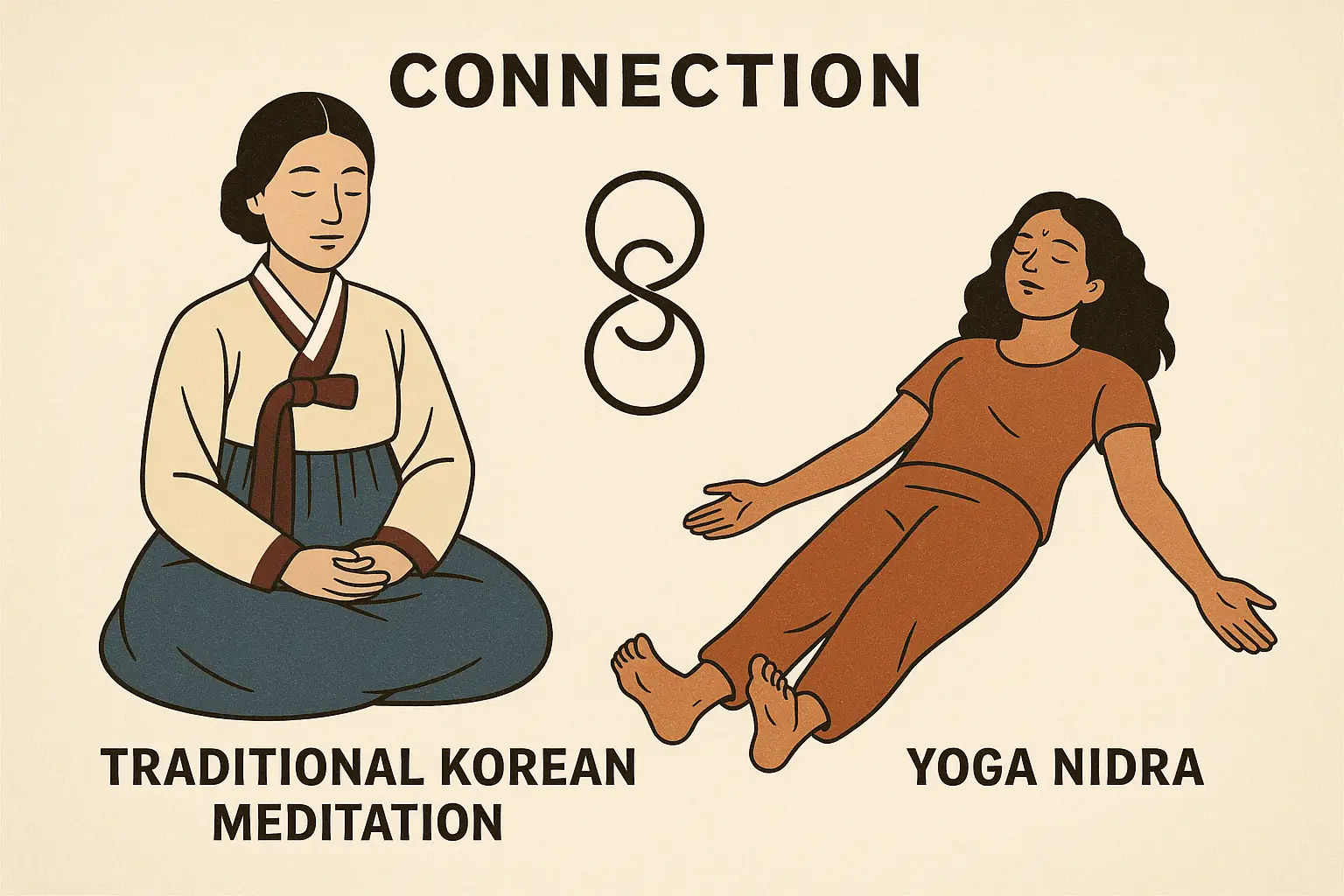
Korea has a long-standing tradition of meditation. Practices such as Seon (Zen) Buddhist meditation and traditional Korean mindfulness techniques, which emphasize calm breathing and self-awareness, share much in common with Yoga Nidra.
K-meditation focuses on deep introspection and self-reflection, and Yoga Nidra also explores the inner self through conscious relaxation. Recently, hybrid practices that combine traditional Korean meditation with modern Yoga Nidra have emerged under the term “K-meditation.”
In this way, Korean meditation culture is establishing itself as a unique and practical wellness method in the global wellness movement. Starting with Yoga Nidra can be a great gateway to experiencing K-meditation for deeper self-reflection and healing.
Tips for Consistent Practice
Yoga Nidra offers the greatest benefits when practiced regularly. Here are some tips to help you build a sustainable routine:
Even short, regular sessions are key to long-term benefits.
Beginners may find it easier to focus with guided audio or video sessions.
Meditating together can boost motivation and help you stick with your routine.
Early mornings or just before sleep are ideal times to maximize the effects of Yoga Nidra.
Beyond Yoga Nidra, try to observe your breath and body in small moments throughout the day.
Recording your experiences and changes can help maintain motivation.
With consistent practice over 8–12 weeks, you’ll notice positive changes such as better stress management, improved sleep, and enhanced emotional regulation.

Experience deep relaxation and recovery through Yoga Nidra. A small pause in your daily routine can lead to significant changes. For more information and practical tips, subscribe to our newsletter and join the journey toward a healthier mind and body.
Reference Links

Services by Botonglee