Falling Asleep in Meditation
Ask a room of beginners what goes wrong when they sit, and the same answer comes back: I fall asleep. Five minutes in, the head drops. You come to, and ten minutes are gone. Then comes the conclusion — I am just not built for this.
Drowsiness in meditation is not automatically a failure. It is worth separating a few things first.
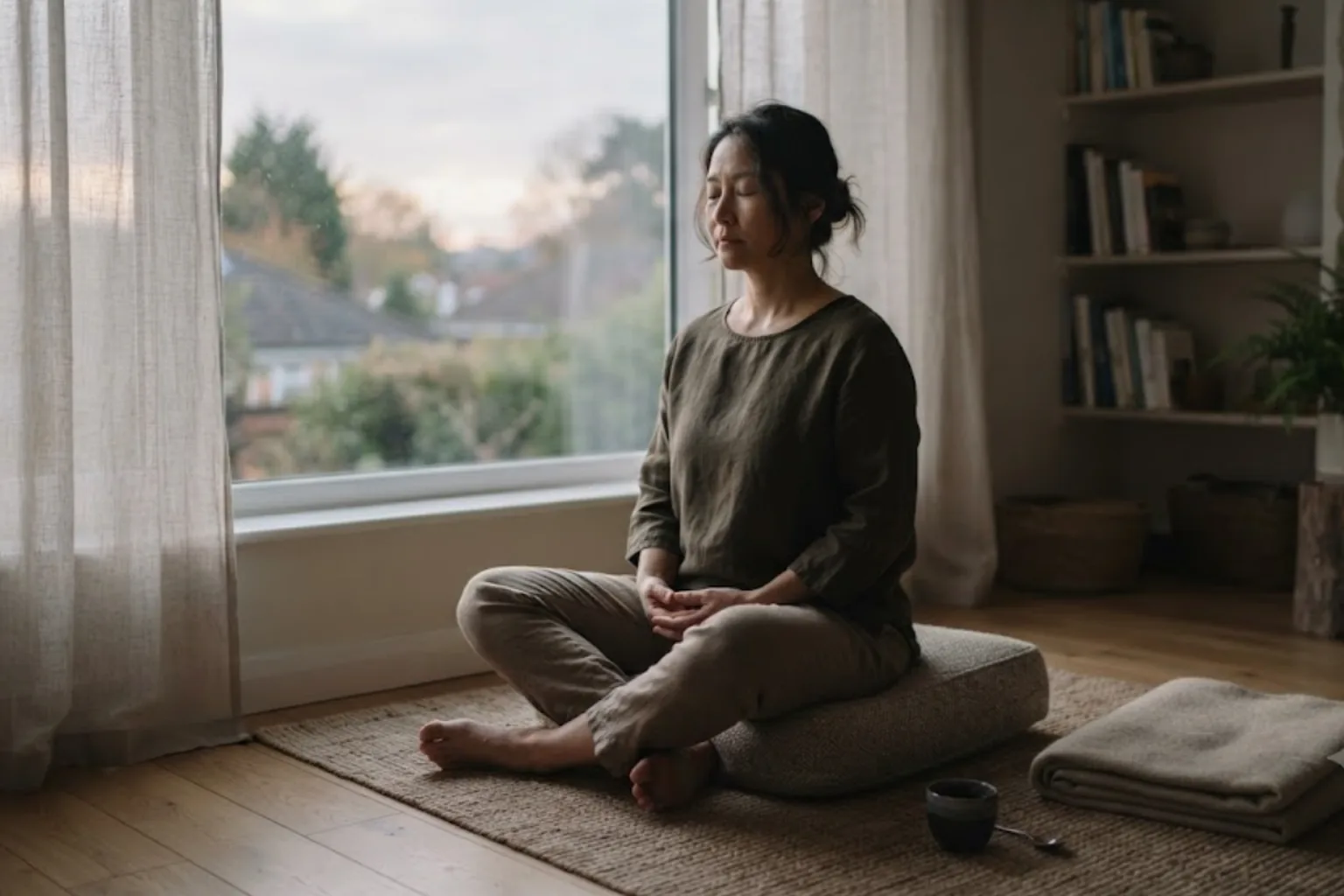
1. Sleep comes before technique
A tired body will spend your meditation on sleep. That is not a character flaw; it is arithmetic. Sit down in a quiet room, close your eyes while short on rest, and the body reasonably concludes that this is bedtime.
So before you change your posture or your method, look at the last few nights. If you have been going to bed late and getting up early, the problem is not your practice. Fixing the sleep is faster than fixing the sit.
2. Whether you slept or went deep shows up when you stand
Even when you are well rested, there are stretches where awareness goes dim. That might be sleep, or it might be depth. While you are sitting, the two feel almost the same: time disappears, thinking stops.
The difference shows afterwards.
Neither one is bad. If you slept, your body took what it needed. If you went deep, the sit did its work. What matters is telling them apart, because that is what tells you what to adjust next time.
If you want to see the pattern rather than guess at it, keep it to one word. After each sit, write down how your body feels in the first minute: "energy" or "tired." A week of that is usually enough. Lots of "tired" means start with sleep. Once "energy" begins to appear, keep doing what you are doing.
3. What to do the moment drowsiness arrives
When you catch yourself nodding, straining to be alert rarely works. Resetting the body and the focus does.
4. Drifting in and out is not a malfunction
Many people treat a broken, in-and-out sit as a failed one. Sitting for an hour and surfacing ten times is ordinary. That is what practice usually looks like.
All you need is a fixed response for the moment you notice you have surfaced.
Three lines is enough. The time spent scolding yourself for drifting is usually longer than the drift itself.
5. About the feeling that "nothing is happening"
Some people practise for months or years without anything dramatic. That is not a mistake on their part. Meditation behaves like a skill and skills take time; nobody learns a tennis serve for three weeks and expects aces.
One thing is worth remembering: when it feels hard, lengthen the sit rather than shorten it. The point where things settle on their own usually arrives after a while of sitting. Stopping at ten minutes can mean turning back just short of it, every time.
There is also the picture problem. If you have decided in advance what an "experience" should feel like, everything unlike that picture registers as nothing at all. Dullness, or thoughts that will not stop, can be the very thing to sit with.
6. How to know the sit worked
Do not grade it on how the sitting felt. You can spend the whole time tangled in thought and still get the benefit. Check three things as you stand up.
One out of three means the sit worked.
One boundary worth stating plainly: if nausea, fever, or dizziness keeps showing up during or right after meditation, shorten the sits and see a doctor. Do not read repeated physical symptoms as a stage of practice.
In short
If sitting alone keeps fizzling out, being guided through it is easier. Step-by-step programmes starting from short sessions are on WECOSMO. For days when sitting itself is the hard part, release the body before you chase the mind; for days when trying too hard is the obstacle, the practice of just sitting. And if the opposite happens — vivid imagery instead of drowsiness — there is a note on mystical experiences.
Services by Botonglee