What Fire Dreams Mean in Korean Interpretation
Nobody wakes up pleased after dreaming of a fire. If the house was burning, the feeling tends to follow you through the morning. And yet in Korea, when you mention it, someone will almost certainly tell you it is a good dream — that money is coming, that business will grow. Few dreams split so cleanly into two opposite readings.
It helps to start with why fire was read as wealth at all. For most of Korean history the fire in the kitchen was the household itself: a hearth that stayed lit meant a family still standing. A flame rising high looked like energy expanding outward. Layer onto that the older association of fire with burning away what is old, and a large, bright fire lands on the auspicious side.
One correction before the situations, because it gets lost in the "you'll be rich" version: even inside the tradition, a fire dream is not automatically auspicious. The same fire, read by its strength and direction, was read the other way.
Three things that decide the reading
Before you look up any individual scene, hold these three in mind. This is where the reading splits.
1. The strength and direction of the flame. Did it climb upward, bright and clean? Or was it dying down, sinking, guttering out? This is the variable the tradition weighted most heavily: rising fire meant expansion, failing fire meant a loss of force.
2. What you did. Did you only watch? Did you light it? Put it out? Run from it? The same fire was treated as a different dream depending on your part in it.
3. What you felt. Warmth and brightness, or fear and a closing throat? When the scene is identical, emotion is what separates the two readings.
The third turns out to be decisive. It is the reason "my house was on fire" splits into two dreams that have almost nothing to do with each other.
Situation by situation
A large fire burning high
This is the scene that carries the most auspicious reading. If the flames climbed upward, bright rather than choking, and what you felt was awe rather than terror, the tradition reads it as force gathering: work expanding, a name becoming known.
If the fire stayed low and the smoke was heavy, the same size of fire is read as weaker. Brightness and direction are the measure, not scale alone.
Your house on fire
The most searched scene, and the one that divides most sharply.
If the fire burned bright and what dominated was astonishment rather than panic, popular interpretation reads it as change arriving in the household, often as wealth. The house stands for your footing, so fire taking hold of it was read as a new phase rather than a loss.
But if you were trapped in smoke, or searching for family, or frozen over what to carry out, that is a different dream. That one belongs to losing control and carrying more than you can hold. The more accurate question is what has felt about to slip out of your hands lately.
A fire spreading across a hillside
Spreading fires are not read by size either. If it spread widely while you watched from somewhere safe, the image is expansion. If you kept backing away from it, or your path closed, it is not expansion at all — it is being pushed out of your own ground.
Putting a fire out
Here interpretations diverge. To keep the wealth symbolism consistent, a folk reading says that putting out the fire means cutting off what was coming to you.
That formula deserves care. In the classical entries, fire appears with wealth and honour on one side and gossip and loss on the other — a genuinely two-sided symbol — and the flat rule "extinguishing always means loss" looks like a later simplification. If you put the fire out and what remained was relief, reading the dream as containment and putting things in order is the more natural fit. What you have been tidying up in waking life is the material for that reading.
Lighting a fire, or feeding it
Starting a fire yourself is read in the tradition as beginning and preparation. If you struggled to catch a flame and got only smoke, it reads as conditions not yet in place. If it caught at once and burned hard, it reads as things about to move quickly.
A candle
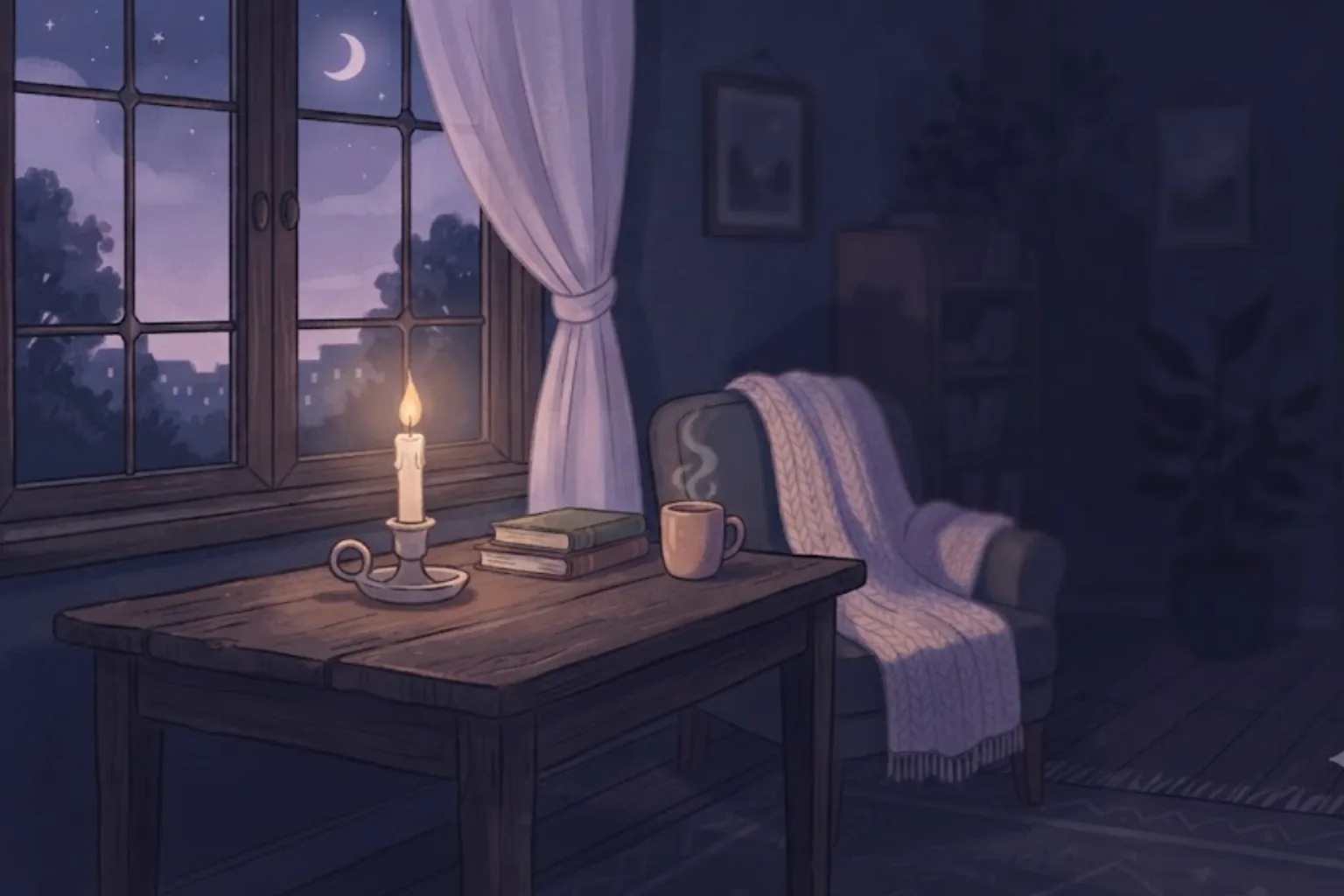
A candle is not read like a bonfire. A small flame that refuses to go out carries images of what must be protected, of prayer, of steady care. A candle flickering or dying is usually read as anxiety and weakening force.
But if the scene continued and you lit it again, then the conclusion of that dream is the relighting, not the darkness. Read from the last scene, not the worst one.
Smoke with no fire
A common scene. No flame anywhere, just smoke rising or the smell of burning. The tradition reads this as a problem not yet visible: rumour, talk, something suspected rather than seen. Less an event than an atmosphere.
Your body or clothes catching fire
The fear in this one is strong enough that people file it under nightmare, but one strand of the tradition read fire touching the body as forceful change. Emotion decides again. If heat and pain were the centre, it belongs with overload and burnout. If you were untouched and mostly astonished, it reads as a turn in circumstances.
Watching a fire from a distance
A dream where you never intervene shows you your position as an observer. Folk interpretation frames it as someone else's affairs touching yours; the psychological reading asks which situation in your life you are currently watching rather than entering.
Explosions and evacuations
An explosion is a dream about speed more than fire: suddenness, change that arrives without warning. Dreams of alarms and evacuation are read most accurately alongside whatever you currently feel unprepared for.
When the dream is the body and the room talking
Fire dreams take in physical and environmental input more readily than almost any other category. A hot night, a blanket too heavy, a dry or overheated room, spicy food before bed — heat, flame and smoke slip into the scenery from all of them.
So the sensible order is this: if fire dreams repeat and you also have real heat, night sweats or breathlessness, look at your body and your bedroom before the symbolism. That said, there is no established one-to-one mapping between a particular dream and a particular illness. Dreams do not diagnose.
One more. If you have actually lived through a fire, or witnessed one, and the same dream keeps returning, that is not a question of interpretation but of recovery. If it keeps breaking your sleep, it is worth talking to someone who works with that.
What the East Asian classical tradition says
Chinese dream books also contain entries for fire, conflagration and smoke, and they group wealth and honour together with gossip and loss. Reading fire as two-sided is not unique to Korean folk interpretation.
Two caveats belong with that. Wording varies substantially between editions and regions. And a great many lines circulating online as "the classics say…" cannot be traced to a verified source — dream books sharing one famous title exist in multiple recensions whose contents disagree.
This guide therefore quotes no individual line and summarises only the logic the entry groups share: strength and direction, your action and your emotion.
The psychological view
Fire has long carried anger, passion and burning out in the same image, because the thing that blazes and the thing that consumes are one.
Which means the informative part of the dream is not the fire. It is what you felt in that scene — elated, terrified, suffocated, indifferent. Find where that feeling belongs in your current life and the dream usually resolves itself.
From modern dream research, the finding that holds up best is the continuity hypothesis: dream content tends to track waking concerns, relationships and emotions. Not a fixed dictionary entry for fire — closer to the opposite, that your present life and older memories are being recombined while you sleep.
Frequently asked questions
Should I buy a lottery ticket?
Wealth symbolism in folk interpretation is a cultural story, not a signal about probability. Enjoy it as a story; do not stake money on it.
Is dreaming of my house burning a bad dream?
It is not fixed. Bright flames with astonishment read as change and wealth; smoke, entrapment and fear read as losing control.
Does putting the fire out really mean money leaving?
There is a folk reading that says so, but it is not a rule. If relief is what remained, containment and resolution fit better.
What about smoke with no flame?
It reads as something unseen — rumour, or a problem you sense but cannot locate. Start with whatever has been sitting on your mind.
I dream of fire often.
Check the conditions before the symbols: room temperature, bedding, food before bed, whether you actually run hot at night. If the repetition follows a real fire, treat it as recovery rather than interpretation.
Related reading
Reading your own dream
Everything above is the general case. Your dream held more — where it happened, who was there, what you did, and how you felt when you woke.
I run a dream-reading tool that takes the dream itself as text. The basic reading is free, and a deeper reading separates the interpretation into psychological, unconscious, traditional and precognitive layers. It asks nothing about your age, job or situation — only the dream. The tool is written in Korean, so it will suit you best if you read Korean.
Read your dream with the Korean dream-reading tool
The traditional and precognitive readings described here are cultural symbol interpretation, not predictions of actual events. If recurring fire dreams come with real heat or disrupted sleep, look at your body and your room before the symbolism, and if they follow a fire you lived through, speak with a professional.
Services by Botonglee