How to Find Undervalued Stocks Using PER and PBR — A Practical Screening Guide
In recent times, as investment markets face growing uncertainties,
individual investors are increasingly interested in systematic ways to identify undervalued stocks.
Especially, PER (Price-to-Earnings Ratio) and PBR (Price-to-Book Ratio) have become fundamental tools
in value investing and key elements in portfolio strategies.
This post provides a practical guide to finding undervalued stocks based on current market trends,
explaining how to use PER and PBR, highlighting sectors to watch,
and offering insights from an investment principles perspective.
Recent Market Trends: Finding Undervalued Opportunities Amid Uncertainty
As of April 2026, the Korean stock market shows some instability
due to uncertainties surrounding interest rate policies and economic growth forecasts.
The KOSPI stands at 5,786.33, showing a slight downward trend,
with foreign investors maintaining a cautious stance on the Korean market.
Notably, the Bank of Korea's dilemma regarding interest rate policies
is negatively impacting corporate investment sentiment.
The KRW/USD exchange rate has risen to 1,494.70,
creating a mixed impact of both opportunities and challenges for export-oriented companies.
Even amid these uncertainties, discovering undervalued stocks that provide a margin of safety
remains a crucial strategy for value investors.

How to Use PER and PBR: Basic Tools for Finding Undervalued Stocks
PER and PBR are the most widely used indicators in value investing,
reflecting a company's profitability and asset value,
respectively.
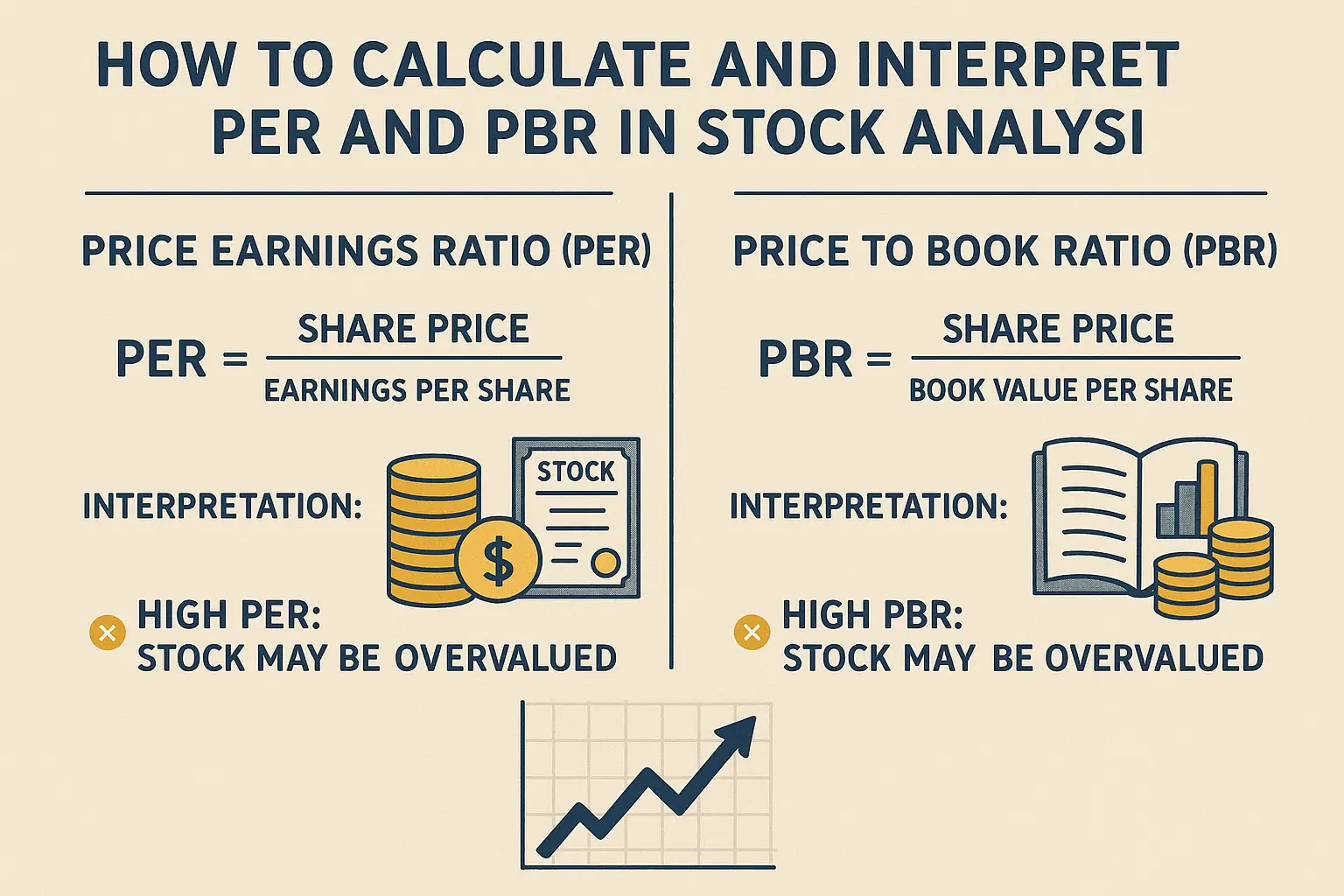
Understanding PER (Price to Earnings Ratio)
PER is calculated by dividing the stock price by earnings per share (EPS).
A low PER generally suggests the stock is undervalued,
with stocks below 10-15 often regarded as undervalued.
However, a low PER alone does not guarantee a good investment;
one must also assess earnings quality,
growth prospects,
and one-time factors.
Using PBR (Price to Book Ratio)
PBR divides stock price by book value per share,
and a PBR below 1 implies the market values the company below its net asset value.
When selecting companies with strong asset bases,
PBR serves as a useful tool to ensure a margin of safety.
Combined Use of PER and PBR
Using both metrics together enhances the likelihood of identifying undervalued stocks
with a sufficient margin of safety relative to intrinsic value.
For example, screening for companies with low PER and PBR under 1
can systematically identify undervalued value stocks.
This screening method aligns with Peter Lynch's use of PEG ratio,
balancing growth and value.
Sectors and Themes to Watch: Focus on Financials and Small Caps
Given current market conditions, many undervalued stocks by PER and PBR criteria
are found in financial and technology sectors.
Undervalued Appeal of the Financial Sector
Despite interest rate volatility,
banks and insurers show improved asset quality,
with many trading below book value (PBR < 1).
Especially in rising rate environments,
expectations of improved net interest margins (NIM) enhance their long-term attractiveness.
Finding Undervalued Growth Small Caps
Among small caps, undervalued growth stocks with low PER and PBR
present significant investment opportunities.
Recent policy shifts increasing support for SMEs and startups
make it worthwhile to explore growth potential in sectors familiar from daily life.
For deeper insights, see
Investment Insights on the Semiconductor Industry in the AI Era.

Insights from Investment Principles: Margin of Safety and Long-Term Focus
Securing a margin of safety, a core tenet of value investing,
is crucial when using PER and PBR metrics.
Following Warren Buffett and Benjamin Graham's philosophy,
focus should be on stocks sufficiently undervalued relative to intrinsic value.
At the same time, considering Jesse Livermore's trend-following principle to confirm momentum
and applying quick stop-loss or waiting when uncertain is effective for risk management.
Using the PEG ratio to balance growth and value from a long-term perspective
aligns well with Peter Lynch's investment philosophy.
Ray Dalio's asset allocation strategy and risk parity model remind us
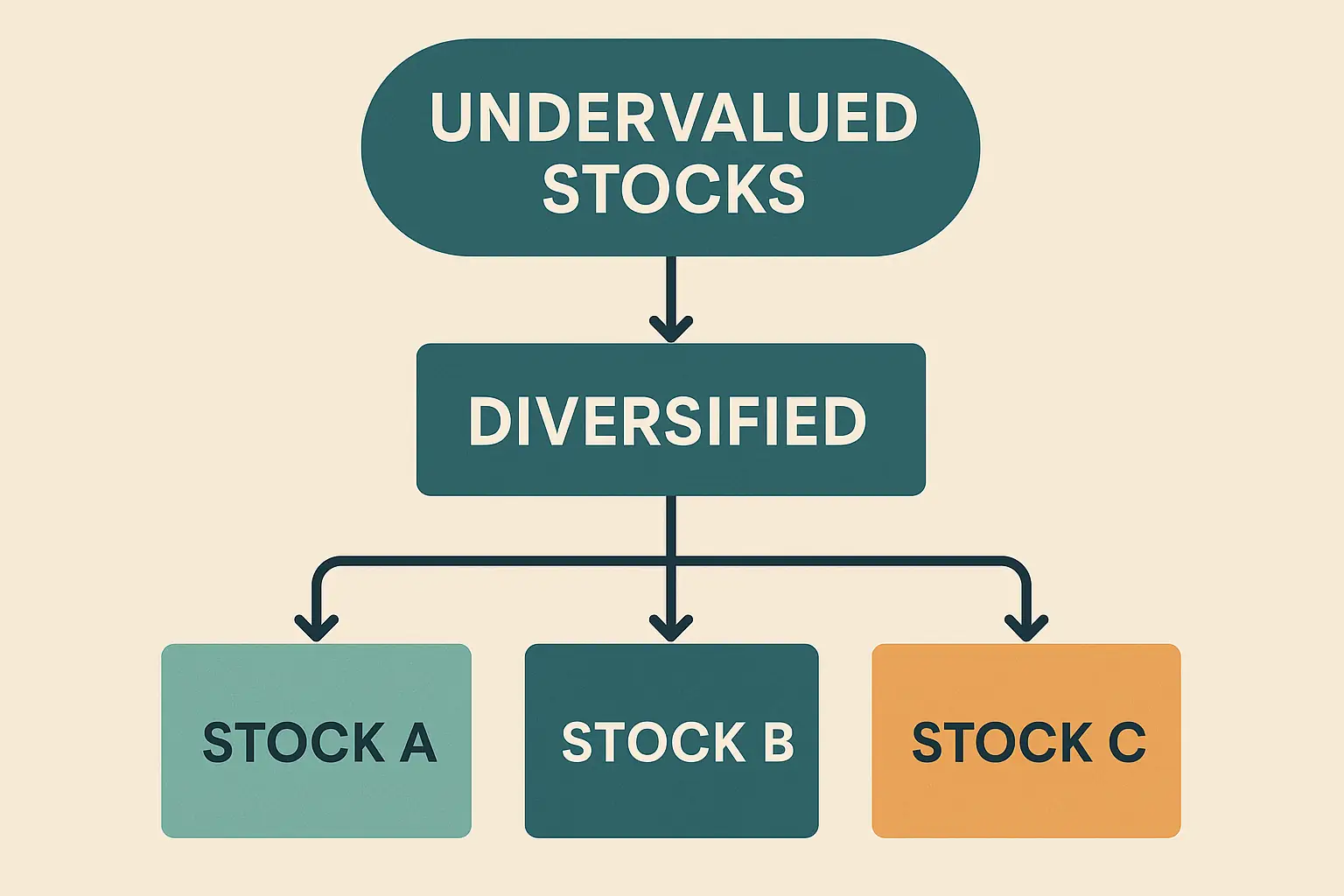
that even portfolios focused on undervalued stocks require diversification and risk balancing.

Personal Portfolio Strategy: Balanced Composition Focused on Undervalued Stocks
My portfolio is built around stocks with both low PER and PBR,
with a focus on sector diversification to reduce risk.
For example, I allocate balanced weights among financials, technology,
and selected growth small caps to navigate uncertainty.
I consider it important to reassess PER and PBR monthly
and rebalance swiftly according to market conditions.
In the long run, I hold stocks with confirmed intrinsic value recovery and upward momentum,
while adopting a wait-and-see approach during uncertain times.
If you are curious about balancing value and growth investing, I recommend reading
Value Investing vs Growth Investing — Which Style Suits Me?.
Conclusion: Elevate Your Investment Strategy with Undervalued Stock Screening
Screening undervalued stocks using PER and PBR goes beyond mere numbers,
shining in understanding investment principles and market dynamics.
In uncertain market environments, securing a margin of safety
and building a balanced portfolio that considers growth potential
is a key challenge for individual investors.
Refer to the practical screening guide and investment principles shared here
to take your investment strategy to the next level!
References
Services by Botonglee