How to Turn an AI Draft Into Your Own Work: A Four-Step Editing Record
An AI tool can produce a headline, an outline, and a complete article in seconds. The result may sound polished, balanced, and ready to publish. Yet many of these drafts have a peculiar weakness: even when the sentences are competent, it is difficult to tell who made the decisions behind them.
The missing layer is not merely better wording. It is editorial judgment. Someone still has to decide what the piece is for, which claims deserve another check, what should be removed, and what position the final article is willing to stand behind.
This guide offers a four-step method for turning an AI-generated draft into work you can responsibly call your own. It is designed for everyday articles, newsletters, reports, and scripts. You do not need an elaborate documentation system. A short record of the decisions that changed the draft is enough to make the process more deliberate.
Go to guideRead more Botonglee AI & Tech articlesExplore practical ways to put human judgment ahead of the tool.Treat the AI draft as material, not the finished object
The first output is often convincing because it follows familiar patterns. It introduces the topic, presents a tidy sequence of points, and ends with an encouraging conclusion. That fluency can make completion feel closer than it really is.
What the draft usually lacks is the full situation around the assignment. It may not understand the reader’s actual decision, the reason this piece matters today, or the consequences of publishing an unsupported recommendation. Even a detailed prompt cannot settle every editorial question in advance. Many of those questions become visible only after you see the result.
Step 1: Rewrite the job of the piece in one sentence
Before editing the draft, write a one-sentence assignment for the article. “Explain how to use AI well” is too broad. “Show a nontechnical writer the four places where human review must change an AI draft before publication” gives you a reader, a boundary, and a useful outcome.
This sentence becomes the editing baseline. An interesting example can be removed if it does not help the assignment. A short paragraph can stay if it gives the reader a decision they can use. Length and completeness stop being the main measures; relevance to the job becomes the measure.
Step 2: Separate facts from interpretation

AI prose often joins a factual statement and an interpretation so smoothly that they feel equally certain. During editing, split them into two columns. Put information that can be checked against an external source in one column. Put your priorities, explanation, and recommendation in the other.
The fact column includes dates, numbers, regulations, product capabilities, quotations, and research findings. Mark anything that lacks a source or could have changed recently. Until it is checked, reduce the certainty of the wording or leave it out. A plausible connection created by the model is not automatically a verified relationship.
The interpretation column answers different questions. Why does this fact matter for this reader? Which trade-off deserves attention? What has your own work shown you? A citation cannot make those decisions for you. Two editors can accept the same facts and still prioritize speed, safety, cost, accessibility, or creative control differently.
Step 3: Record what you removed, not only what you kept
Most editing records preserve only the final version. But human judgment is often more visible in the material that was rejected. Note why you removed an exaggerated promise, an unsupported number, an irrelevant case study, or a conclusion that did not match your experience.
Suppose the draft says that a tool “dramatically improves efficiency,” and you change it to “can reduce the time needed to produce a first draft.” The second sentence is narrower. It describes the part of the process you can reasonably observe without promising an outcome for every user. That revision is not cosmetic. It changes the scope of the claim.
Removal notes become reusable. If you repeatedly delete inflated benefits, unnecessary introductions, or unsourced statistics, those patterns can become your personal editorial rules. Knowing what you routinely correct often improves future work more than adding another page of instructions to the prompt.
Step 4: Make your experience and responsibility visible
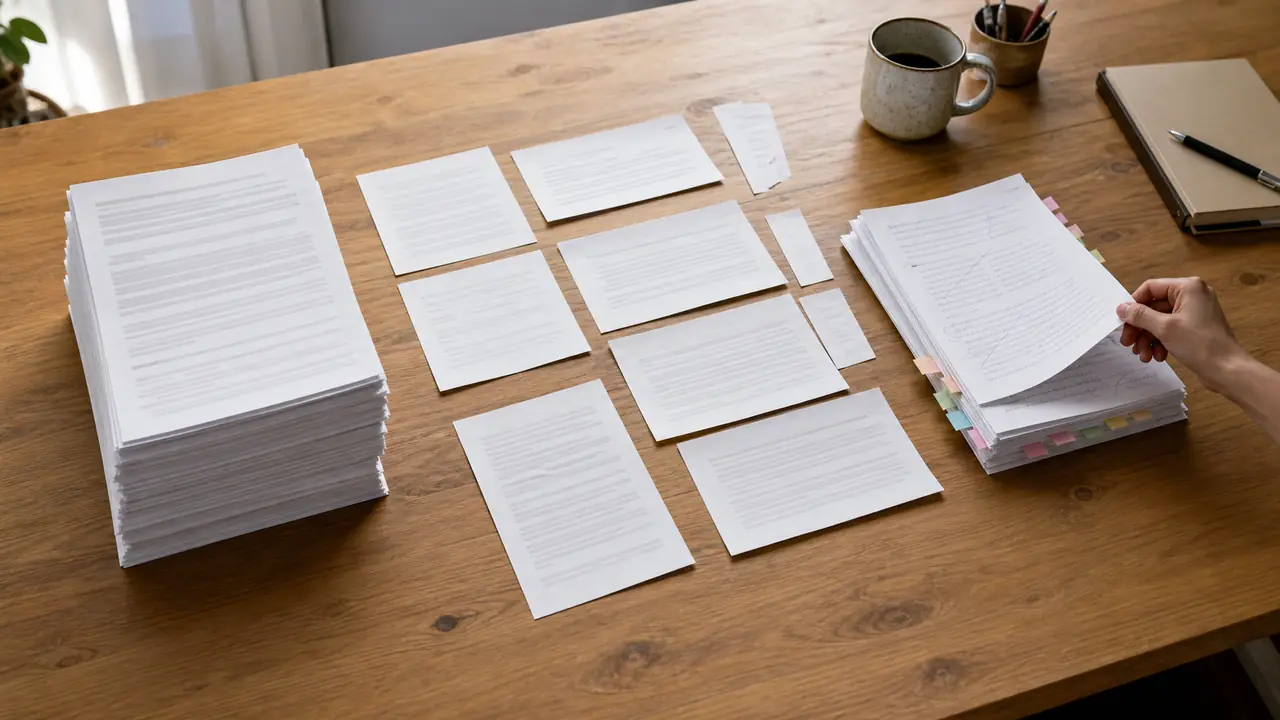
Avoiding generic AI prose does not require decorative emotion or a long personal story. It requires visible decisions. The reader should be able to see what the writer prioritizes and how the work is divided between the tool and the person.
“Use different methods depending on the situation” does not reveal much. “For a public article, verify the factual claims before spending time polishing the tone” establishes a priority. “Use AI efficiently” is equally vague. “Let the tool propose an outline, but choose the examples and final conclusion yourself” shows an actual division of responsibility.
Before publishing, ask one final question: if a reader challenges this sentence, can I explain why it is here? Recheck numbers you cannot defend, specialist terms you do not understand, and actions you would not responsibly recommend. The person pressing Publish remains the final decision-maker, regardless of how much text the tool produced.
When the editing log matters more than the prompt log
A prompt log shows what you asked the system to do. It does not show which output you selected, which claims you checked, or why you changed the conclusion. For public work, keep a short editing log beside the prompt.
This record does not automatically create a legal right or guarantee ownership. The terms of the tool and the rules of the publishing platform still require separate review. Its practical value is simpler: it makes human purpose, selection, and revision easier to explain, while improving quality and accountability inside the workflow.
A 15-minute editing routine for today
Spend the first two minutes writing the one-sentence job of the piece. For the next five minutes, mark factual claims and separate anything that needs a current source, a number check, or a closer reading of the original material.
Use the following five minutes to find the three most generic sentences. Rewrite each one so that a priority, a concrete action, or a real boundary becomes visible. Replace “use it appropriately” with the conditions that define appropriate use. Replace “improve productivity” with the specific stage of work that became faster or clearer.
There is no need to build a perfect editorial system before you begin. For one draft today, save one purpose sentence, three fact checks, three substantial rewrites, and four removal notes. The essential question is not how many words AI supplied. It is whether the final judgments in the published piece clearly belong to a person who can explain them.
AI can accelerate the production of raw material. It cannot take responsibility for the direction of the piece, the limits of a claim, or the decision to publish. A short record of those human choices turns the draft from something to copy into something to think with.
Services by Botonglee