India's Stock Market: Could It Become the Next Growth Engine Over the Next Decade?
India's stock market offers individual investors an attractive growth opportunity, but it also comes with a variety of risks. In this article, we’ll take a detailed look at recent trends in the Indian economy, highlight key industry sectors, discuss investment implications from a principles-based perspective, and share practical portfolio strategies. If you’re interested in investing in India’s stock market, I hope you’ll find these insights useful.
Recent Trends in the Indian Economy
Over the past five years, India’s economy has posted an average annual GDP growth rate of over 7%, making it one of the fastest-growing emerging markets. According to the World Bank and IMF, India has consistently maintained a growth rate of 6.5–7% since 2021, even amid a global economic slowdown. Three main drivers underpin this growth: a rising population, rapid urbanization, and advances in IT and technology industries.
With a population exceeding 1.4 billion, India boasts a large and youthful workforce. Urbanization is projected to surpass 50% by 2025, fueling changes in consumption patterns and driving growth in infrastructure and service industries. The middle class is expanding rapidly, especially in major cities, strengthening the domestic demand-driven structure of the economy.
On the innovation front, India’s IT services sector has established itself as a global outsourcing hub. Indian companies are showing strong competitiveness in software development, cloud services, fintech, and more. Government initiatives to expand digital infrastructure and nurture startups are also key pillars of economic growth.
This favorable macroeconomic environment bodes well for India’s stock market. However, inflationary pressures, interest rate volatility, and geopolitical uncertainties can increase short-term market volatility. Therefore, it’s essential to closely monitor economic indicators and policy changes when investing.
> Recently, global markets have seen yield curve inversions between short- and long-term interest rates. This is often interpreted as a signal of a potential recession, so it’s important to consider this risk in your investment decisions. For more details, see What the Yield Curve Inversion Tells Us About Recession Signals.

Key Sectors to Watch
Several sectors in the Indian stock market deserve particular attention: IT and software services, healthcare, and consumer goods. Let’s explore the growth drivers and current market landscape for each.
IT and Software Services
India’s IT services industry occupies a leading position in the global outsourcing market. As demand for software development and maintenance from US and European companies continues to rise, major Indian IT firms such as Tata Consultancy Services (TCS), Infosys, and Wipro are driving stable revenue growth and share price appreciation.
Recently, innovative startups in fintech, cloud computing, and artificial intelligence (AI) have also been making their mark. The Indian IT sector is moving beyond simple outsourcing to strengthen its own innovation capabilities, positioning itself as a core engine of stock market growth over the next decade.
Healthcare
Demographic shifts, rising middle-class living standards, and an aging population are boosting demand for medical services, pharmaceuticals, and biotech. Local pharmaceutical companies and hospital chains are expanding, while telemedicine and digital healthcare platforms are gaining traction.
Notably, Indian firms collaborating with global pharmaceutical companies are playing a key role in technology transfer and clinical trials, offering significant growth potential. Healthcare is seen as a stable long-term investment, closely tied to demographic trends.
Consumer Goods
Urbanization and a growing middle class are driving increased consumer spending, giving India’s consumer goods industry strong growth momentum. Fast-moving consumer goods (FMCG), e-commerce, and financial services are expanding rapidly, with mobile payments and online shopping fueling sales growth.
Both domestic and international consumer brands with high recognition are accelerating their push into the Indian market, making related stocks increasingly attractive. The steady revenue growth of companies offering everyday products and services provides a clear signal of robust expansion.

Investment Principles: Key Takeaways
When approaching the Indian stock market, it’s advisable to base your strategy on three core investment principles: value investing, asset allocation, and long-term investing.
Value Investing: Finding Undervalued Companies
Due to India’s rapid growth, some stocks trade at high valuations. This makes it important to seek out companies that are undervalued relative to their intrinsic worth. Use fundamental financial metrics like the price-to-earnings ratio (PER) and price-to-book ratio (PBR) to objectively assess company fundamentals and select stocks with a sufficient margin of safety.
Some IT and healthcare companies have low price/earnings-to-growth (PEG) ratios, offering both long-term growth and valuation stability. For more on value investing, check out How to Find Undervalued Stocks Using PER and PBR.
Asset Allocation: Diversifying Risk
Applying Ray Dalio’s risk parity and all-weather portfolio philosophy, asset allocation is essential when investing in India. The Indian stock market carries significant country risk, currency volatility, and policy risk, so it’s important to balance Indian equities with domestic and international stocks, bonds, and cash-like assets.
Combining dollar-denominated ETFs, direct investments in Indian stocks, and mutual funds can help reduce risk and build a flexible portfolio that can weather market volatility—key for long-term investing.
Long-Term Investing: Maximizing Growth Potential
Following Peter Lynch’s principle of investing in what you know, it’s important to understand India’s unique economic and cultural characteristics and to consistently monitor the market. India’s demographic structure, consumption patterns, and industrial development are unlikely to change overnight, so a long-term, steady investment approach is most effective.
Rather than chasing short-term momentum, patient and systematic investing is more likely to yield strong risk-adjusted returns. Of course, if you’re unsure about market direction or anticipate excessive volatility, it’s wise to cut losses quickly or wait on the sidelines as needed.

Personal Thoughts and Portfolio Strategy
In my own portfolio, I maintain an allocation of over 30% to Indian equities, reflecting my confidence in India’s long-term growth potential. Here’s how I approach this:
While India’s stock market offers significant growth opportunities, it’s also highly volatile. A disciplined, principle-based strategy is essential, and if you lack experience or information, it’s wise to devote more time to research and information gathering.
If you want the latest insights and in-depth analysis on the Indian stock market, I also recommend subscribing to a quality newsletter.
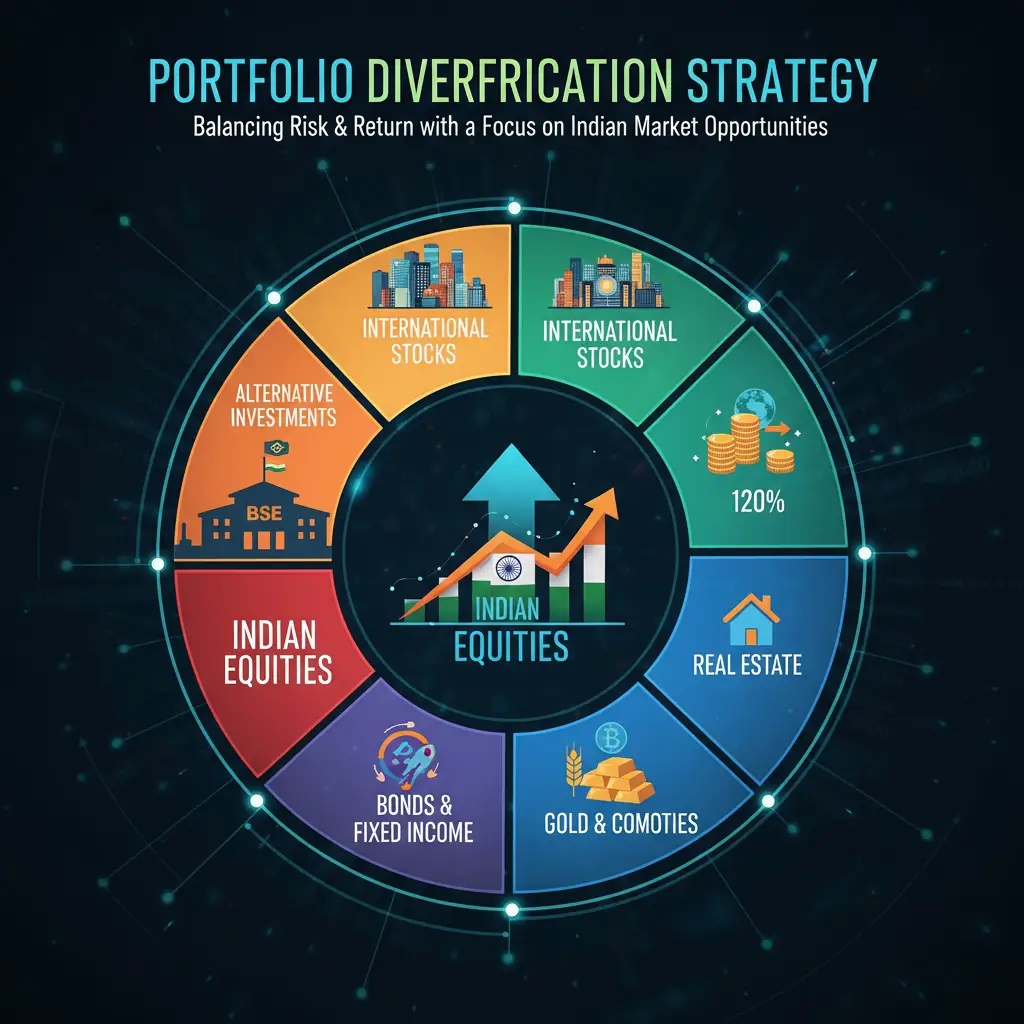
India’s stock market, driven by its population, technology, and consumption, has the potential to become a major growth engine for the global economy over the next decade. However, it’s essential to pay close attention to valuations, risk management, and to maintain a long-term perspective. Building a balanced portfolio based on a mix of value investing, trend following, and asset allocation is the key to success.
Be sure to watch for market signals such as yield curve inversions, which may indicate a potential recession, and adjust your investment strategy accordingly. For a deeper analysis, see What the Yield Curve Inversion Tells Us About Recession Signals.
If you’d like more information and insights on the Indian stock market, consider subscribing to a newsletter. Regular updates and in-depth analysis can help support your successful investment journey as an individual investor.
Reference Links

Services by Botonglee