Interest Rate Cuts and the Stock Market: How to Analyze Historical Patterns for Investment Insights
When interest rates are cut, it's only natural for investors to wonder:
This article will help you clearly understand the impact of interest rate cuts on the stock market and the historical patterns that have emerged. With this knowledge, you'll be able to set concrete criteria for which stocks and sectors to focus on, as well as portfolio strategies to consider during periods of rate cuts. Rather than just offering a market outlook, this guide provides actionable checklists and ideas to help you turn insights into real investment decisions.
Here's how the content is structured:
Recent Market Trends: Understanding Rate Cuts and the Broader Economy
In June 2026, the Bank of Korea lowered its base rate from 3.25% to 2.75%, marking the first reversal after a series of rate hikes since 2022. This policy move was a response to concerns about economic slowdown, delayed consumer recovery, and the need to stabilize financial markets. Following this decision, the Korean won/US dollar exchange rate stabilized, and the KOSPI index rose nearly 2.5%, signaling improved investor sentiment.
Globally, the US Federal Reserve is also easing its rate hike stance, leading investors to pay closer attention to the possibility of rate cuts. These policy shifts have provided positive momentum for stock markets, especially driving gains in technology stocks. However, with inflation cooling but the labor market still strong, investor sentiment remains cautious.
The main effects of a rate cut include lower borrowing costs for companies and reduced debt burdens for consumers. This can stimulate the real economy, and in the stock market, a lower discount rate increases intrinsic value, creating a favorable environment for long-term investors. Still, in the short term, concerns about economic slowdown can lead to heightened volatility, so a balanced approach is essential.
For a deeper dive into market trends and the impact of rate cuts on stocks, see Yahoo Finance's analysis article.
Historical Patterns of Rate Cuts: Case Studies and Investment Implications
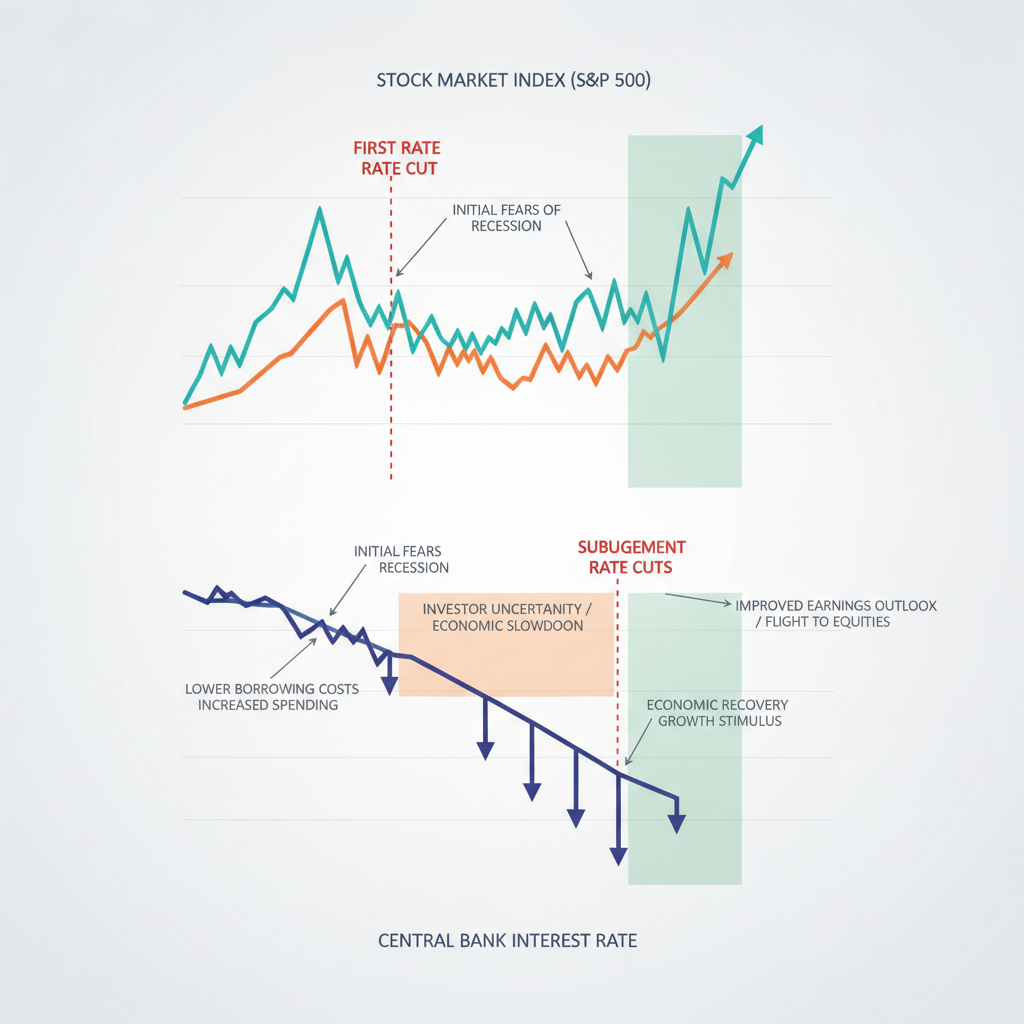
Historically, rate cuts have generally had a positive effect on the stock market. A prime example is the US Federal Reserve's aggressive rate cuts following the 2008 financial crisis. While there was short-term market turmoil, by 2009 the stock market rebounded strongly, ushering in an era of low interest rates. During this period, value stocks tended to outperform momentum stocks as undervalued companies were re-rated.
Similar patterns have been observed in recent rate cut cycles. For instance, after the rate cut announcement in the first half of 2026, the KOSPI rebounded quickly, and technology and growth stocks shifted into a strong uptrend, expanding momentum investment opportunities. However, in times of lingering uncertainty, stocks that surged rapidly in the short term often required quick profit-taking or a wait-and-see approach.
Historical data shows that the 1–3 months immediately following a rate cut are typically volatile, but over a 6–12 month horizon, markets tend to rally. This suggests that asset allocation and risk parity strategies, like Ray Dalio's All Weather Portfolio, can offer stable returns during such periods.
Additionally, during rate cut cycles, focusing on "industries and growth stocks you know," as Peter Lynch recommends, increases your chances of success. It's important to identify stocks with reasonable PEG ratios relative to growth, and to incorporate observable trends from daily life into your investment decisions.
From a technical analysis perspective, confirming momentum on the charts and strictly adhering to Jesse Livermore-style stop-loss timing can help manage risk during volatile periods.
Sectors and Themes to Watch: Investment Opportunities During Rate Cuts
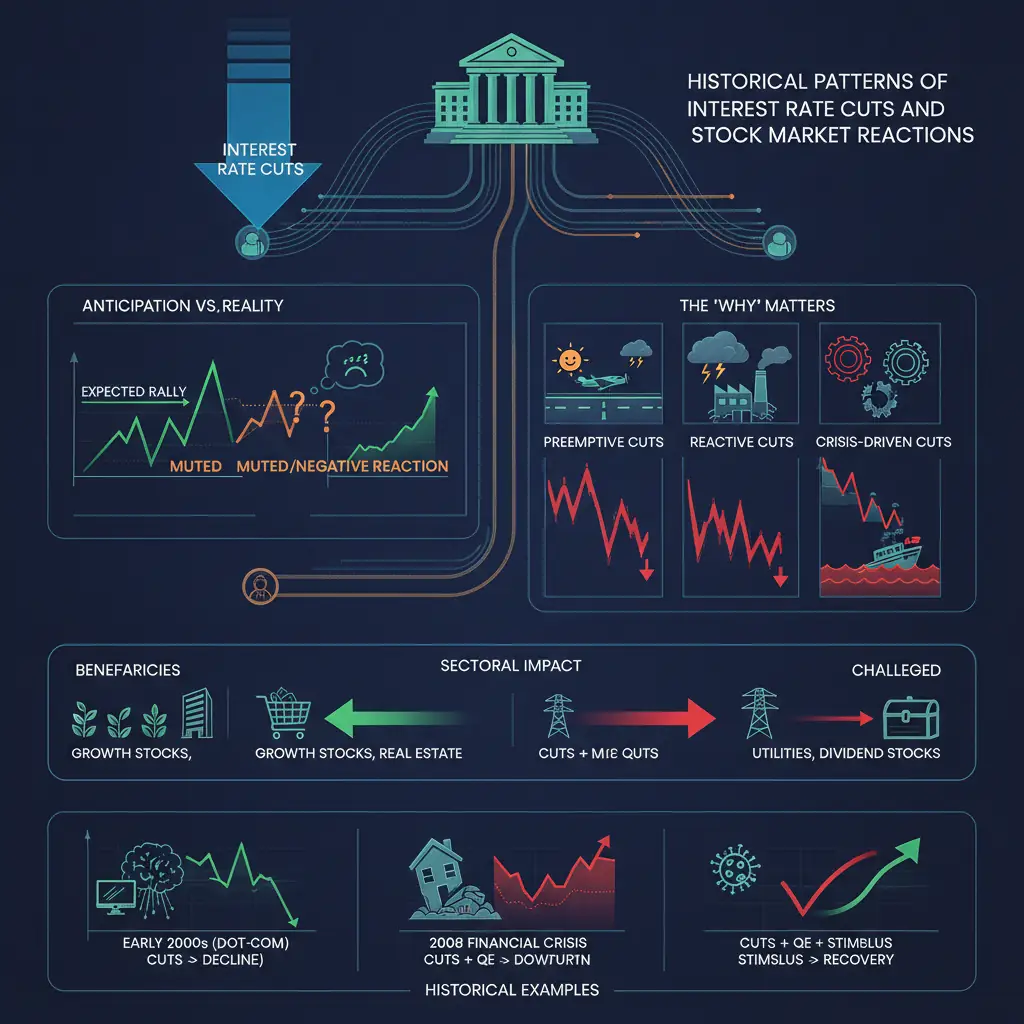
Certain sectors consistently attract attention during periods of rate cuts.
First, the financial sector. While rising rates generally benefit financial stocks, rapid rate cuts can squeeze banks' net interest margins. However, in a gradual easing cycle, financial companies with lower risk profiles, such as insurers and asset managers, often perform well due to increased lending and expectations of economic recovery.
Second, real estate-related stocks. Lower loan rates can revive real estate investment and housing demand, boosting REITs and construction stocks. For more details, see the REITs Investment Guide.
Third, technology and consumer sectors. Lower rates reduce the discount rate for growth stocks, boosting their valuations, and encourage consumer spending, driving strength in future-oriented industries like IT, internet, and electric vehicles. Hardware and service themes such as AI, cloud, and semiconductors are particularly benefiting from this momentum.
Lastly, ESG (Environmental, Social, Governance) related stocks are emerging as long-term growth themes. As rate cuts stimulate the economy, green energy, sustainable consumer goods, and socially responsible investment (SRI) stocks are being recognized as promising mid- to long-term plays.
When selecting stocks during a rate cut cycle, it's essential to carefully review both the fundamentals and momentum of each sector.

Insights from Investment Principles: Balancing Stability and Growth
Rate cuts are not just about short-term momentum—they also tie into long-term investment principles. From the value investing perspective of Benjamin Graham and Warren Buffett, lower base rates mean lower discount rates, which significantly increases intrinsic value. This creates a favorable environment for holding undervalued stocks with a strong margin of safety over the long term.
Applying Jesse Livermore's trend-following principles, it's effective to quickly ride stocks that establish clear uptrends after a rate cut announcement. However, when trends are uncertain or volatile, swift stop-losses and a wait-and-see approach are necessary, making technical analysis and psychological discipline crucial.
As Peter Lynch suggests, using the PEG ratio to find stocks with reasonable valuations relative to growth is key. Paying attention to consumer trends and industry changes you observe in daily life can also inform better investment decisions.
From Ray Dalio's asset allocation and risk parity perspective, it's important to revisit your All Weather Portfolio during rate cut cycles. Adjust the balance between stocks, bonds, and cash, and consider exposure to alternative assets. Typically, during rate cuts, increasing your equity allocation and including some inflation-hedged bonds is recommended.
Ultimately, rather than sticking rigidly to a single investment principle, a blended approach that incorporates value investing, trend following, growth stock selection, and asset allocation is both practical and effective.

Personal Investment Strategy: Portfolio Review and Response During Rate Cuts
As of July 2026, in the early phase of rate cuts, I am also making some adjustments to my portfolio. From an asset allocation perspective, I've increased my equity exposure from 50% to around 60%. I maintain a mix of growth and value stocks: for growth, I focus on stocks with a PEG ratio below 1.5 and strong earnings growth potential over the next three years; for value, I select financially sound companies trading at least 20% below their intrinsic value.
To manage short-term volatility, I set strict stop-loss lines at 5–7% for each position and respond quickly if technical indicators weaken. Among tech stocks, I track AI and semiconductor equipment companies for momentum, while in the financial sector, I maintain a focus on insurers and asset managers.
I also keep a portion of my portfolio in bonds and cash to ensure buying power during market corrections. The key is to "wait and observe" when conviction is low, as uncertainties remain around further rate cuts and the severity of economic slowdown.
For additional resources, I recommend the article How to Save Money on Banking During Rate Hikes, as managing financial costs can significantly impact your investment returns. Asset management outside of investing is just as important.
If you want a balanced understanding of value and growth investing, check out Value vs. Growth Investing: Finding the Right Style for You to review strategies that fit your personal investment style.

Interest rate cuts mark a significant turning point in the stock market. However, rather than relying solely on the simple equation "rate cut = stock rally," it's more important to ground your actions in historical data, sound investment principles, and a robust personal investment philosophy. I hope this article serves as a practical guide for reviewing your own investment principles and making the most of opportunities during rate cut cycles.
For more investment insights and strategies, be sure to check out other related articles on the blog.
Reference Links
Services by Botonglee