Investing in the Semiconductor Industry in the AI Era: Insights for Building a Successful Portfolio
With the rapid advancement of AI technologies and the acceleration of digital transformation, the semiconductor industry has become a core infrastructure of the modern economy. For individual investors, these changes represent more than just a technological trend—they are now central to portfolio strategy. The semiconductor sector is a critical area that requires a blend of various investment principles, including value investing, trend following, and asset allocation. In this article, we take a deep dive into recent market trends, key semiconductor companies to watch in the age of AI, and practical investment principles and strategies.
This post incorporates long-term value investing philosophy, momentum strategies, Peter Lynch’s approach to growth stock discovery, and Ray Dalio’s asset allocation principles, offering actionable insights for individual investors.
Recent Market Trends: Opportunities and Challenges in the Semiconductor Industry
As we move into the first half of 2026, the semiconductor market continues to see steady demand growth, driven by the proliferation of advanced technologies such as AI, IoT, and autonomous vehicles. The explosive expansion of global data centers and cloud services is fueling increased investment in high-performance AI chips, which has become a major driver of stock price appreciation.
However, supply chain issues and geopolitical risks still present significant uncertainties. The ongoing US-China tech rivalry and restrictions on the supply of materials and equipment are contributing to price volatility, requiring investors to approach the sector with caution. Industrial policies in major countries like the US, South Korea, and Taiwan are also reshaping the industry landscape. For example, South Korea’s semiconductor policy is focused on domestic retention and supply chain stabilization (Korea Economic Daily). (Note: South Korea is one of the world’s leading semiconductor producers, along with the US and Taiwan.)
Key Trend Summary
Given these divergent trends within the semiconductor sector, it’s essential to consider both macroeconomic movements and the performance and technological competitiveness of individual companies.

Key Semiconductor Companies and Areas to Watch
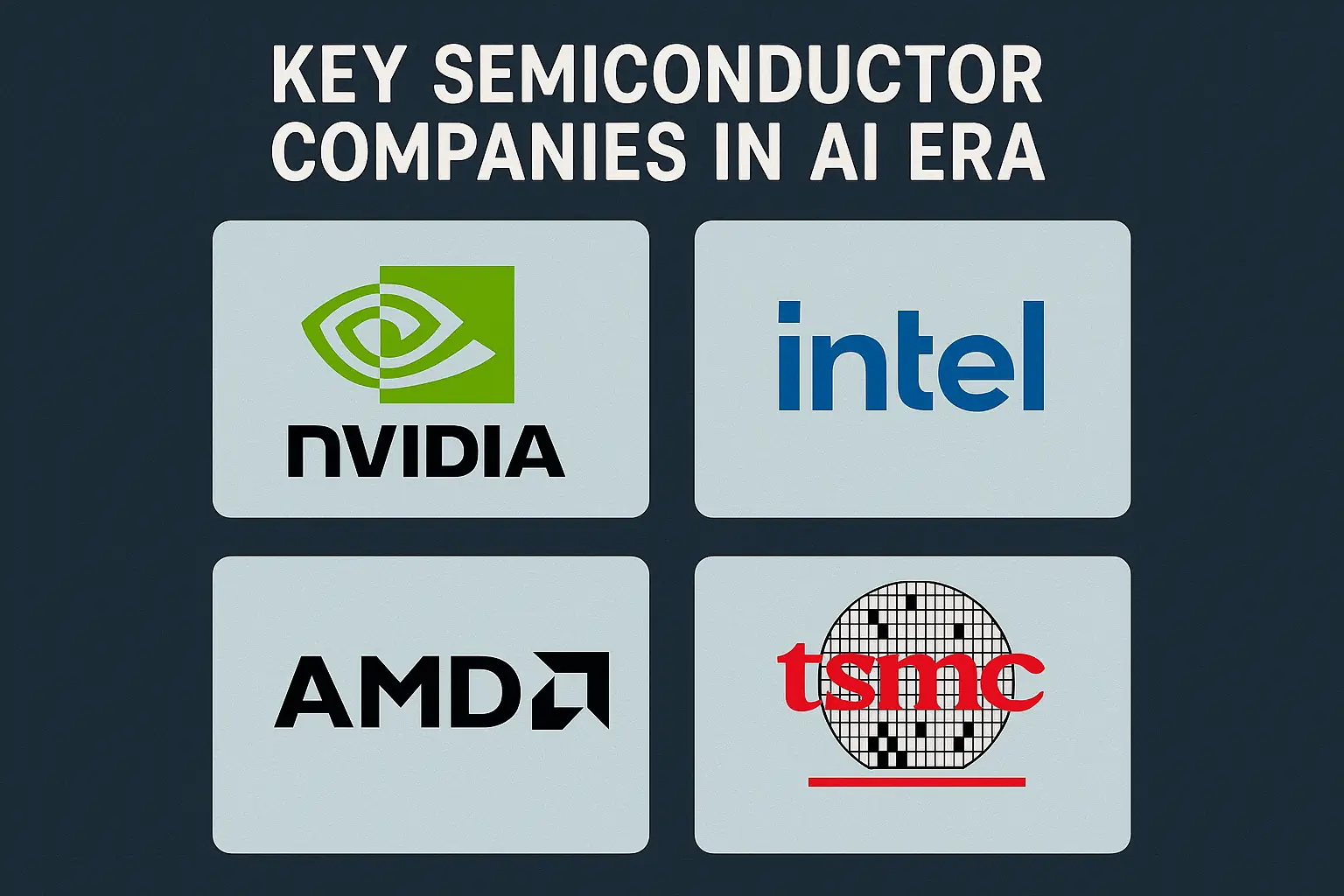
In the AI era, the semiconductor industry is moving beyond the traditional race for capacity and speed, focusing instead on developing chips optimized for AI computation. For individual investors, the key is to identify companies with strong growth potential and technological leadership.
Leading Companies and Technology Trends
High-Growth Potential Areas
With government support policies in place, the investment environment for these companies is improving. The US, for example, is supporting large-scale R&D and factory construction through the ‘CHIPS Act,’ while South Korea is also strengthening its semiconductor ecosystem.
Implications from an Investment Principles Perspective
The semiconductor sector is characterized by rapid technological change and high volatility. Individual investors should balance value investing with trend-following strategies to effectively manage risk.
Value Investing: Assessing Intrinsic Value and Growth
Trend Following: Leveraging Momentum and Quick Response
Risk Management and Asset Allocation

Personal Thoughts and Portfolio Strategy
I view the semiconductor industry as a long-term growth sector driven by AI, and I am gradually increasing my investment allocation. Rather than concentrating solely on a few names, I prefer a hybrid strategy that combines diversification and risk management.
Long-Term Investment Approach
Diversification and Risk Management
Flexible Portfolio Adjustments
Referring to Charlie Munger’s investment checklist (Charlie Munger’s Investment Checklist), which aligns with my own investment philosophy, I am reminded of the importance of asking myself, “Do I truly understand this industry?” and “Is the price reasonable compared to intrinsic value?”—and of applying strict standards to my decisions.
In Conclusion
In the AI era, the semiconductor industry is set to play an increasingly vital role in individual investor portfolios. However, given the rapid pace of technological change and persistent global risks, it is essential to go beyond simple trend-following and instead focus on value assessment, growth potential, systematic risk management, and asset allocation strategies.
If you’re interested in more in-depth investment insights and specific portfolio strategies, consider subscribing to the newsletter. With regular updates and practical guidance, we can navigate even the most turbulent markets with confidence.
Reference Links

Services by Botonglee