Investment Insights: Comparing KOSPI and S&P 500 – The Optimal Asset Allocation Strategy for Korean Investors
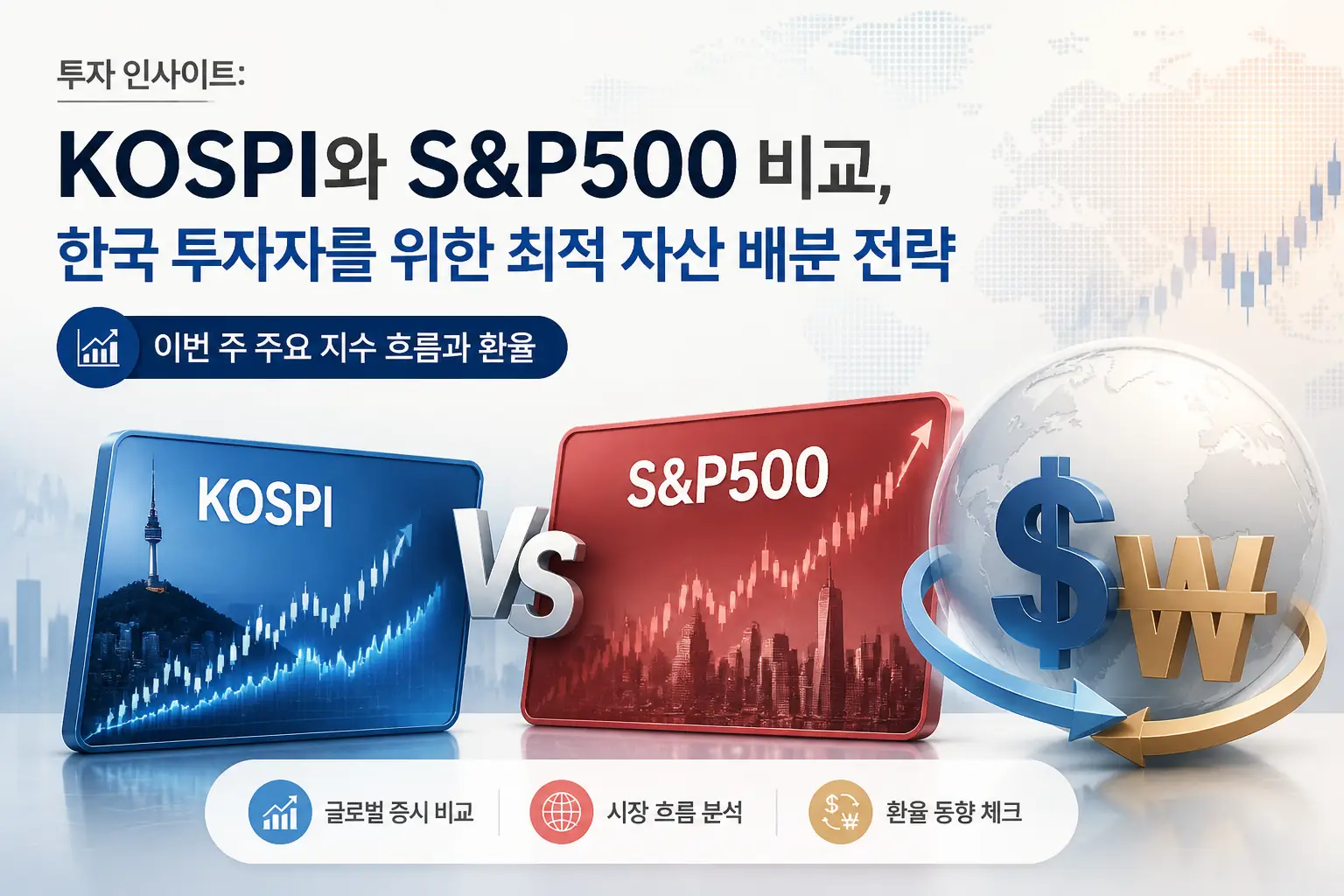
If you are a Korean stock market investor, you can’t ignore the recent trends in the KOSPI and S&P 500 indices. This week, the KOSPI plummeted by 4.95% to 6,268.74, while the S&P 500, the benchmark US index, rose by 1.18% to 7,577.81. This divergence is not just a matter of time zone or market environment—it offers crucial implications for how Korean investors should approach asset allocation.
By reading this article, you’ll gain a clear understanding of the recent market movements and key news affecting both KOSPI and the S&P 500, see a comparative analysis of the two indices, and discover concrete, optimal asset allocation strategies tailored for Korean investors. Especially in today’s volatile environment, we’ll break down which strategies are most effective and highlight the key factors to watch in the coming week.
Here’s how this article is structured: First, we summarize this week’s market trends and currency fluctuations. Second, we select and analyze three major news stories, explaining their market impact and what they mean for investors. Third, we compare the structural differences between KOSPI and the S&P 500 and analyze corresponding investment strategies. Finally, we wrap up with key points to watch next week and practical closing insights to help you set a realistic investment stance.
Go to guideSee the Optimal Allocation StrategyComparative analysis of KOSPI and S&P 500This Week at a Glance: Key Index Movements for KOSPI and S&P 500
This week, the contrast between domestic and international stock markets was striking. As of August 3, the KOSPI fell 4.95% from the previous week to 6,268.74, dropping into the low 6,200s. In contrast, the US markets surged ahead: the S&P 500 climbed 1.18% to 7,577.81, the NASDAQ soared 1.82% to 25,834.76, and the Dow Jones rose 1.08% to 53,053.03.
On the currency front, the KRW/USD exchange rate dropped 0.52% to 1,432.50 KRW per dollar, meaning the Korean won strengthened slightly against the US dollar. This is an unusual scenario, with Korean assets being sold off while the US stock market rallies.
The sharp decline in the Korean market was driven primarily by large-scale selling from foreign investors. The KOSPI, heavily weighted toward semiconductors and IT, came under particular pressure, dragging down the overall index. Meanwhile, the US market was buoyed by strong earnings from major tech companies, especially in the NASDAQ.
These divergent trends between domestic and international markets offer important clues for investors on how to view both markets and allocate assets accordingly.
This Week’s Key News & Analysis: Foreign Selling, US Tech Rally, Korean Policy Uncertainty
1. Surge in Foreign Investor Selling in Korean Stocks
The biggest issue this week was the massive sell-off by foreign investors. In July alone, foreigners net sold nearly 50 trillion KRW worth of Korean stocks—a major factor behind the KOSPI’s steep drop. This persistent selling reflects growing uncertainty and declining confidence in the Korean stock market.
Investor Perspective: When foreign selling is intense, it’s wise to focus on intrinsic value and margin of safety rather than chasing falling stocks. Having clear stop-loss rules is also crucial to manage heightened short-term volatility.
2. US Tech Stocks Re-Evaluated, S&P 500 Rises
In the US, tech stocks related to AI and cloud computing rebounded strongly. Amazon hit new highs on the back of increased AI investment, and Microsoft’s strong earnings further fueled the NASDAQ’s rally. As a result, both the S&P 500 and NASDAQ continued their upward momentum.
Investor Perspective: The US market’s strength supports considering a higher allocation to growth stocks in your portfolio. However, with valuations rising, it’s important to balance growth potential with price discipline.
3. Korean Economic Policy Uncertainty and Declining Investor Confidence
Recently, uncertainty around Korea’s economic policies has shaken investor sentiment. Mixed policy messages and the fallout from leveraged ETFs have eroded trust in the financial markets, while political uncertainty is also on the rise.
Investor Perspective: In times of policy uncertainty, it’s prudent to increase your allocation to safe assets and focus on risk management strategies to handle volatility, rather than making aggressive bets.
This week’s news highlights how investors should balance intrinsic value and market momentum, and how to interpret policy and global events. For a deeper dive into market trends and investment insights, see This Week’s Investment Insights: How to Effectively Interpret Market Trends and Major News.
Comparative Analysis: KOSPI vs. S&P 500 – Market Structure & Investment Strategies
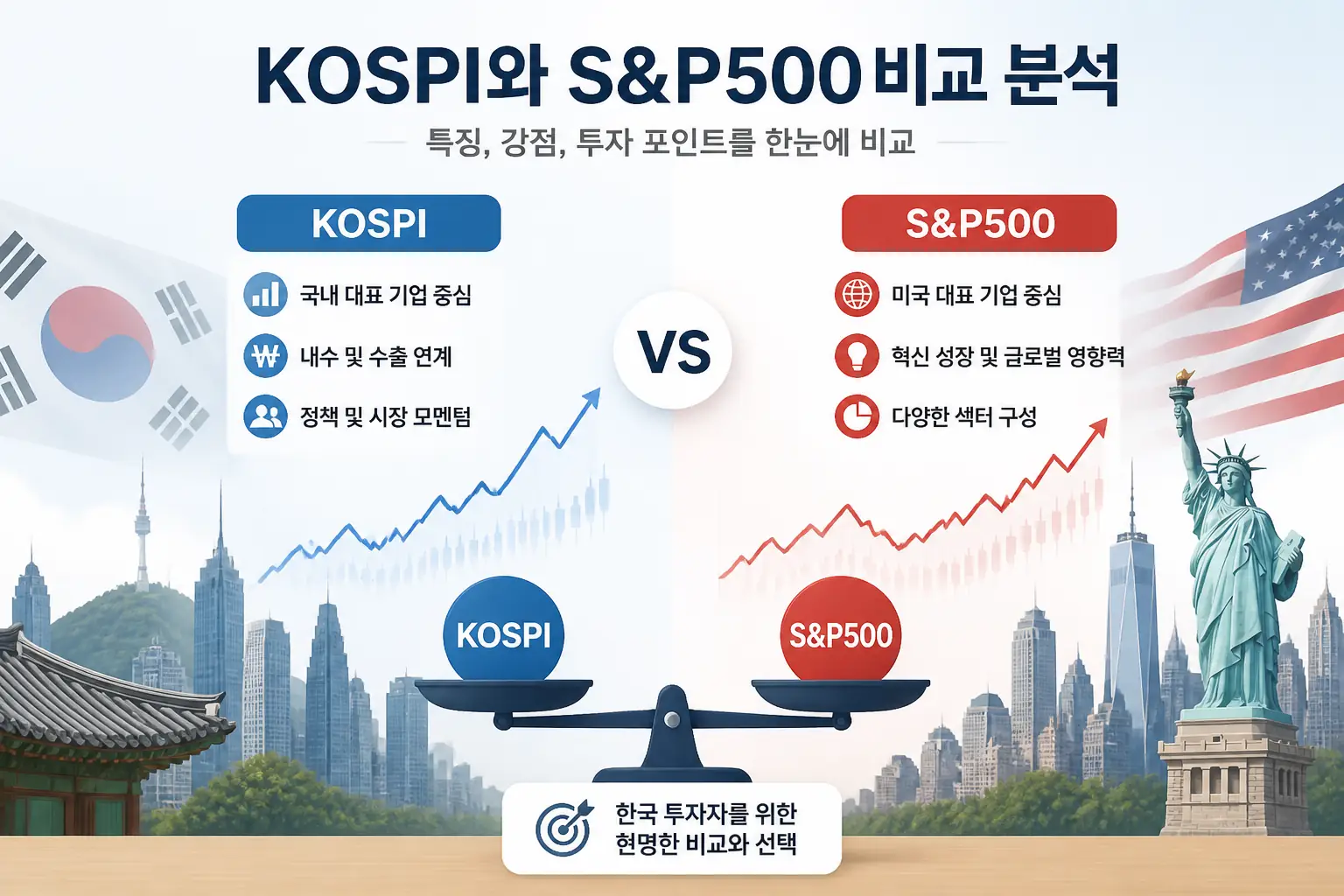
1. KOSPI: High-Risk, High-Reward Structure Centered on Semiconductors & Tech
The Korean stock market is highly dependent on semiconductors and IT. Recent corrections in the semiconductor sector and foreign selling have led to sharp declines in the KOSPI, showing how sector risk can heavily impact the entire index. Policy uncertainty has further dampened investor sentiment.
In this environment, analyzing intrinsic value and securing a margin of safety are essential. During sharp declines, flexible responses and clear stop-loss rules are necessary.
2. S&P 500: Diversified Sectors and Strong Growth Stocks
The US S&P 500 index is spread across a range of industries—finance, healthcare, consumer goods, IT, and more—making it relatively stable and less volatile. This week’s tech rally reaffirms the growth momentum, creating a favorable environment for selective investment in growth stocks.
Investors should maximize diversification and balance value and growth stocks, considering asset allocation from a long-term perspective.
3. Optimal Allocation Strategy: Balancing Diversification and Timing
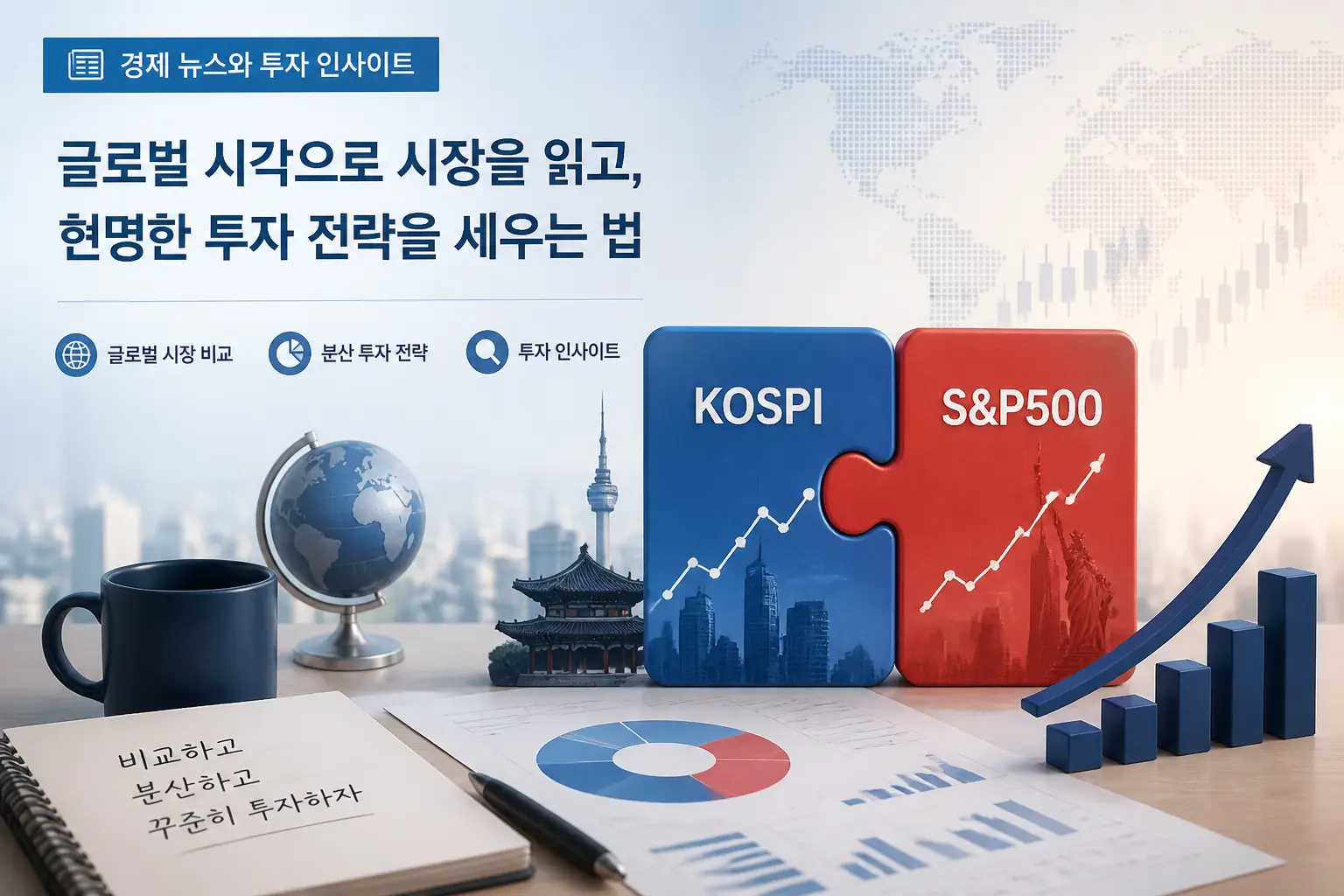
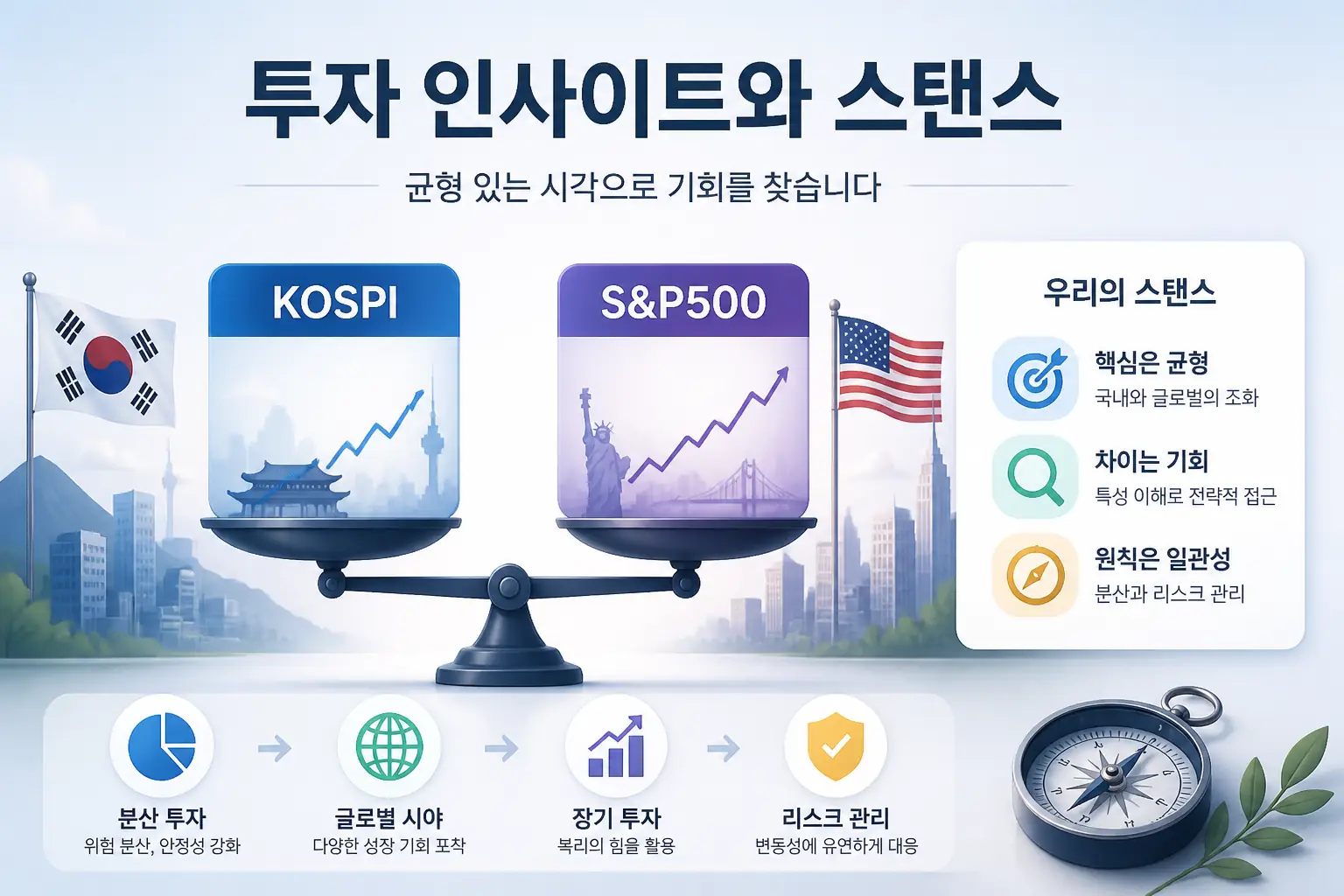
Given the differences between the two markets, the most effective strategy for Korean investors is to combine KOSPI and S&P 500 in a balanced portfolio. This approach helps diversify risks like currency fluctuations and foreign selling in Korea, while leveraging growth momentum in the US market.
Following Ray Dalio’s asset allocation principles, it’s wise to limit KOSPI exposure but gradually increase it with careful consideration of long-term growth potential.
For a more detailed comparison of KOSPI and S&P 500 and practical investment strategies, refer to KOSPI and S&P 500: A Korean Investor’s Guide to Asset Allocation.
Key Points to Watch Next Week: Interest Rates, Economic Data, Foreign Flows
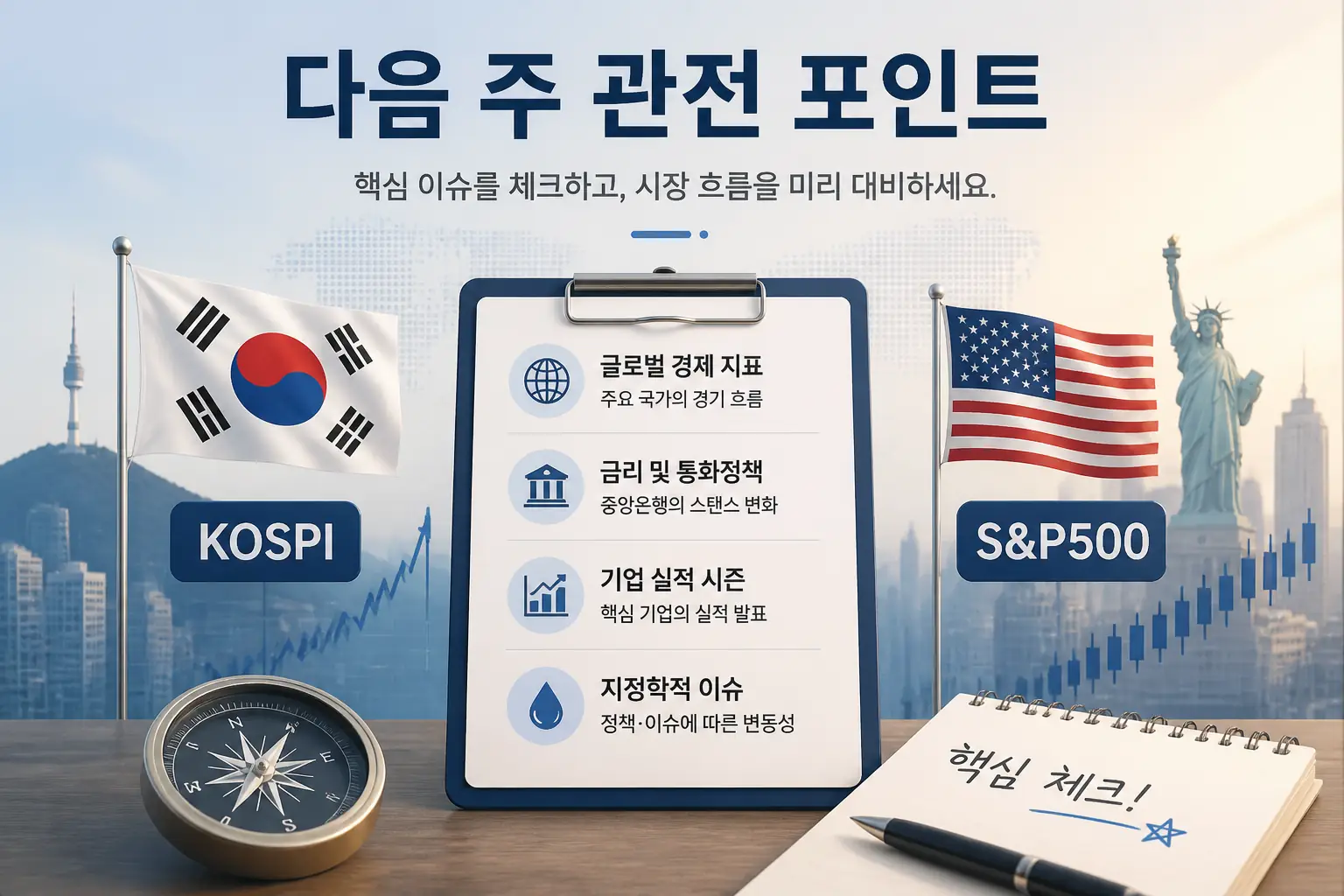
The upcoming FOMC meeting and major economic data releases are scheduled for next week. Changes in interest rates and Fed guidance will have a direct impact on the S&P 500 and global markets.
Key indicators such as consumption, employment, and inflation will be released. The state of inflation and employment could influence further rate hikes and affect KOSPI volatility.
The direction of foreign capital flows is a crucial variable for the stability of the Korean stock market. Whether large-scale net selling continues or a rebound emerges will determine the KOSPI’s short-term direction.
Botonglee’s Closing Insights: Current Stance and Investment Guidelines
Right now, the Korean stock market faces a triple challenge: foreign selling, a downturn in the semiconductor sector, and policy uncertainty. In the short term, a cautious approach is warranted. With the KOSPI down 4.95% and volatility high, aggressive buying is risky.
On the other hand, the US S&P 500 continues to rise on the back of tech-driven growth momentum, making this a good time to consider increasing your S&P 500 allocation. However, careful stock selection and valuation checks are essential.
In conclusion, it’s best to maintain a balanced portfolio between KOSPI and S&P 500 for long-term investing, while also implementing stop-loss and risk management strategies to handle short-term volatility. Referencing Ray Dalio’s asset allocation principles, aim for risk parity and supplement with trend-following strategies that account for market momentum.
Investors should use this week’s market messages to thoroughly assess intrinsic value, growth potential, and policy risks, and put optimal allocation strategies into practice.
For more in-depth discussion on investment insights and asset allocation strategies, check out This Week’s Investment Insights: How to Effectively Interpret Market Trends and Major News and KOSPI and S&P 500: A Korean Investor’s Guide to Asset Allocation.
Services by Botonglee