Make the Weekend Feel New Without Going Far: Try One First in Your Own Neighborhood
Saturday can arrive and still feel almost identical to Friday. You sleep later, look at your phone, eat somewhere familiar, and return home. Nothing went badly, yet the day leaves only a faint impression.
It is easy to assume that a memorable weekend requires a trip, a new hobby, or an elaborate plan. It does not. Your own neighborhood probably contains a street you have never taken, a shop you have noticed but never entered, or one small choice you keep postponing.
The aim today is not to optimize your weekend. Choose one thing you have never done nearby, take a small action, and notice what changes. Turning one block earlier than usual is enough.
Go to guideExplore more Botonglee essays about everyday changeFind other practical ways to shift the direction of a day through small, deliberate choices.A weekend can feel short because its scenes look too familiar
Routine is useful. You know where the grocery store keeps everything and can walk a familiar route without checking directions. Fewer decisions mean less friction during a busy week.
A day off becomes blurry when it repeats the same scenes in the same order. Sunday evening arrives, and this weekend blends with the previous one. The hours were there, but few details helped your memory separate them.
You do not need a demanding itinerary. Let the rest of the day stay familiar and change one scene. A memorable day is not always an eventful day; sometimes it contains one moment when you chose instead of following the usual route automatically.
Move once before waiting for the right mood
We often tell ourselves, “I’ll go out when I feel lighter.” On a low-energy afternoon, that permission may never arrive. Comparing options from the sofa can be more tiring than taking a short walk.
Reduce the decision. Replace “I should do something interesting” with “I will visit one place within a fifteen-minute walk.” You may return after twenty minutes or decide the place is not for you. The plan still worked because it produced information, not a perfect mood.
Action does not guarantee enjoyment. It gives you evidence that stillness could not provide. You do not have to manufacture enthusiasm; you need a choice small enough to begin while some resistance remains.
Set a radius to make a first easier to find
Searching for something new can quickly produce famous destinations. Then transportation, reservations, waiting time, and companions turn a simple outing into a project.
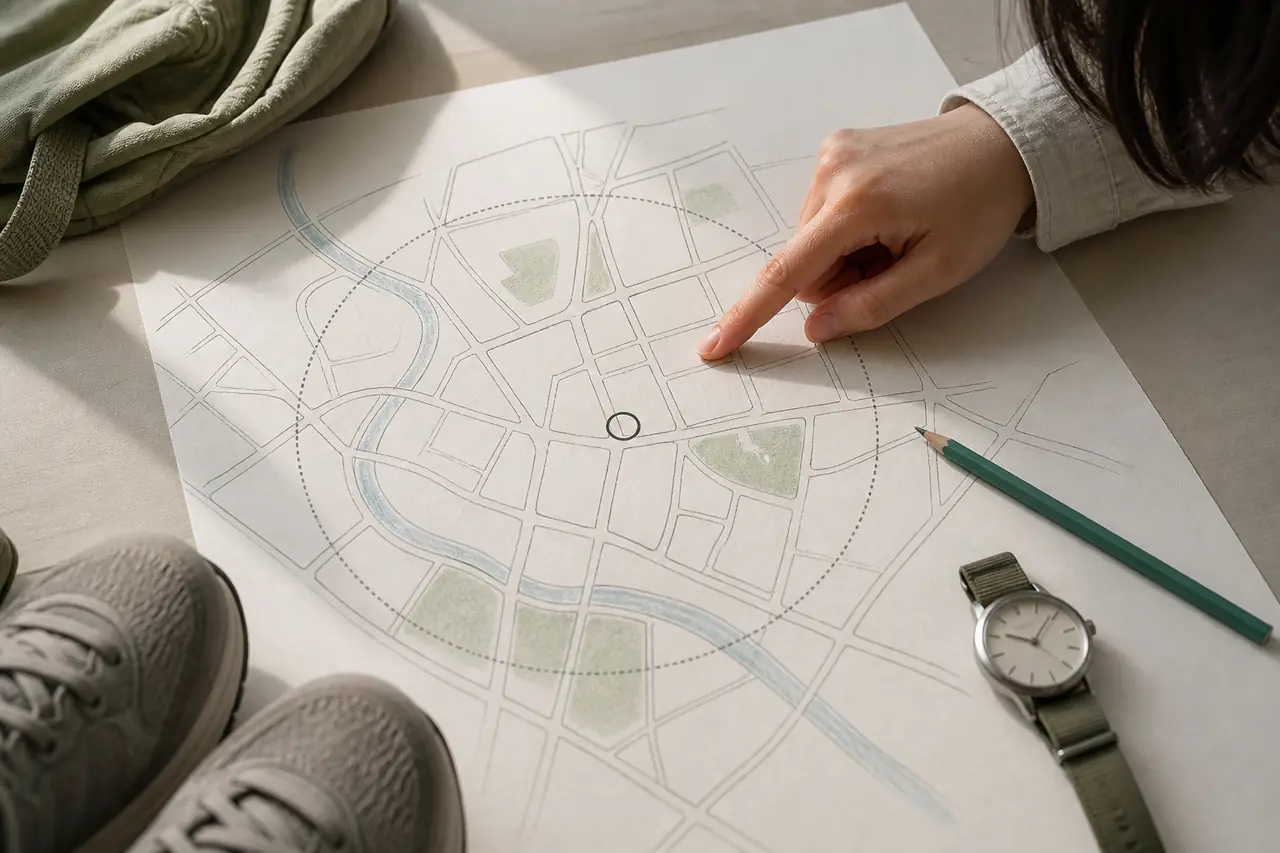
Limit the search to a twenty-minute walk from home. Trace your usual routes on a map and look one block beyond them. You might find a tiny park, a side street connected to another subway exit, or a shop you have passed for years without entering.
Use three criteria: it should feel manageable alone, fit within an hour, and carry little cost if it disappoints you. Once a place qualifies, stop comparing. Choose the nearest reasonable option and protect the smallness of the experiment.
A first does not have to cost money
If every new experience becomes a purchase, weekends get expensive. A first is defined by changing one familiar choice, not by consumption. Turn left where you always turn right, sit on a different bench, or walk through the part of the market you normally use as a shortcut.
Enter a small library and open one magazine. Walk a section without headphones. If you usually photograph everything, leave one scene unrecorded and notice what remains later.
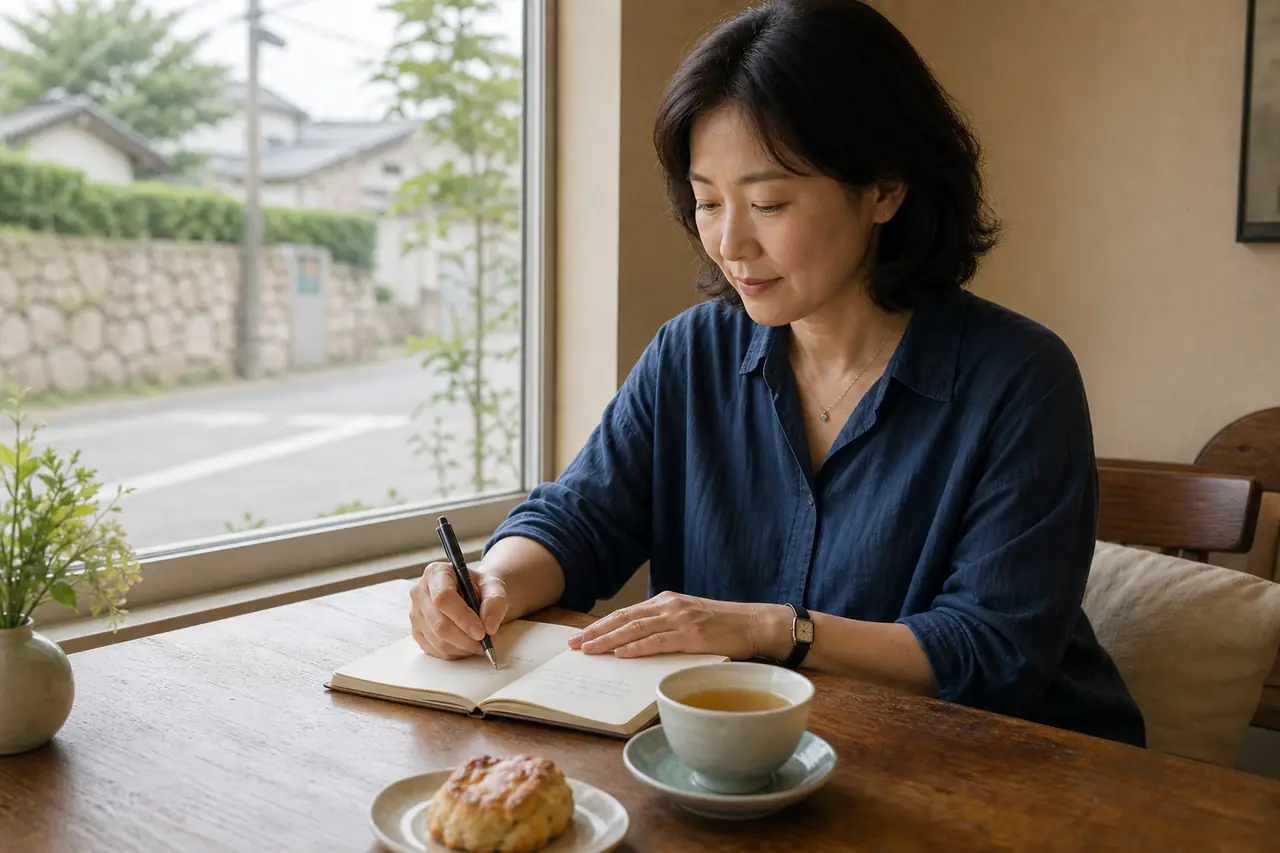
If you want to spend money, keep the unit small: one pastry from a bakery you have never entered or a tea you have never ordered. The point is to notice that you chose differently and stayed present for the result.
Rate enjoyment and accomplishment separately
Afterward, we often compress the experience into one verdict: “It wasn’t that good.” Yet a shop can be ordinary while you still feel pleased that you entered alone. A street can be beautiful but too hot for a long walk.
Ask two questions separately. How enjoyable was it from zero to ten? How satisfying was it to choose and follow through? Write honest scores, then one sentence: “The shop was average, but I was glad I did not turn around,” or “The street was peaceful, but it had too little shade.”
This keeps the experience from becoming a pass-or-fail test. A low score still sharpens your next choice. Novelty is not a guarantee of delight; it is a way to discover your preferences through direct contact.
Doing one first alone can restore a sense of agency
Shared experiences matter, but if every outing requires company, a schedule mismatch can stop the whole plan. Going alone lets you choose the pace, destination, and departure time.
Start with a low-pressure place: a shop with takeaway service, a quiet cafe with a visible entrance, a daylight market, or a library where leaving is easy. Stay for ten minutes if that is enough.
The goal is not to perform independence or create an elegant image of being alone. It is simply to make a choice and follow it at your own pace. Let the meaning become clear afterward.
A forty-minute neighborhood first you can try today
Spend five minutes with a map. Select one block outside your normal routes and choose a destination. Confirm that it is open, but do not read reviews for long. Too much information replaces experience with expectation.
Use the next twenty-five minutes to walk and stay briefly. Slow down once and notice something your usual pace would miss: a handwritten sign, a second-floor window, a tree, or the way people use a small public space. If the destination does not appeal to you, leave. Reaching the door is already useful information.
Use the final ten minutes to finish three sentences: “Something I saw for the first time was ___.” “What felt better or more uncomfortable than expected was ___.” “Next week, I would like to change ___.” Keep the record short enough to complete.
You can expand your life radius without traveling far
Your living radius is not measured only in kilometers. It includes places you could visit but do not, details you see without noticing, and choices you postpone because they seem too small to matter.
You do not need to conquer a destination every weekend. Change the street this week, enter a small shop next week, and try a different menu later. Some experiments will become favorites; others will remain one-time visits.
If today looks exactly like every other day, do not wait for your mood to transform first. Put on your shoes and move one block beyond the usual line. With one first, a familiar neighborhood becomes a place where you can choose again.
Services by Botonglee