Too Hard to Play, a Joy to Watch: What Ori Taught Me About Games Worth Watching
There's a game I can't really play myself, because the controls are too demanding for me. It's called Ori.
Not long ago I sat next to someone while they played it, and I only watched. I never touched the controls once, and it was still thoroughly enjoyable.
If you're someone who has quietly decided "games just aren't for me" because your hands can't keep up, this is a note that there's another way in. Here's why watching worked so well, and how that experience turned into a standard for the game I'm building now.
What kind of game is Ori?
The facts below come from public sources, not from my own play.
Ori is a 2D action platformer from Moon Studios. A platformer is a game where you get from place to place by running, jumping, clinging to walls and timing your movements across gaps and hazards. The first game, Ori and the Blind Forest, came out in 2015. The second, Ori and the Will of the Wisps, followed in 2020. Both are available on Xbox, PC and Nintendo Switch.
Games like this keep your hands busy. You time a jump, jump again in mid-air, catch a wall, push off, and the next obstacle is already coming. For anyone who doesn't play often, that rhythm is the real barrier — not the story, not the puzzles, but the fingers.
Doesn't the easy mode solve that?
It's worth knowing what the difficulty settings actually do before you buy.
Both games have an easy option. The first game gained easy, hard and one-life modes in its 2016 Definitive Edition. The second game asks you to choose easy, normal or hard when you start.
But in Ori and the Will of the Wisps, the difficulty setting is about combat numbers. On easy, enemies hit you for less and your own attacks hit harder. The platforming itself — the jumps, the walls, the timing — stays exactly the same; only the damage from spikes and other hazards shifts a little. And at launch, once you picked a difficulty, you couldn't change it partway through that playthrough.
So if your problem is the jumping rather than the fighting, easy mode won't fully rescue you. The enemies get gentler, but the jump you can't land is still there. That's when sitting beside someone who can land it becomes a perfectly good way to enjoy the game. It was for me.
Five things that make a game fun to watch
When I asked myself why watching was so enjoyable, the answer was that five things weren't working separately. They were woven together: sound, story, gimmicks, level design and art. Here's what each of those means if you don't speak "gamer."
Sound. The music and sound effects. The person playing is focused on the screen and their fingertips; the person watching has empty hands and hears everything. When the music shifts with each scene, simply following it is enough to put you inside the moment.
Story. Why the character is on this journey at all. While the player concentrates on the next jump, the watcher follows the story. Two people are looking at the same screen from two different seats.
Gimmicks. A word gamers use for a special device or rule that belongs to one section of a game — a platform that bounces you upward, a floor that crumbles after a few seconds, a wall you can only cross with an ability you just earned. Every time a new one appears, there's a small "oh, so that's how it works" moment, and the watcher gets to solve the puzzle alongside the player.
Level design. How a stretch of the game is laid out: where the path leads, and in what order the hard parts and the breathing room arrive. When tension and rest take turns, the person watching ends up holding their breath and letting it go right along with the player.
Art. What you actually see on screen. Ori is a game whose makers put its look and its story up front. When easy mode was added to the first game, Xbox's own news site described it as a way for players of any skill level to enjoy the game's immersive art style and its narrative.
Plenty of games are excellent at one or two of these. What struck me about Ori was that the five weren't pulling in different directions. That's why it was a pleasure not only for the person holding the controller but for the person sitting next to them.
Five questions for picking a game you can share
If one person in your home plays and another tends to sit and watch, you can turn those five things into questions and get a quick sense of whether a game will work for both of you.
People who struggle with controls often feel they've been handed the spectator's seat. With a game that gets a lot of yeses here, that seat turns out to be a good one.
The standard it gave me
I'm currently making mind games for WECOSMO — meditation you approach the way you'd approach play. This isn't my first attempt at turning meditation into a game; an earlier experiment was SoulDive, an interactive game I made during a long-term program at Korea's New Content Academy.
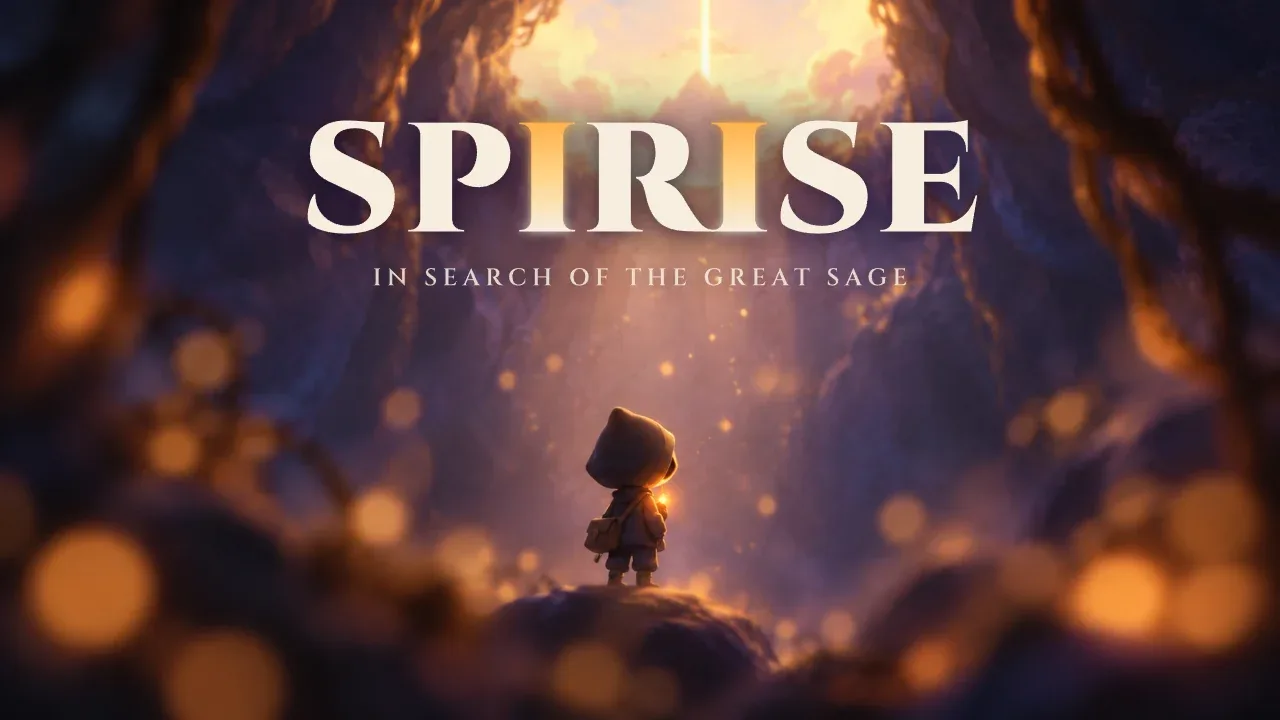
The main game live on WECOSMO right now is called Spirise. On a night when the mind is too loud, the main character falls into an underground place with no light at all, carrying only the bag they take everywhere, and climbs back up by digging through the earth with their breath. You breathe in while you hold, and breathe out slowly as you let go, and the earth opens. Rush it and you don't rise; steady your breath and you do. On the way up, fragments of the mind — something someone once said to you, a scene from the past — stick to your bag, and at resting points you take them out, look at them, and decide whether to carry them on or set them down. Each stage takes only a few minutes.
Because it moves forward on steady breath rather than quick hands, it starts from a very different place than a game like Ori. Still, watching Ori made one standard clear for me: a game that's enjoyable for the person playing and for the person beside them, where sound and story, devices and paths, and the art all come together instead of standing apart. That's what I want to measure the mind games I make from here on against.
You can read what Spirise is about on the Spirise page on WECOSMO without logging in. To start playing, you'll need an account, and signing up is free.
Services by Botonglee