Ray Dalio’s All Weather Portfolio Strategy for Navigating Market Changes
Every individual investor desires stable returns, especially in highly volatile markets. Recently, the Korean economy has faced a so-called “triple whammy” of high interest rates, inflation, and a strong US dollar, making risk management more crucial than ever. In this environment, the ‘All Weather Portfolio’ strategy—designed to uphold investment principles while flexibly adapting to market shifts—is once again in the spotlight.
This article explores the concept of the All Weather Portfolio, originally developed by Ray Dalio, discusses how to apply it in today’s market, and provides practical strategies and a detailed look at its pros and cons for individual investors. You’ll also gain insight into how this core asset allocation framework can harmonize with value investing, trend-following, and Peter Lynch’s growth stock analysis.
What Is the All Weather Portfolio?
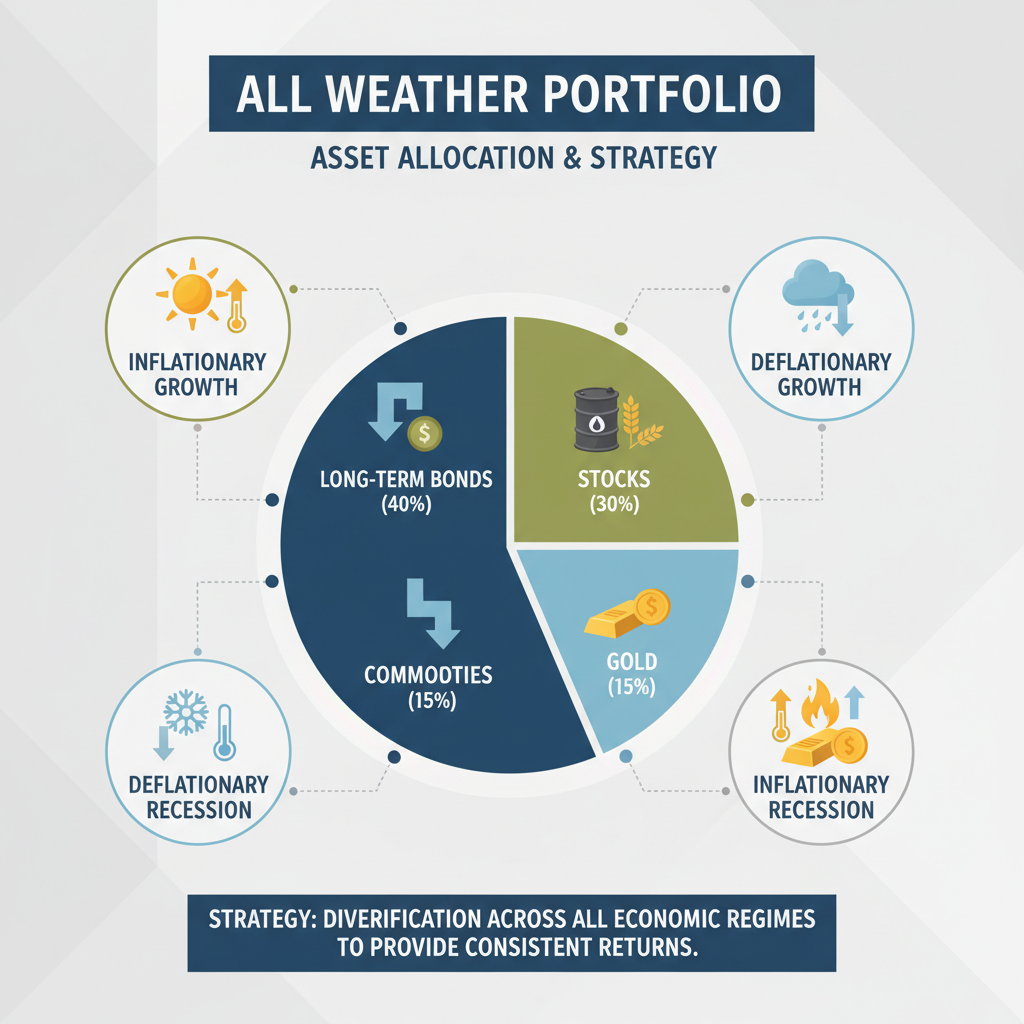
Ray Dalio, founder of Bridgewater Associates, is recognized as a leading hedge fund strategist. His All Weather Portfolio is, as the name suggests, a strategy designed to withstand any economic environment. By optimizing asset allocation for four key economic scenarios—expansion, recession, inflation, and deflation—it aims to achieve both stability and growth.
With the Korean stock market experiencing corrections, foreign investor sell-offs, and global uncertainty, such a diversified approach offers valuable lessons for individual investors. Managing complex risks now requires more than simply holding undervalued value stocks.
Current Market Trends Analysis
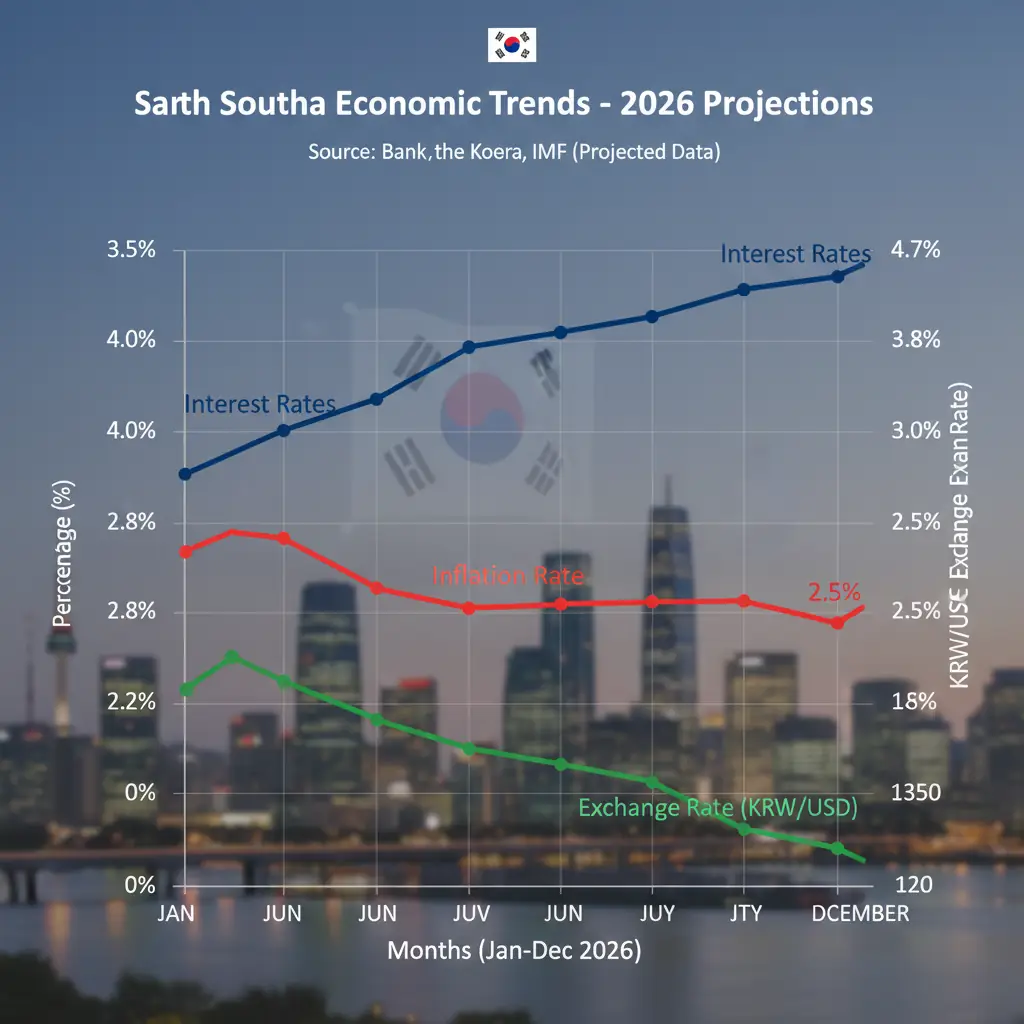
As of May 2026, the Korean economy has entered a new phase often referred to as the “Korean-style high-pressure economy.” According to former Vice Minister of Economy and Finance Kim Yong-bum, high interest rates, inflation, and a strong US dollar are persisting, and there is a growing perception that these are the “costs of success.” The KOSPI index recently edged up to 7,847.71 points, while the KOSDAQ surged 4.99%, led by strong performance in small- and mid-cap growth stocks.
Given this level of uncertainty and volatility, diversifying risk through asset allocation is more important than concentrating on a single asset class. The All Weather Portfolio offers a way to adhere to sound investment principles while enhancing adaptability in such an environment.
Components of the All Weather Portfolio
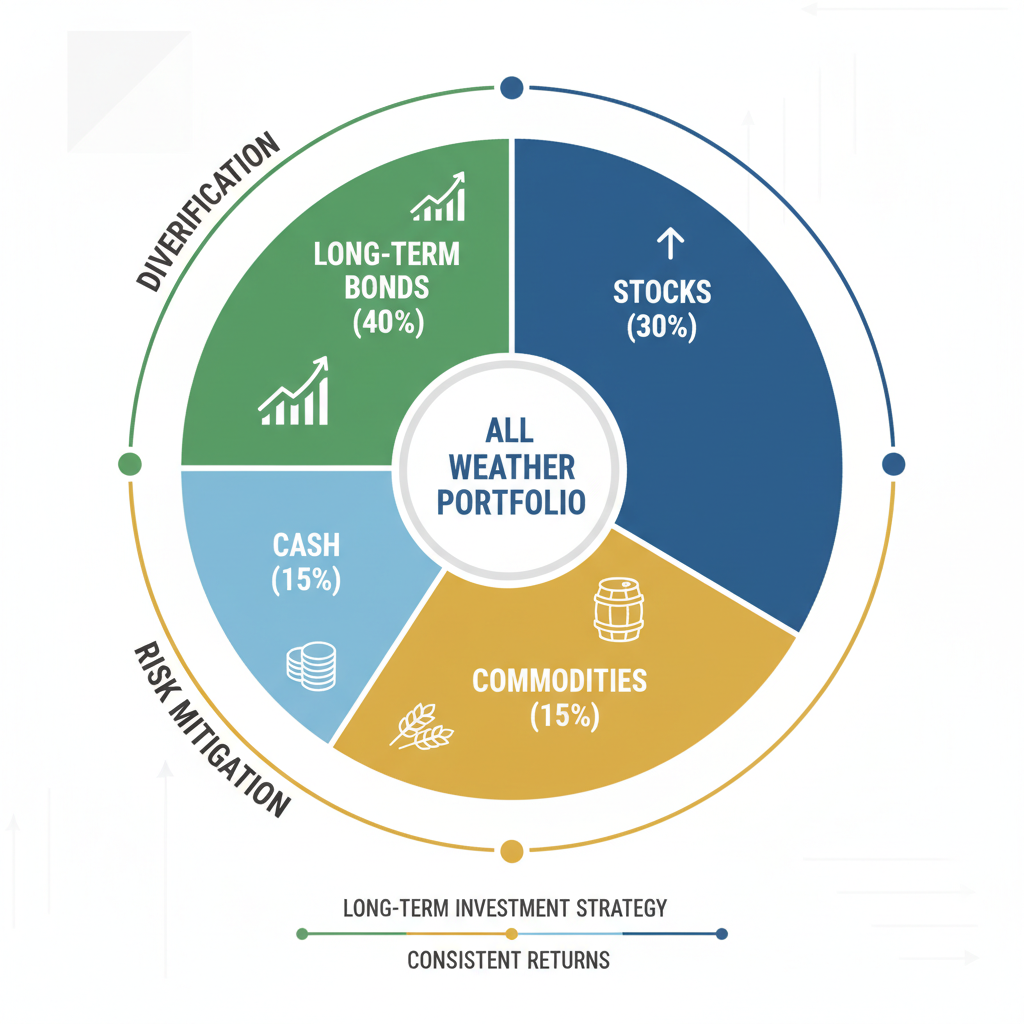
The All Weather Portfolio is built around four main asset classes. Each plays a distinct role depending on the economic climate, collectively enhancing the portfolio’s overall stability.
Generate returns during periods of economic growth and rising inflation. In addition to large-cap growth stocks, you can include companies from industries you know well or discover promising growth stocks in everyday life, following Peter Lynch’s principles. When volatility is high, it’s safer to limit stocks to about 30% of your portfolio.
Serve as a safe haven during recessions and deflation. While sensitive to interest rate changes, they can rise in value during economic slowdowns, making them essential for risk mitigation.
Act as a hedge against inflation. When prices of energy, gold, or agricultural products rise, commodities help shield your portfolio. With commodity prices trending upward recently, you can access this asset class via ETFs or mutual funds.
Provide liquidity and a buffer against sudden market swings. Keeping about 10% of your assets in cash allows you to act quickly, including executing stop-losses if needed.
Each asset class is designed to respond to one of Dalio’s four market scenarios (expansion, recession, inflation, deflation), playing a key role in controlling overall portfolio volatility.
Portfolio Strategy for Individual Investors
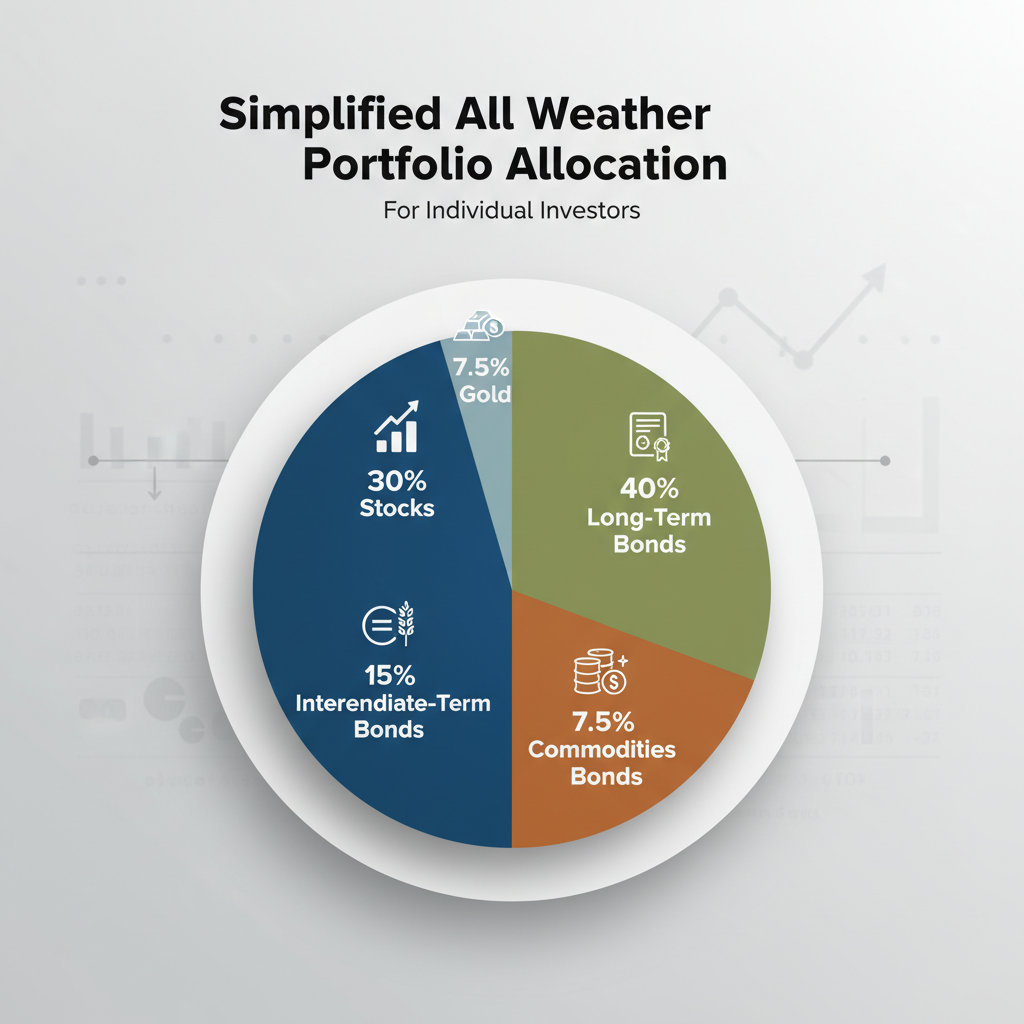
If you want to build your own All Weather Portfolio, consider the following allocation and implementation tips:
Focus on large-cap blue chips, but also include a small portion of stocks from industries you understand or those with strong growth momentum. Use the PEG ratio to find undervalued growth stocks, combining Peter Lynch’s approach.
Use domestic and international long-term bond ETFs for stability. To manage interest rate risk, consider diversifying bond maturities.
Utilize gold, energy ETFs, or agricultural funds. Since the main goal is inflation hedging, adjust the allocation as economic conditions change.
Maintain liquidity to seize opportunities and respond to sudden volatility.
These ratios can be adjusted based on market conditions and your personal risk tolerance. The key is to rebalance quarterly or semi-annually, bringing allocations back to target levels. Rebalancing should be systematic and rule-based, not driven by emotion.
Monitor the market consistently from a long-term perspective, but maintain patience and conviction rather than reacting to short-term noise. Cut losses quickly if necessary, but otherwise, stay on the sidelines until clear signals emerge—an approach that aligns with Jesse Livermore’s trend-following principles.
Pros and Cons of the All Weather Portfolio
Pros
Cons
It’s important to objectively weigh these pros and cons and decide if this strategy fits your own investment philosophy and style. If you’re a value investor, consider including a portion of undervalued stocks based on intrinsic value. For more on evaluating companies’ fundamental worth, refer to Charlie Munger’s investment checklist (Charlie Munger’s Investment Checklist).

Conclusion and Practical Guide
The All Weather Portfolio is a powerful tool for individual investors to systematically manage risk and pursue long-term results in today’s uncertain and volatile markets. Especially now, as both the Korean and global economies face complex challenges, maintaining a “margin of safety” while adapting to market changes through balanced asset allocation is an essential investment principle.
Practical Guide
Objectively evaluate your investment horizon and risk tolerance, and review your current holdings in cash, stocks, and bonds.
Aim for 30% stocks, 40% bonds, 20% commodities, and 10% cash, using a mix of ETFs, funds, and individual securities.
Adjust your allocations quarterly to prevent significant drifts and make minor tweaks as markets evolve.
Keep track of key economic indicators, interest rates, and exchange rates to ensure your portfolio remains aligned with the environment.
Avoid overreacting to short-term volatility; when uncertain, it’s often best to wait for clearer signals before acting.
Study the latest investment strategies and success stories to build your skills. For more, see AI Growth Stock Investment Strategies.
The All Weather Portfolio is not a rigid formula but a flexible framework that can be tailored to your unique circumstances and preferences. By reducing uncertainty and staying true to your investment principles—while remaining adaptable—you can look forward to healthier asset growth.
If you want to keep up with the latest investment insights, consider subscribing to our newsletter. For deeper discussions on long-term investing and asset allocation, feel free to reach out anytime.

Reference Links
Services by Botonglee