Renting a Space for a Small Gathering in Seoul: 7 Things to Ask Before You Book
As the year winds down, a lot of people end up organizing something: a year-end party with coworkers, the last book club meeting of the year, a reunion of old friends. Restaurants in Seoul are an easy default, but they come with time limits and the table next to you. So many organizers start looking at renting a whole room instead, a place where ten or so people can sit together and talk for as long as they booked.
Renting a space is not the same as booking a table, though. Nobody brings the food unless you arrange it. Nobody cleans up unless you do. Someone has to decide how late the conversation can go and how much to collect from each person. If you don't ask about these things before you book, you find out on the day.
Botong Lee Studio is a photo studio near Hansung University Station in Seoul, and we also rent it out for small gatherings where people sit in a circle and talk, such as book clubs, discussion groups and creative meetups. This post lists seven things worth asking any venue before you book, with our own conditions as a worked example. Prices and rules below were checked against our public pages on October 28, 2026.
1. Maximum capacity is not the same as comfortable seating
The "maximum guests" number on a listing is the most people the space will accept. It is not necessarily the number of people who can all sit down and see each other's faces. Instead of trusting a single number, ask three questions:
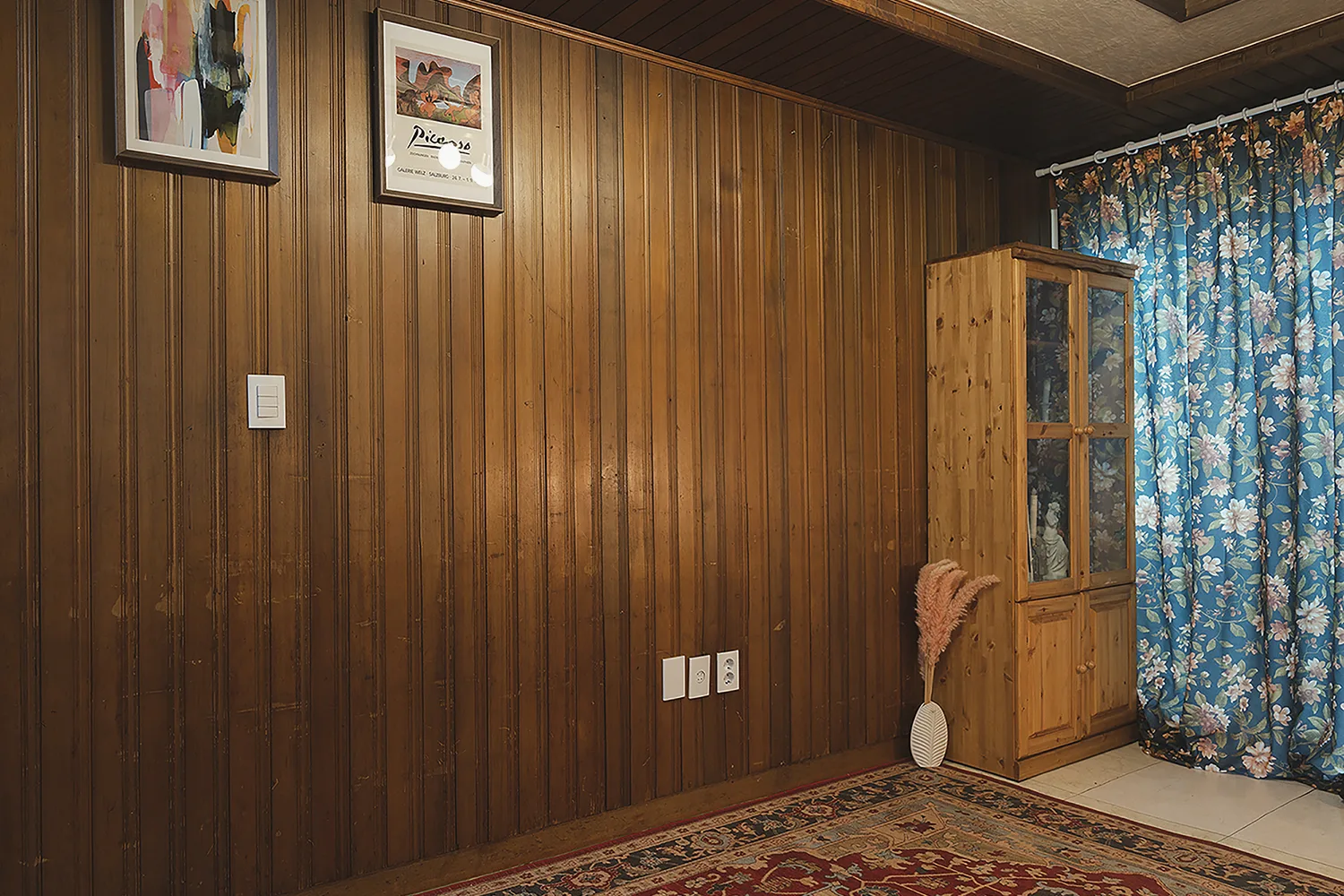
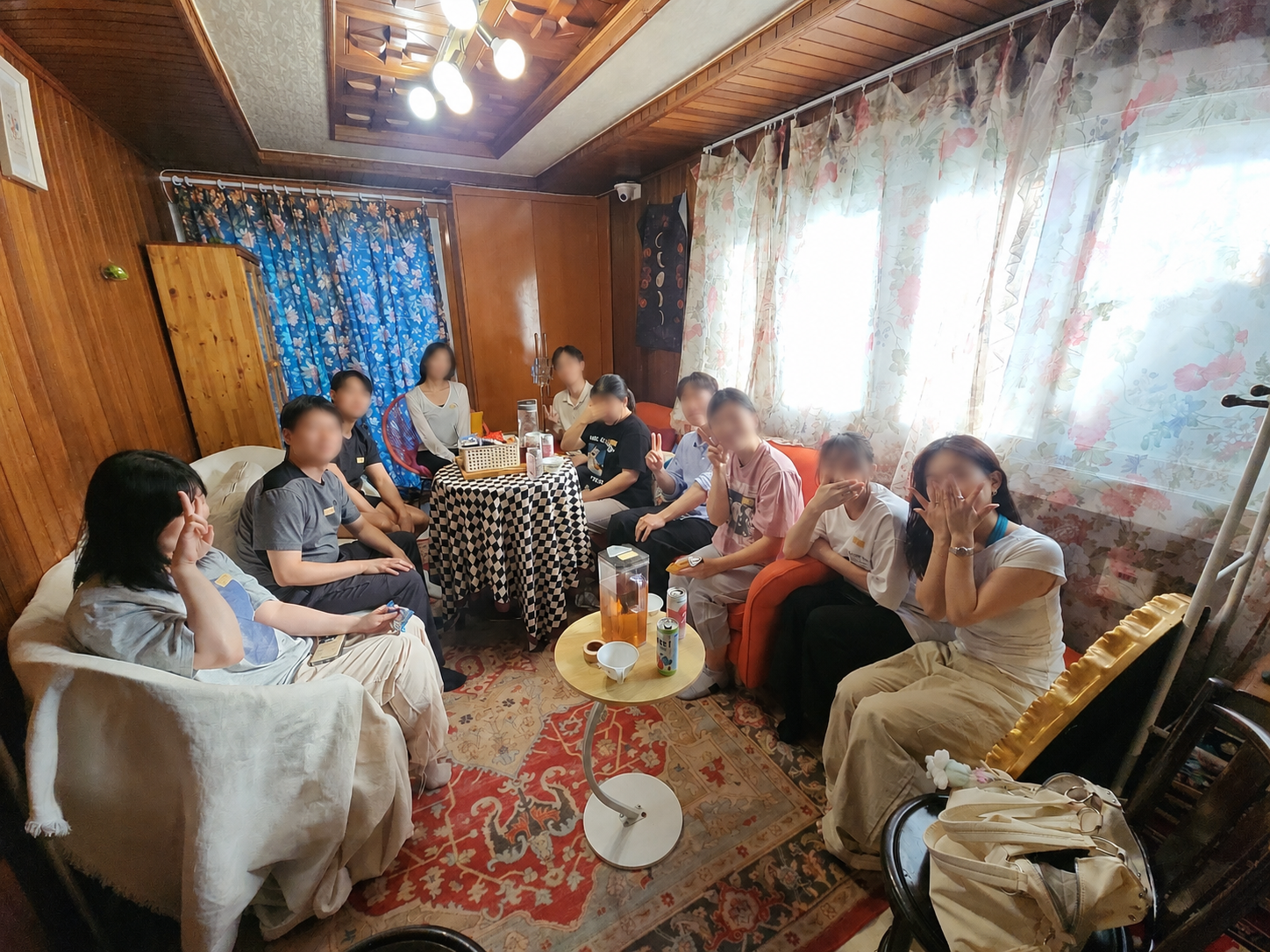
Our studio is the entire ground floor of an older Korean house, about 56 square meters (17 pyeong in Korean listings), used privately by one group at a time. Bookings take 2 to 20 people. You can arrange the sofas, chairs and tables into a circle; just put the furniture back where it was before you leave. The photo below is from a real gathering of a little over ten people in the living room. If you tell us what kind of meeting it is, how many people are coming and the seating you want when you book, we can give you a more precise picture of how the space will work.
2. Convert the price to "per person, per hour" and your budget answers itself
Most group events are paid for by splitting the bill. So instead of comparing total prices, convert each venue's rate into a per-person figure. It makes the decision much faster.
Rental spaces in Korea usually price in one of two ways. A flat hourly rate stays the same no matter how many people come, so the per-person cost drops as the group grows. The other model charges a base rate for a set number of people plus a fee for each extra person. With that model, the per-person cost barely changes as the group grows, and the number of hours you book is what really sets the price.
Our studio uses the second model: 15,000 won per hour for two people, plus 5,000 won per hour for each additional person, with a two-hour minimum.
Whether you are six or ten, the cost stays around 5,500 to 5,800 won per person per hour. With a venue like this, it is easiest to work backward from your budget. If eight people can each put 20,000 won toward the room, 20,000 ÷ roughly 5,600 comes to about three and a half hours. Book three hours, pay about 16,900 won each, and spend the rest on snacks.
Remember that your booked time includes setting out food and cleaning up. Leave a buffer before and after the part where everyone is actually talking.
If your gathering will run from the evening into the night, compare the hourly rate with a full-day booking too. Ours come in two versions: All-Day (9 a.m. to 7 p.m., 250,000 won) and All-Night (7 p.m. to 9 a.m. the next day, 300,000 won). Both cover up to 15 people, with 10,000 won for each extra person, up to 20. Fifteen people starting at 7 p.m. and staying five hours would pay 80,000 won × 5 = 400,000 won at the hourly rate, while All-Night is 300,000 won, or 20,000 won each. The full-day packages are listed for video and group photo shoots, so if you want one for a gathering, please contact us before booking.
If you would like to compare several venues on the same basis, our post on comparing rental studio prices (in Korean) walks through the formula for each pricing model: How to compare rental studio prices.
3. Food, drinks and the kitchen: "bring" and "cook" are different questions
"Outside food allowed" and "cooking allowed" mean different things. Whether you are ordering delivery or need to heat or boil something changes what you need from the space. Ask four things:
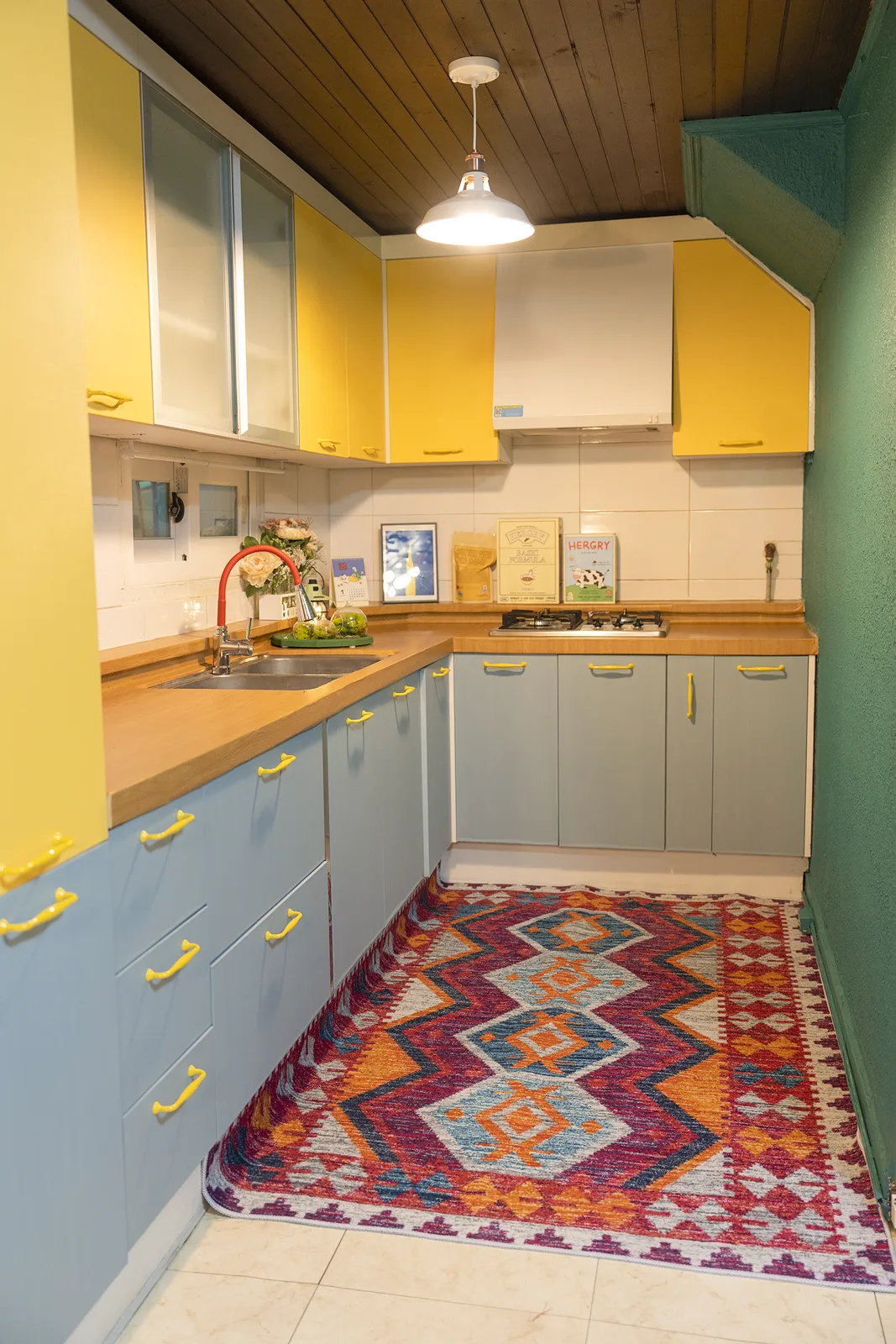
At our studio you can bring food and alcohol, and the kitchen is available to use. There is a coffee machine as well. If you cook, please air out the smell and clean the surrounding area and the dishes before you leave. The whole space is non-smoking.
4. Night noise: find out whether it's a residential street
Year-end gatherings often start in the evening. Ten o'clock at night means something very different in a commercial building than on a residential street. If you plan to play music or games that get loud, ask the venue before booking what time the volume needs to come down.
Our studio can be booked around the clock, but it is the ground floor of a detached house on a residential street, so please keep the noise down late at night. When the front door opens and closes, the dog on the second floor may bark briefly at first. For gatherings that go late, plan for conversation rather than a loud party.
5. Cleanup and deposits: ask what "back to normal" means
Renting a space includes returning it to how you found it. If the venue holds a deposit, knowing what they check and when you get it back makes the last thirty minutes far less hectic. Ask:
For full-day bookings (All-Day or All-Night) we take a 100,000 won deposit and return it after checking that the furniture is back in place, the space is clean and nothing is damaged. Any damage to equipment or furniture, or stains, needs to be compensated. The space has CCTV recording, so if anyone needs to change clothes, please use the bathroom or the veranda area.
6. Getting there and parking: count the drivers first
Ten guests means ten different ways of arriving. Count how many people are driving, then ask how many cars can actually park at the venue and where the nearest public parking lot is. Putting directions in one message to the whole group saves a lot of phone calls on the day.
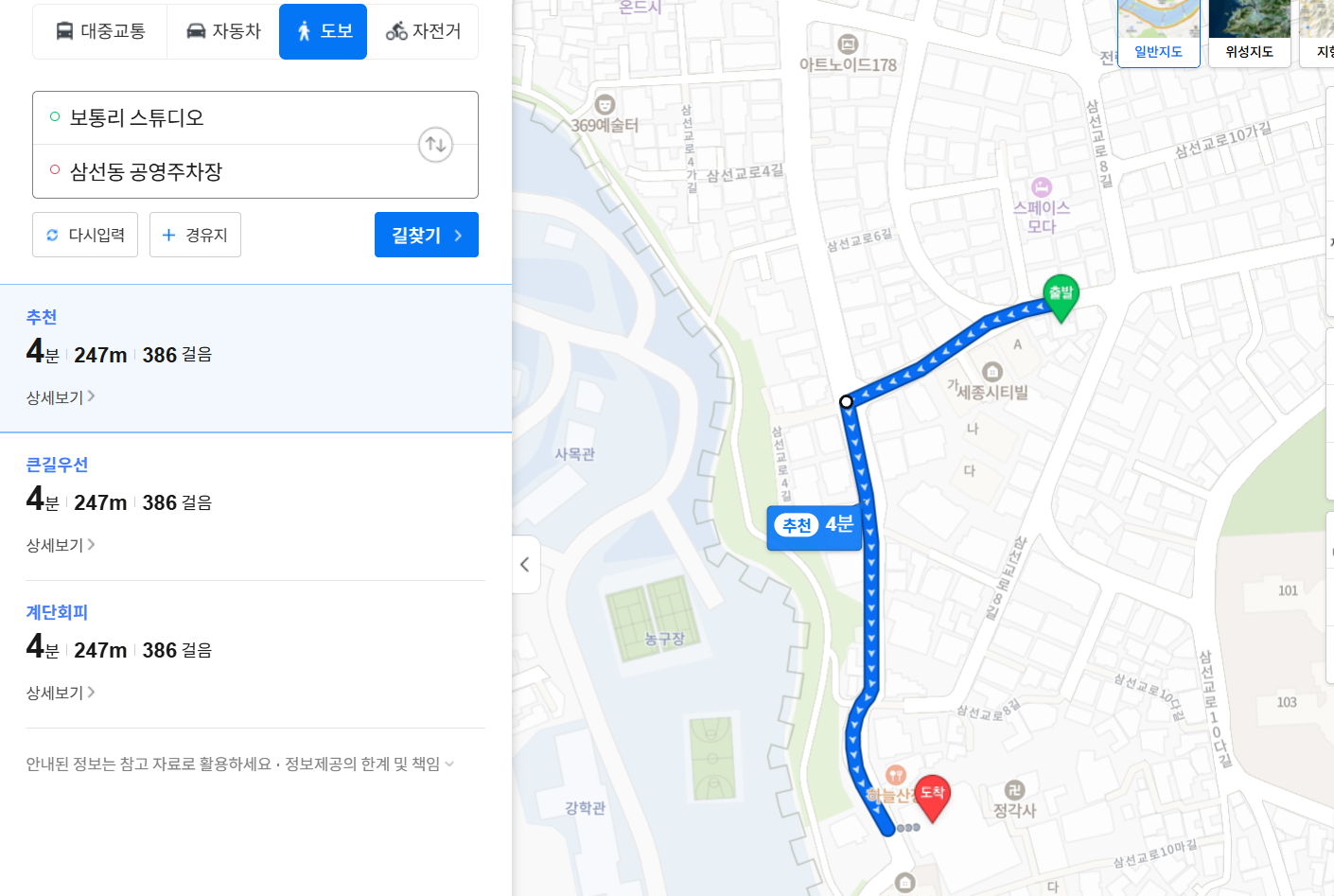
Our studio is about a five-minute walk from Exit 3 of Hansung University Station (Line 4). You can park in the resident-permit spot in front of the studio, but you have to move the car right away if the permit holder calls, so for longer gatherings we recommend the Samseon-dong public parking lot, about a four-minute walk away. Pets are welcome; if there is an accident indoors, the owner is responsible for the cost.
7. Let the refund schedule set your RSVP deadline
Attendance at a group event changes at the last minute. So when you choose a venue, check how much you get back on each day before the event, and set the date you collect money and confirm headcount to match. Also ask whether the price is recalculated if fewer people come.
For bookings made through Spacecloud, a Korean space-rental platform, our refund schedule is: 100% back if you cancel 8 or more days before, 80% at 7 days, 70% at 6 days, 60% at 5 days, 50% at 4 days and 30% at 3 days. From 2 days before, there is no refund. Cancelling within two hours of payment gets a full refund regardless of the date. With a schedule like this, the safest move is to collect RSVPs and lock in your headcount at least 8 days before the event.
You can visit before you book
Photos make it hard to judge how close people will sit or how big the kitchen is. If you can, visit first. We welcome short visits of about ten minutes; just call the studio on the day.
Whichever venue you contact, including these five details in your first message gets you a faster answer:
For light, equipment and layout details, see our pre-booking checklist (in Korean): 7 things to check before booking. Our full price list is public on the studio page.
Booking information
Book or ask about Botong Lee Studio
Tell us the type of gathering, headcount and hours, and we can reply faster.
Frequently asked questions
How much does it cost to rent a space for ten people for three hours?
It depends heavily on how the venue prices extra guests. At a venue that charges per additional person, multiply (base hourly rate + extra guests × per-person fee) by the hours you need. At Botong Lee Studio, ten people for three hours is 165,000 won, or 16,500 won each.
Can we bring food and alcohol to a rented space?
Every venue is different, so ask about bringing food and about cooking separately. At our studio you can bring food and alcohol and use the kitchen. If you cook, please air out the smell and wash the dishes. Smoking is not allowed indoors.
Can a gathering run late into the night?
Our studio can be booked 24 hours a day, but it is on a residential street, so please keep it quiet late at night. If you plan to start at 7 p.m. and stay long, compare the hourly rate with the All-Night booking (300,000 won, up to 15 people included), and contact us before booking.
Services by Botonglee