Why You Never Finish Decluttering
Clearing out my space had sat on my to-do list for months. I chipped at it on weekends and never finished. Empty one shelf and another had filled up; a week later things had drifted back to where they started.
Then I brought in a professional and gave the whole day to it. Something that had dragged on for months was done by evening.
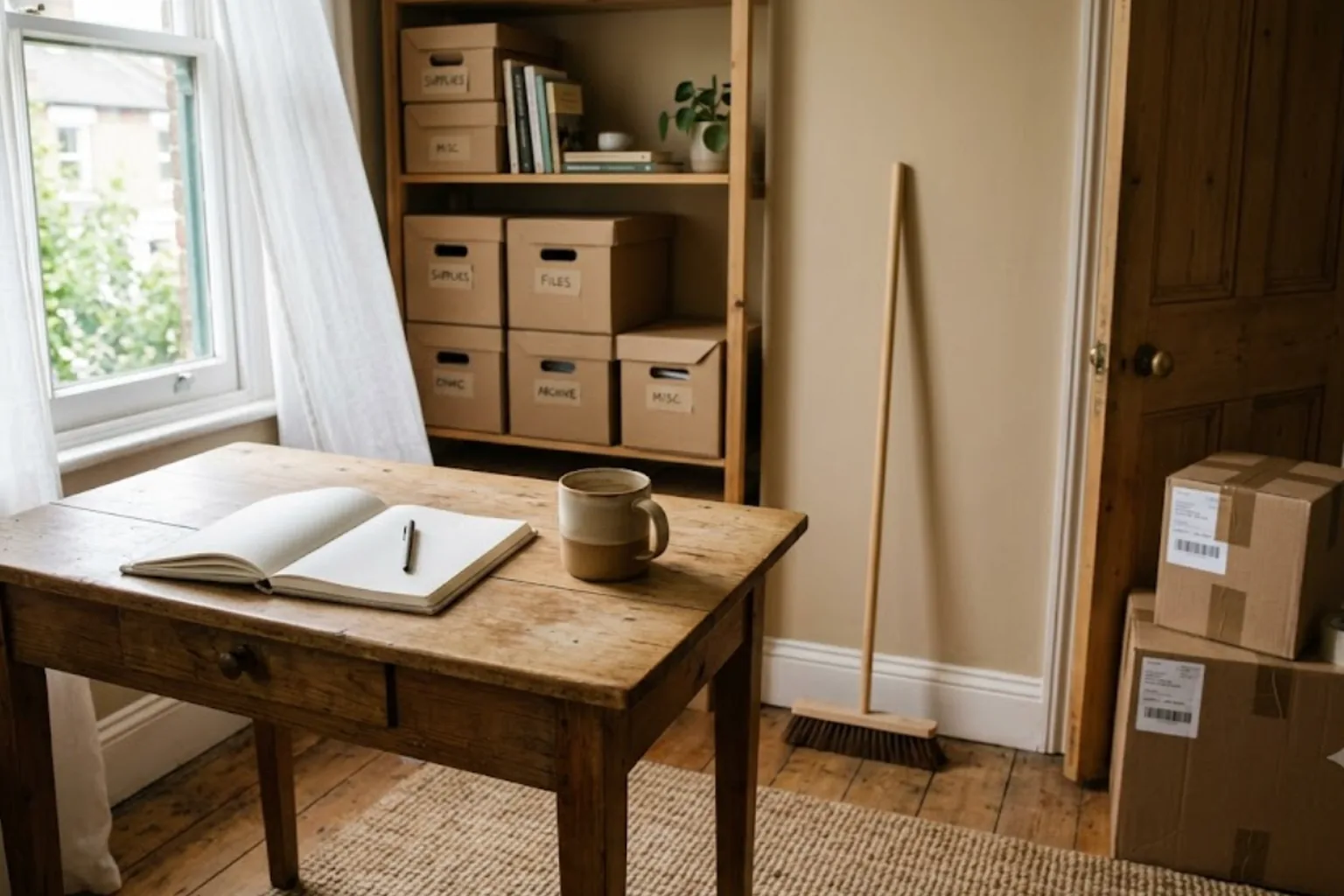
The bottleneck was never time
Working alone, I always told myself I simply did not have the hours. Spending one full day with someone else showed me where it actually got stuck.
Every object you pick up brings a moment where you have to decide: keep it or let it go. On your own, that moment stretches. "I might need this someday." "It was expensive." "Throwing it out feels like throwing out that time of my life." The hesitation repeats with every single item, so your hands are busy but nothing moves. The uncertain things go back where they were, and the job slides to next week.
With someone beside you holding the criteria, those moments shrink. They are not deciding for you; they keep the standard steady. A few plain questions — "When did you last use this?", "Do you have something else that does the same job?" — cut the hesitation short, and progress stops stalling.
You do not fail to finish because you lack time. You fail to finish because deciding alone is hard.
Why one whole day works better
Tidying in small sessions means re-deciding from scratch every time. You have to remember where you stopped and what rule you were using, and meanwhile the space quietly fills up again.
Give it one full day and the criteria hold for the whole day. The rule you set in the morning carries you to the evening. Because the flow is unbroken, you can judge similar things together, and judging gets faster. It cost money, but months of dragging became one day, and the focus that followed came with it. For me, that was the cheaper option.
Clearing the space changed my focus
When work is not going well, the usual move is to look for a better method: a new tool, a new plan, more willpower. This time I changed the order. I cleared the space I work in first.
It was physically exhausting. Tidying is far more labour than it looks — lifting, carrying, wiping, putting back, all day. But from the next day my focus and my mood were noticeably different. With less in my line of sight at the desk, getting into the actual work took less time.
When you cannot focus, the thing to fix may be the space, not your willpower.
A day of that work also changed how I see something else. There are people who do this labour every day. Having done it myself for one day, I saw more clearly how large a share the people who run a household have always carried.
Setting up the same conditions on your own
If bringing in a professional is not an option, recreate the role they play before you start.
In short
How letting go of things touches the mind is in a separate piece, emptying your home empties your mind.
Services by Botonglee