DIY Family Photos in Seoul: Seven Things to Decide When Nobody Is Behind the Camera
Around the end of the year and before Lunar New Year, a lot of families in Seoul want a proper family portrait. Renting a studio and shooting it yourselves is a reasonable way to do it. It usually costs less than a photographer's package, nobody is rushing you, and a home-style room feels more relaxed than standing in front of a plain backdrop.
But a DIY family photo has one problem that a solo self-portrait doesn't. Everyone has to be in the picture, including the person who would normally hold the camera. With nobody behind the camera, you need a plan for how the shutter gets pressed and how you'll know the photo is sharp. Without one, most of your booked time goes to running back and forth.
This guide is for families of three to six people renting a studio to shoot themselves. If you're shooting alone or as a couple, our two-hour plan for a rental studio self-portrait covers time and gear in more detail.
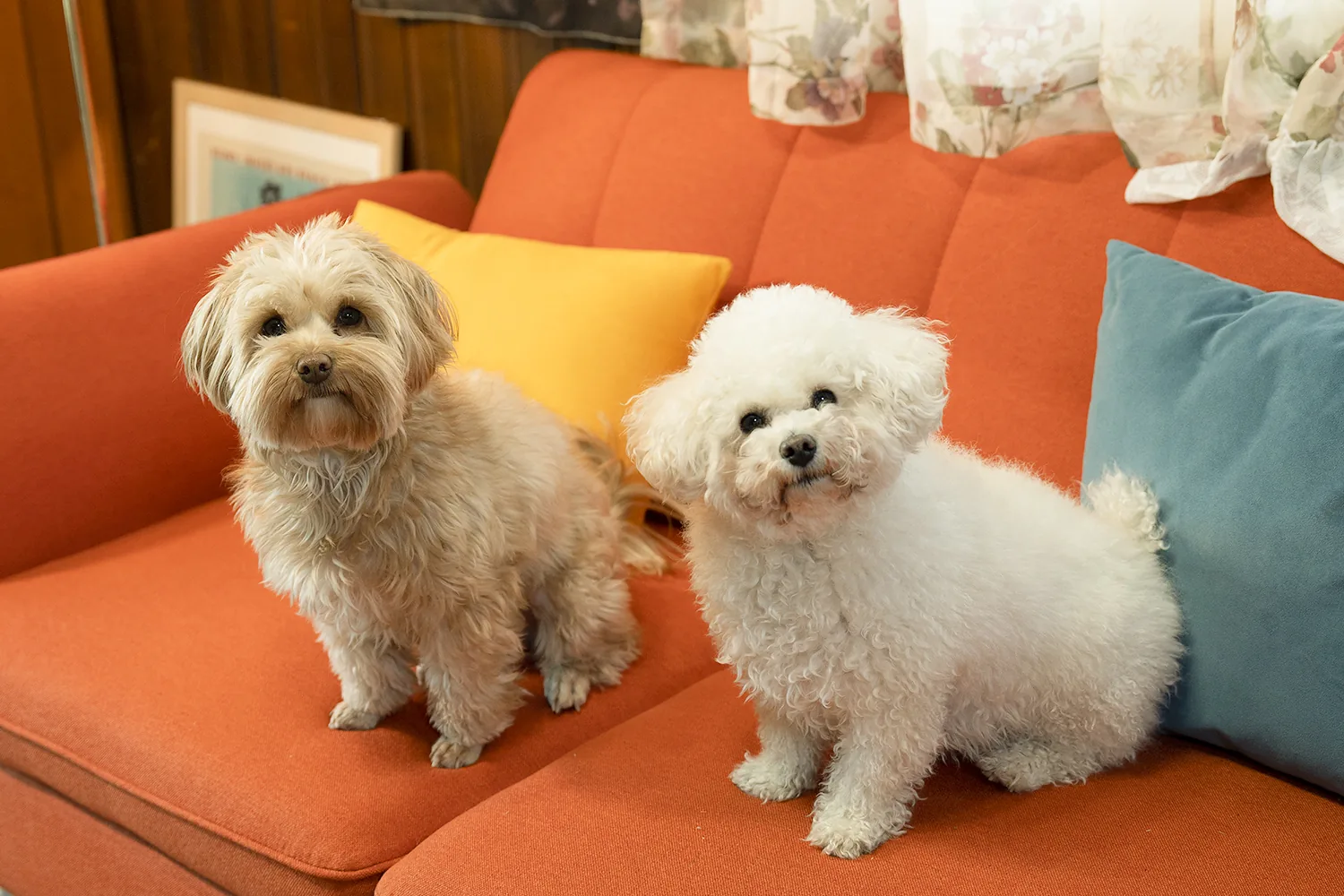
The sofa in our studio's living room. Pets are welcome too.
1. Price it for your whole family, not by the hourly rate
Many rental studios in Korea quote a rate for a base number of people and add a fee for each extra person. Family photos go over the base number quickly, so the headline hourly rate can be far from what you'll actually pay. Wherever you book, this formula gives you the real figure:
(base hourly rate + extra people × per-person fee) × hours booked
At Botong Lee Studio the base rate is 15,000 won an hour for two people, plus 5,000 won an hour for each additional person, with a two-hour minimum.
Studios don't all count children and pets the same way. When you book, list the actual number of people and pets coming and ask. If you're comparing several studios, our guide to comparing Seoul rental studio prices by group total walks through it.
Remember that your booking includes carrying gear in, setting up lights, changing clothes and putting the room back afterwards. The bigger the group, the more of the booking those things take.
2. Fire the shutter with a remote or an app
If you shoot with the ten-second self-timer one frame at a time, someone has to sprint to the camera and back for every shot. Ten frames means ten sprints, and by the time that person is back in place, everyone's smile has gone stiff. There are four better options.
Remotes and flash triggers have to match your camera model, so bring your own. Our studio has a tripod, but its mount may not fit your camera; if you have a tripod you trust, bring it.
Shooting on a phone works too: a phone clamp for the tripod and a cheap Bluetooth remote are enough. One thing to watch. A phone's main camera is wide, so if you stand close, people at the edges of the frame look stretched sideways. Step back a pace or two and use the 2x setting, or bunch everyone toward the middle.
3. Focus once, then lock it
With nobody behind the camera, autofocus can quietly land on the sofa or the wall behind you, and you won't find out until you get home. A simple routine avoids that:
Face detection is handy, but with several faces in the frame the camera decides whose face wins. For the main group shot, locking focus is safer.
If you stand in two rows, the focus needs to cover the distance between the front row and the back row. Stopping down to around f/8 makes it much easier to get both rows sharp. That lets in less light, so keep the shutter speed at 1/125 of a second or faster in case a child moves, and make up the difference with ISO or the studio lights.
Take three or four frames, then zoom in once on the back of the camera. If the faces at both ends of both rows are sharp, stop checking and keep shooting.
4. Big group? Use the room, not the backdrop
Paper and cloth backdrops come in a fixed width. Line a big family up side by side and the people at each end slide off the backdrop, so a wall or a piece of furniture creeps in. Step the camera back to fit everyone head to toe and the top and bottom edges of the backdrop start to show.
So split the shots like this:
Our studio has a large white backdrop cloth, colored backdrops in red, yellow, green and black, and a chroma key backdrop. Whichever studio you book, if you want the full group in front of a backdrop, ask beforehand how many people fit side by side.
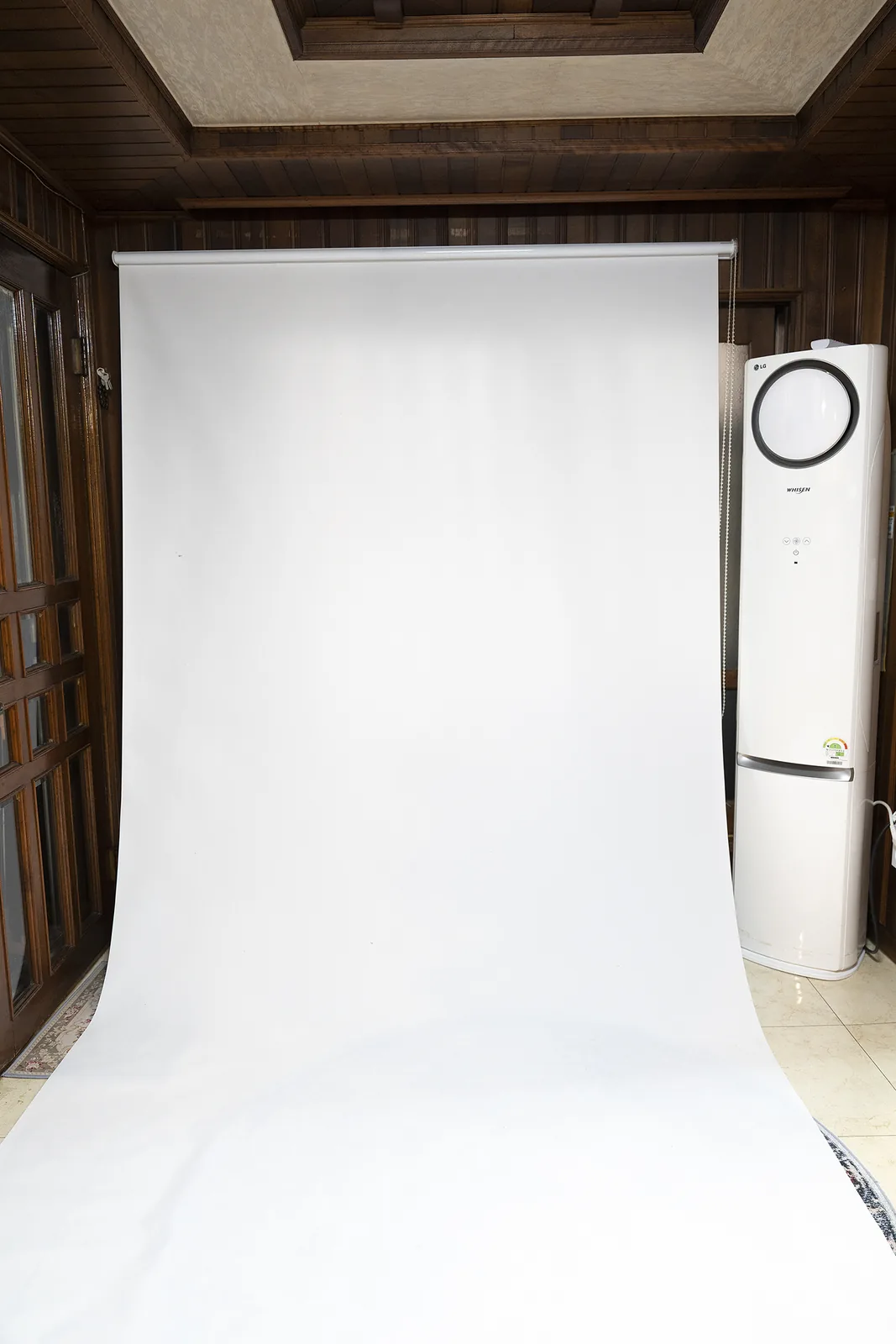
A white backdrop. Because its width is fixed, it suits smaller set-ups like a couple or one child.
5. Pick two or three colors for the whole family
Matching white T-shirts are safe, but in the photo there's nothing to look at except faces. A better approach is to choose two or three colors and let everyone pick something within them. The outfits differ, but the family still reads as one group. Quiet colors that sit well together, such as beige, gray and navy, rarely go wrong.
A few things to avoid:
Budget time for changing, too. Changing one outfit and tidying hair takes around ten minutes. If there's one place to change, a family of four taking turns can spend close to forty minutes on it. Arrive already wearing the first outfit, and limit changes to one round for the whole family. At our studio you change in the bathroom and check the result in the full-length mirror in the room.
6. Shoot the full group first, before kids and pets run out of patience
Children and pets don't stay focused for long. Once the lights are set, take the most important full-family shot first, then move on to smaller combinations and individual portraits. Leave free play for the end, with interval shooting running.
Writing a short must-have list before you arrive saves a lot of dithering on the day:
For pets, holding a treat just above the lens pulls their eyes toward the camera. An unfamiliar room can make them nervous, so bring a leash and a pee pad. Pets are welcome at our studio; if there's an accident, the owner covers the damage.
Think about kids and pets when you choose lights as well. Some children and animals flinch at a flash. Continuous lights stay on, never flash, and capture the scene exactly as you see it, which also makes results easier to predict when nobody is behind the camera.
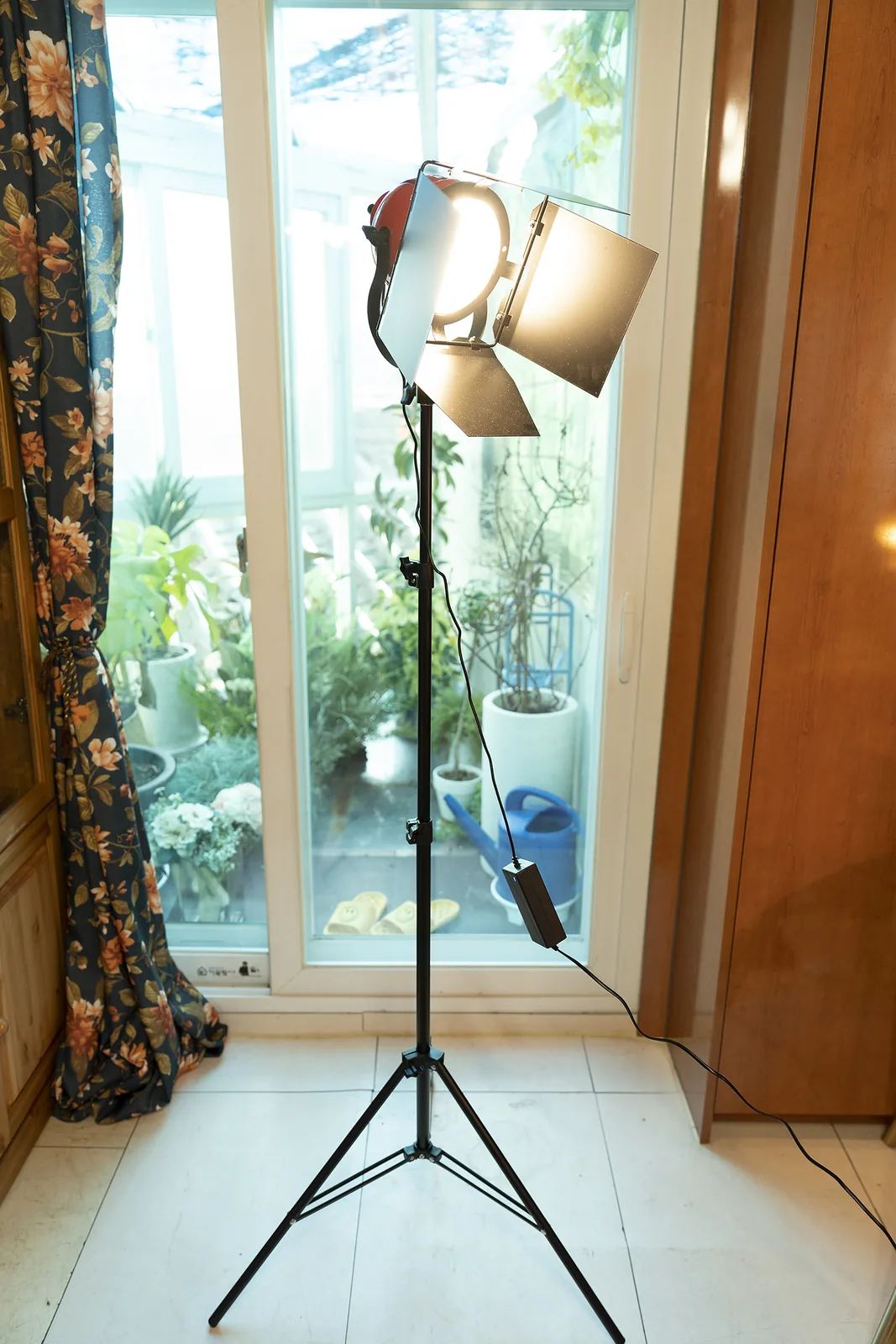
A continuous light by the window. It stays on, so what you see is what you get.
7. In winter, book the morning
The best natural light at our studio comes at about 9 a.m. and 5 p.m. But from late November to mid-January, the sun in Seoul sets between about 5:15 and 5:35 p.m., so the 5 p.m. light disappears almost as soon as it arrives.
For year-end or Lunar New Year family photos, a morning booking is the better choice. Even in midwinter the sun rises between about 7:30 and 7:45 a.m., so the 9 a.m. light is still there to use. If an afternoon slot is your only option, plan to use the lights from the start. On cloudy days the light is weaker at any hour.
When a family is better off hiring a photographer
DIY isn't right for every family. If you have two or more small children and every adult is busy keeping up with them, if nobody in the family is comfortable with a camera, or if it's a once-only occasion you can't afford to miss, hiring a photographer is the better call.
At Botong Lee Studio, photography is 70,000 won an hour. Shooting inside the studio means no travel time and no separate room fee, so two hours comes to 140,000 won. You receive every original, and retouching is 7,000 won per photo for only the ones you choose. Compared with 50,000 won for a family of four shooting themselves for two hours, the difference pays for a person behind the camera who handles composition and light. Our post on renting a studio versus hiring a photographer in Seoul compares the two in more detail.
What to ask before you book
Whichever studio you choose, asking these first makes the day much easier:
Botong Lee Studio is the ground floor of a detached house about a five-minute walk from Exit 3 of Hansung University station (Line 4), and one family has the whole 56-square-meter space to itself. If you drive, the resident parking spot in front has to be cleared when a resident calls, so we recommend the Samseon-dong public car park instead. Full prices are public on our studio page. Booking is through Spacecloud or Naver Map; both pages are in Korean.
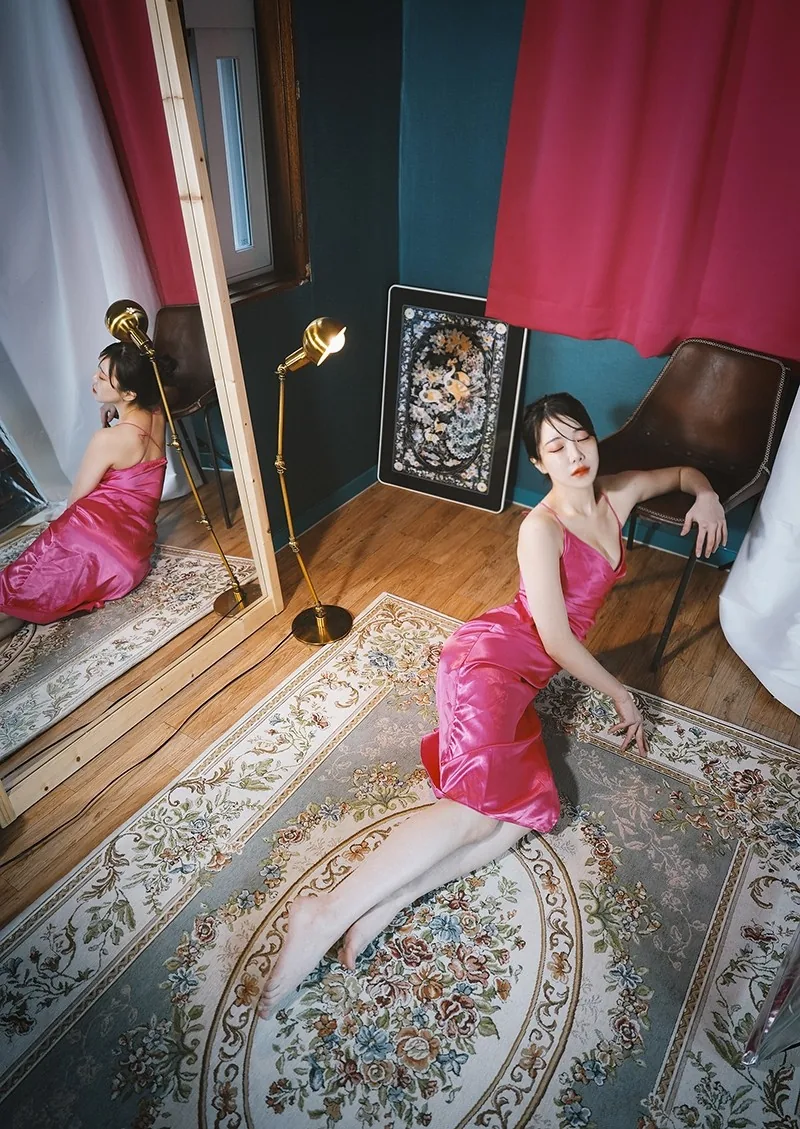
Booking information
Book or ask about Botong Lee Studio
Tell us how many people are coming, whether you're bringing children or pets, and the time you'd like.
Frequently asked questions
How much does a DIY family photo session in a Seoul rental studio cost?
It depends on how the studio charges for extra people. Multiply (base hourly rate + extra people × per-person fee) by the hours you book. At Botong Lee Studio, a family of four for two hours is 50,000 won, and six people for two hours is 70,000 won.
Can we bring our dog?
At our studio, yes. Bring a leash and a pee pad; if there's an accident, the owner covers the damage. Other studios have their own rules, so ask before booking.
What time of day is best for family photos in winter?
Morning. In Seoul from late November to mid-January the sun sets around 5:15 to 5:35 p.m., so late-afternoon window light fades fast. A 9 a.m. start gives you natural light to work with.
Do we need a professional camera?
No. A phone on a tripod with a Bluetooth remote works. Step back and use the 2x setting so people at the edges don't look stretched.
Services by Botonglee