How to Compare Clothing Manufacturing Quotes
When people get their first two or three quotes for a clothing run, the first thing that throws them is not the price. It is that the quotes do not look alike. One maker sends a single per-unit number. Another lists fabric, trims, and sewing line by line. A third leads with "no commission." Laid side by side like that, the quotes cannot really be compared.
I have spent fifteen years designing clothes and managing their production, and I now handle small-batch apparel development and manufacturing from Seoul. When someone asks me how to compare quotes, the first thing I tell them is this: do not compare commission rates. Ask each maker what the per-unit cost is made of, and compare that. Below is the order I would read a quote in. It works whether you end up working with me or with someone else.
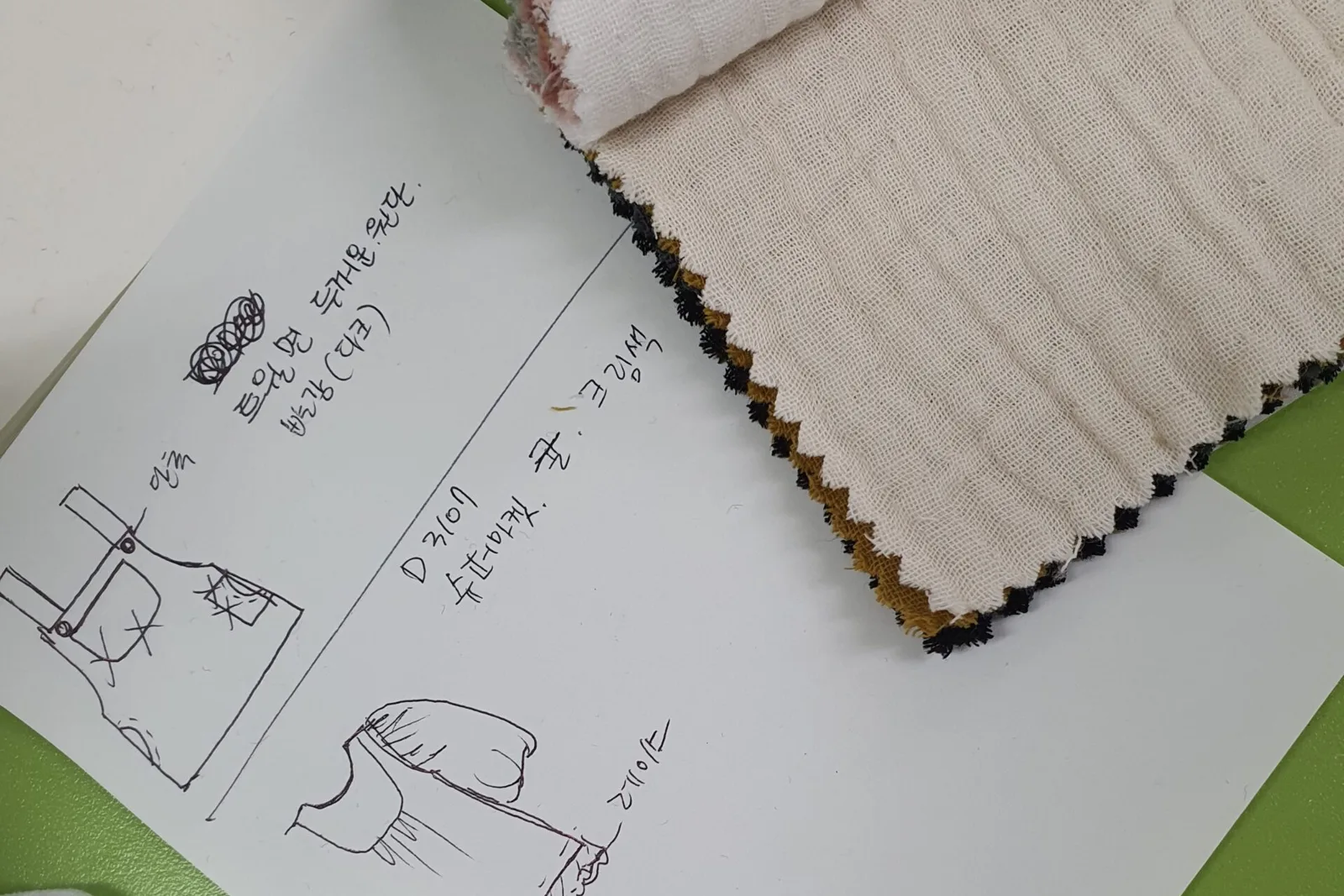
1. "No commission" can be the more expensive quote
There is a comparison I have used for years when explaining how production pricing works. Picture two quotes for the same order of 100 T-shirts.
The quote without the word "commission" looks cheaper, yet it costs twice as much per unit. The exact figures will move with the fabric and the finishing; the example is there to show the structure, not to set a price.
"No commission" rarely means "no margin." More often it means the margin has been folded into the unit price where you cannot see it. A maker taking a margin is completely normal; they are doing work and carrying risk. What makes quotes hard to compare is not whether a margin exists, but not being able to see where the money sits and how much of it there is.
So when a quote arrives, one sentence is enough: "Could you break the unit price down into fabric, trims, labor, finishing, and margin?" Once you have answers to that, you can actually compare.
2. A unit cost breaks into five parts
The cost of a single garment usually comes from five places.
The maker's margin is added on top of these.
Here is a real production sheet I used, for a fleece vest. Along the bottom rows, fabric, waste, and buttons each get their own line, and every line records the supplier, the material name, the unit price, the quantity used, and a total. Higher up there is a box for sewing labor, followed by boxes for finishing, printing, and washing. Everything adds up into the production cost box on the left. I have blurred the figures and the company names because those are prices agreed with suppliers.
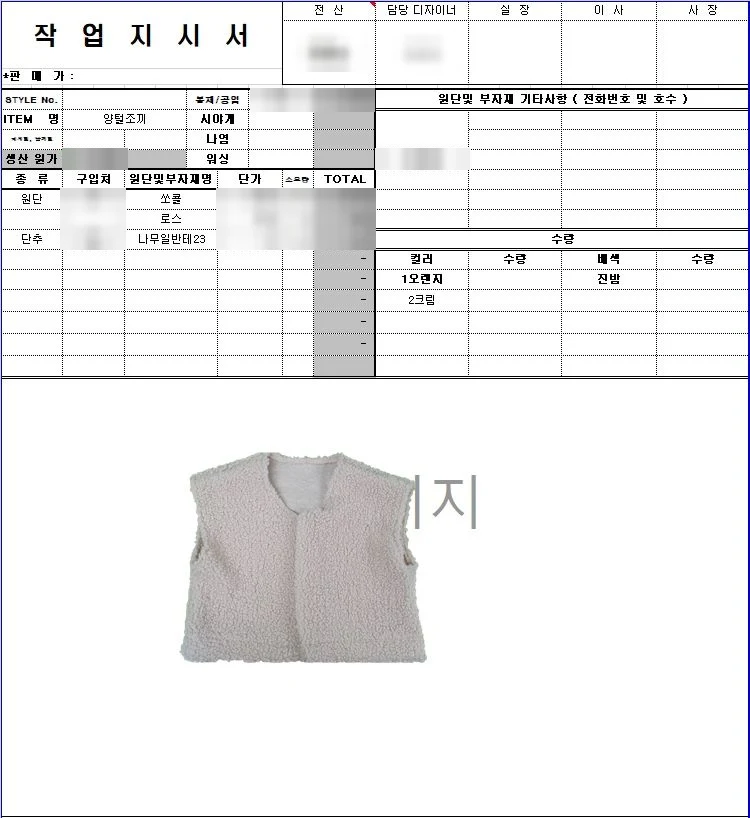
Two things from that sheet are useful when you read any quote.
The fabric cost is not just the fabric price. The same fabric costs more per garment when the cut is oversized or the length is long, because each piece uses more of it. That is why a quote with a cheaper fabric price is not always the quote with the cheaper fabric cost. If a quote shows the price per meter or yard but not how much one garment uses, ask.
Check whether waste is shown. Cutting always leaves something on the table. When waste has its own line, it is easy to follow how the fabric cost was reached. If it is not listed, just confirm that it is already included in the fabric figure rather than waiting to appear later.
The top of the sheet also has a field for the retail price. A production cost only means something next to the price the garment will sell for, so even on the making side the two numbers sit on the same page.
3. Unit prices only compare at the same quantity
Every per-unit figure on a quote rests on an assumption about how many pieces you are making. Change the quantity and the unit price changes with it.
In my own work, I can make a single garment, but a unit price that leaves room to sell the piece starts at about 20 units. From there, the per-unit cost keeps falling as the run gets bigger, because preparing to cut and sew takes roughly the same effort whether the run is small or large.
So before comparing two quotes, make sure they are built on the same quantity. If one maker priced 100 units and another priced 300, the numbers cannot be placed side by side. Asking for two quantities, for example "What would it be at 50 units and at 100?", also shows you how sensitive each maker's pricing is to volume.
4. Costs that sit outside the unit price: sampling and labels
If you only compare unit prices, two costs are easy to miss.
Sampling. This is a one-off development cost paid before production. It covers the pattern (the garment's blueprint), grading (the blueprint for each size), the labor to sew a single sample, and the cutting dies for any custom trims. Three of those four, the pattern, the grading, and the dies, are not paid again in production. To compare fairly, find out whether a maker has spread the sampling cost into the unit price or charges it separately. I explain why sampling is priced this way in my post on sample costs and schedules, and how many rounds of samples to expect in my post on sample rounds for petite and plus-size clothing.
Labels and hang tags. Woven brand labels have a minimum order of 1,000 and cost 100 to 350 won each. Hang tags have a minimum of 500 and cost 150 to 300 won each. Because the minimums have to be met in full on your first order, the first run carries an extra 175,000 to 500,000 won.
Spread that over the first run and its weight becomes clear.
The leftover labels and tags carry straight into your next run, so the money is not wasted. It does, however, belong in the cash plan for the first order. Ask whether labels are included, quoted separately, and what minimum applies. Labels also take one to two weeks to make, so order them while the sample is being made; if you wait until production finishes, the finished garments sit waiting for labels.
5. Timelines and defect terms are part of the quote too
If two quotes land close on price, compare what you get in time and responsibility.
Seven questions to ask with every quote
How I quote
When I quote a job, I show the manufacturing cost and list the sampling fee and the per-unit margin separately. The lower the cost of what you are selling, the more of the sale stays with you, and I would rather you see exactly where that cost comes from. The process starts with a meeting about the items and the concept you have in mind, then a second meeting where we go through the designs and fabrics I have gathered and choose together, and then sampling, revisions, and production. I also draw the artwork for printing and embroidery myself.
In short
If you have a garment in mind, tell me what it is and roughly how many you need. I will start with a quote that shows the cost line by line.
Request a clothing production quote · Common questions are answered in the production FAQ, and past projects are collected in my production work archive.
Services by Botonglee