Good Meditation Guidance Leaves Room
In some classes and guided recordings the voice never stops. It is loud, encouraging, always one instruction ahead of you. At first it feels like energy, like someone is really leading the session.
Then it ends and nothing has settled. Your body moved for an hour, and you never once got inside yourself.
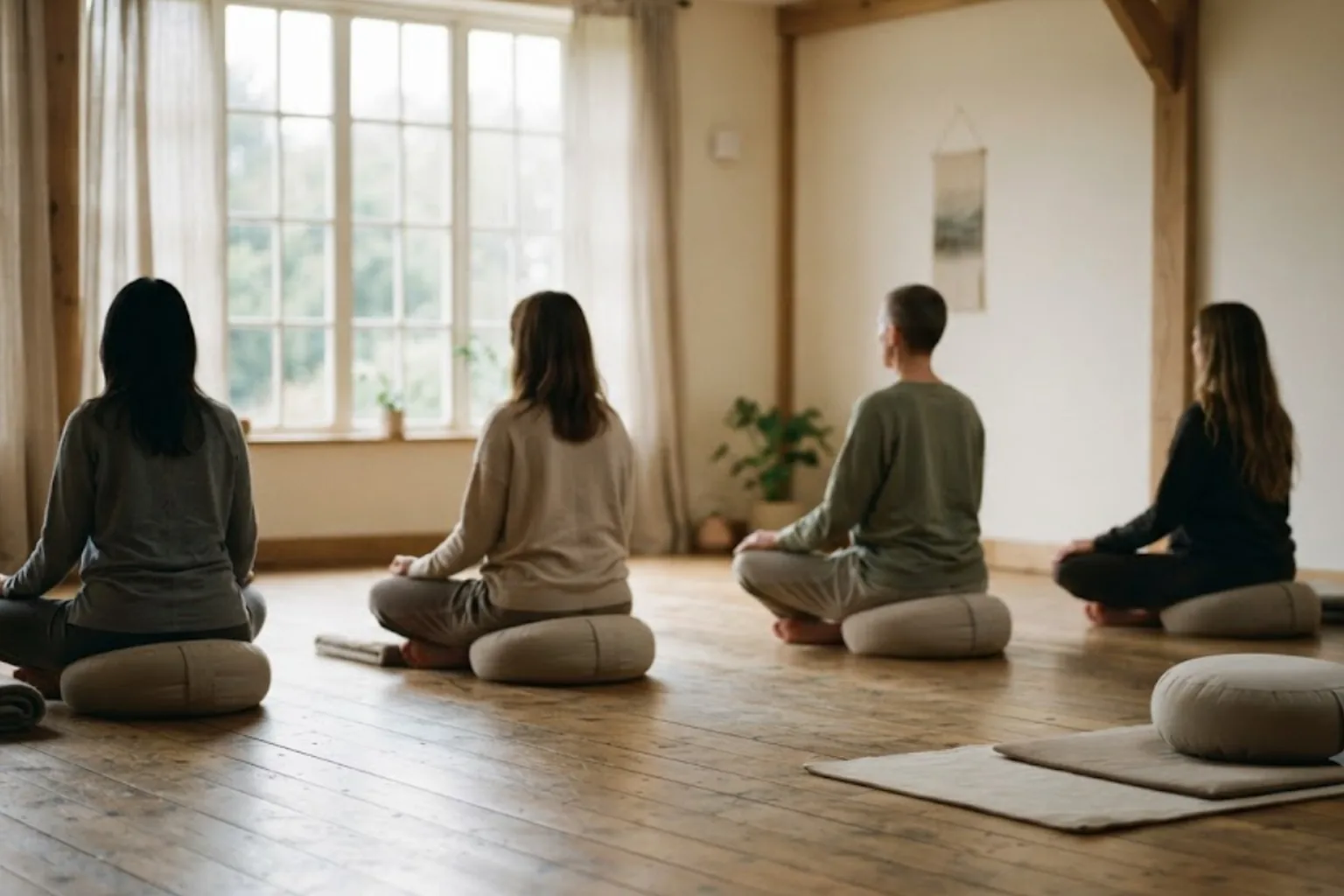
Talking fills the time where the work happens
In meditation and in body practice, the thing you came for happens after the instruction stops.
You follow the movement, and then there are a few seconds where you feel where it landed. You take a few breaths and simply watch them arrive and leave. That is where a practitioner finds their own sensation.
If the person guiding fills that gap with words, the room stays in listening mode — attention pointed outward, at a voice. You cannot go inward while you are tracking someone else's sentence. When the talking never breaks, the whole session runs facing outward and ends that way.
The same is true of volume. A big encouraging voice looks like it is lifting the room, but it erases the quiet in which anything settles.
How much guidance a class actually needs
After years of leading sessions, the list turns out to be short.
Silence is uncomfortable to hold at first. A long quiet stretch feels like you have stopped teaching. That stretch is usually where most of the work gets done.
Spare is not the same as unprepared
Saying little and having nothing prepared are different things. Room that has been left open is not neglect.
Prepared guidance can drop most of its words and still keep everyone oriented: the sequence is set, the pauses are placed deliberately, and one sentence arrives at each transition. Without that, silence becomes a blank — people do not know what they are meant to be doing, and their eyes open.
Good guidance is not about filling the time with words; it is about leaving the room a practitioner needs to find their own way. That room has to be designed.
What to listen for when choosing a class or recording
It separates quickly.
The same test applies to practising alone. Rather than leaving a guided track running the whole way through, it is often better to listen to the opening and then let the rest be quiet.
In short
If you want guidance that is structured step by step, short sessions onward are on WECOSMO. If sitting makes you sleepy, there is how to tell sleep from depth; if trying hard is the obstacle, the practice of just sitting.
Services by Botonglee