Which Wedding Photos Should You Have Retouched? Sort by What Editing Can Fix First
A few days after the wedding, the files arrive all at once. If your photographer works the way I do, that means every unedited frame from the day, and a new task lands on you: deciding which photos to have retouched and how many. In Korea couples call this step "select."
Most people start by scrolling and marking favorites. It feels natural and it takes forever, because after the first fifty frames everything looks alike. A faster order is to do the opposite first: before looking for the best photos, separate the ones editing can rescue from the ones it cannot.
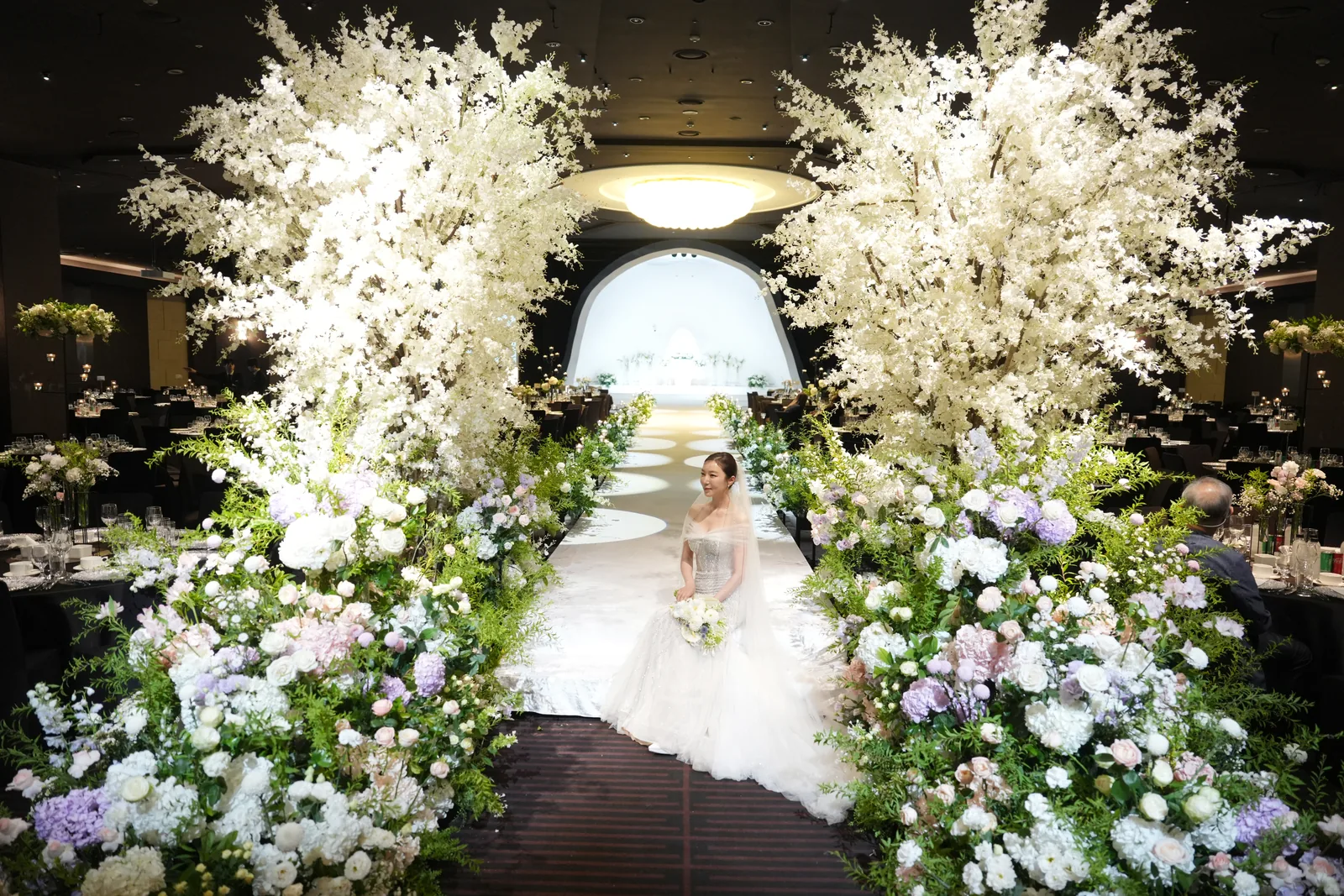
At Botong Lee Studio I deliver all of the originals first and retouch only the frames a couple chooses. Retouching is KRW 7,000 per photo, with no minimum. So what you pick decides both the final set and the bill. The method below works no matter who photographed your wedding; where I quote deadlines or scope, they are the terms I publish, used here as a worked example.
Before you start choosing
Download everything and keep two copies. Originals usually come through a download link that expires. Mine stays open for three weeks from delivery, and I keep the originals for six months from the wedding date before deleting them. Put one copy on your computer and another on an external drive or cloud storage before you open a single file to judge it.
Choose on a large screen. On a phone, a half-closed eye or focus that landed on an ear instead of an eye can look perfectly fine. Zoom in on a monitor and the difference is obvious.
Put the request deadline on your calendar. With me, you have six weeks from the day the originals arrive to send your retouching list, and the edited files come back within six weeks of receiving that list. A late list means late photos. If you need prints for a specific date, such as a thank-you card or a framed gift for your parents, count backward and set your own deadline.
Pass one: can retouching fix it?
Once you know what retouching actually does, most decisions make themselves. Under my terms, basic retouching covers four things:
So do not throw a photo away because it looks a bit dark, a little yellow, slightly crooked, or shows a blemish. That is exactly the work basic retouching does. Unedited files are supposed to look unfinished.
The following, on the other hand, will not be saved by basic retouching. You can drop them in the first pass:
Then there is a middle group: frames that only work if someone reshapes a face or body, removes a person or object, replaces the background, or borrows an expression from another frame. Those jobs fall outside basic retouching and cost extra; I quote the price and wait for your agreement before starting. When you hit one of these, look for a neighboring frame from the same moment before requesting the extra work. A version that needs less help may be sitting right next to it.
Pass two: one frame per moment
Big moments such as the entrance, the vows, and the recessional are shot in quick bursts. Bursts are one of the main reasons selecting drags on: every frame looks good, so you want to keep them all.
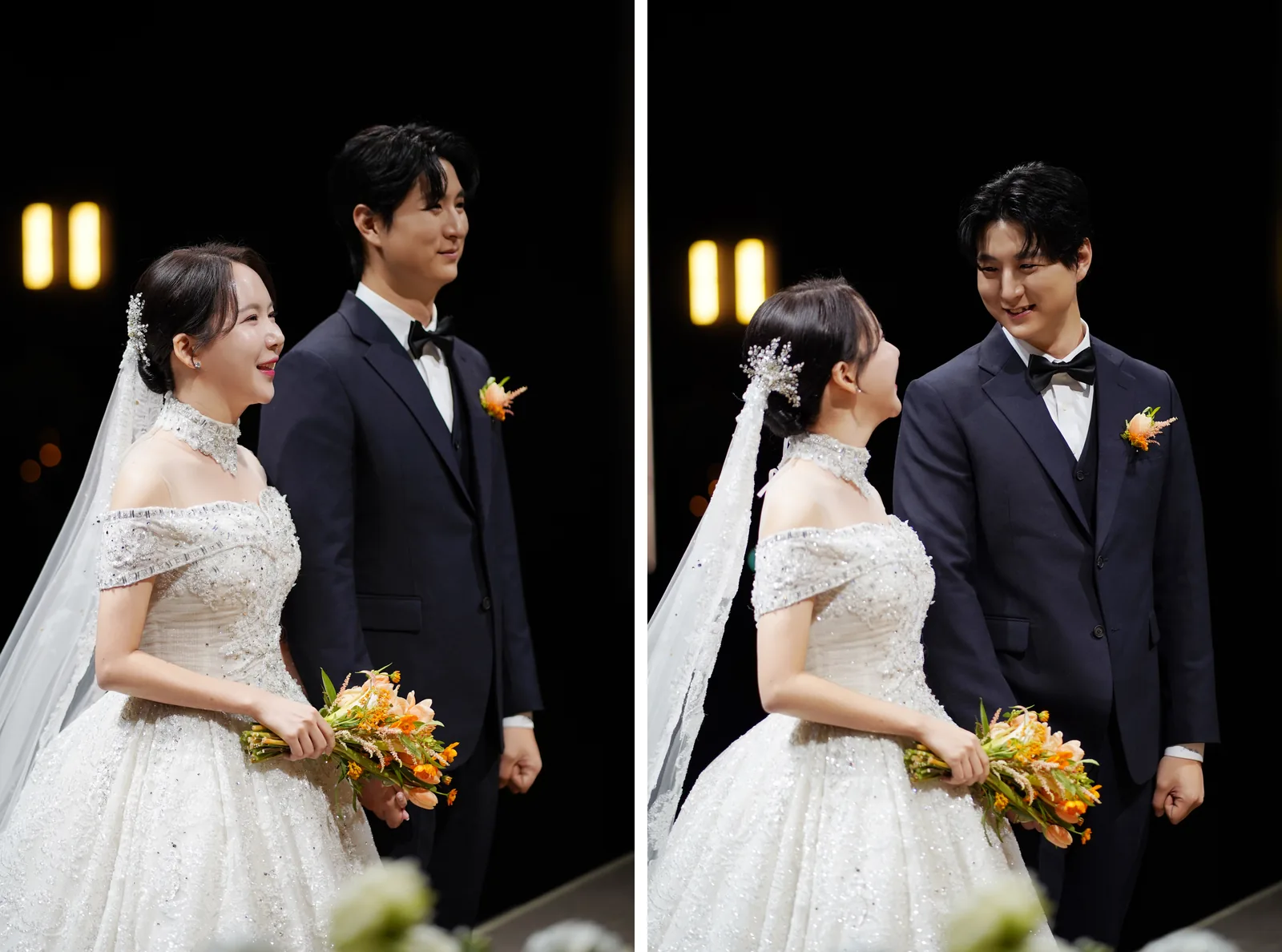
These two were taken one after the other from the same spot. On the left, the couple smile toward the same side of the hall. On the right, they turn to each other. Both deserve to be kept, but if they belong to the same moment, one retouched version may be all you need. A few ways to decide:
If you sent your photographer reference shots before the wedding, start your search with those scenes. What you wanted before the day is a good tiebreaker after it.
Group portraits follow different rules
The formal family portrait, which Korean weddings take right after the ceremony, puts many people in one frame. The more people, the rarer the frame in which everyone has open eyes and faces the camera.
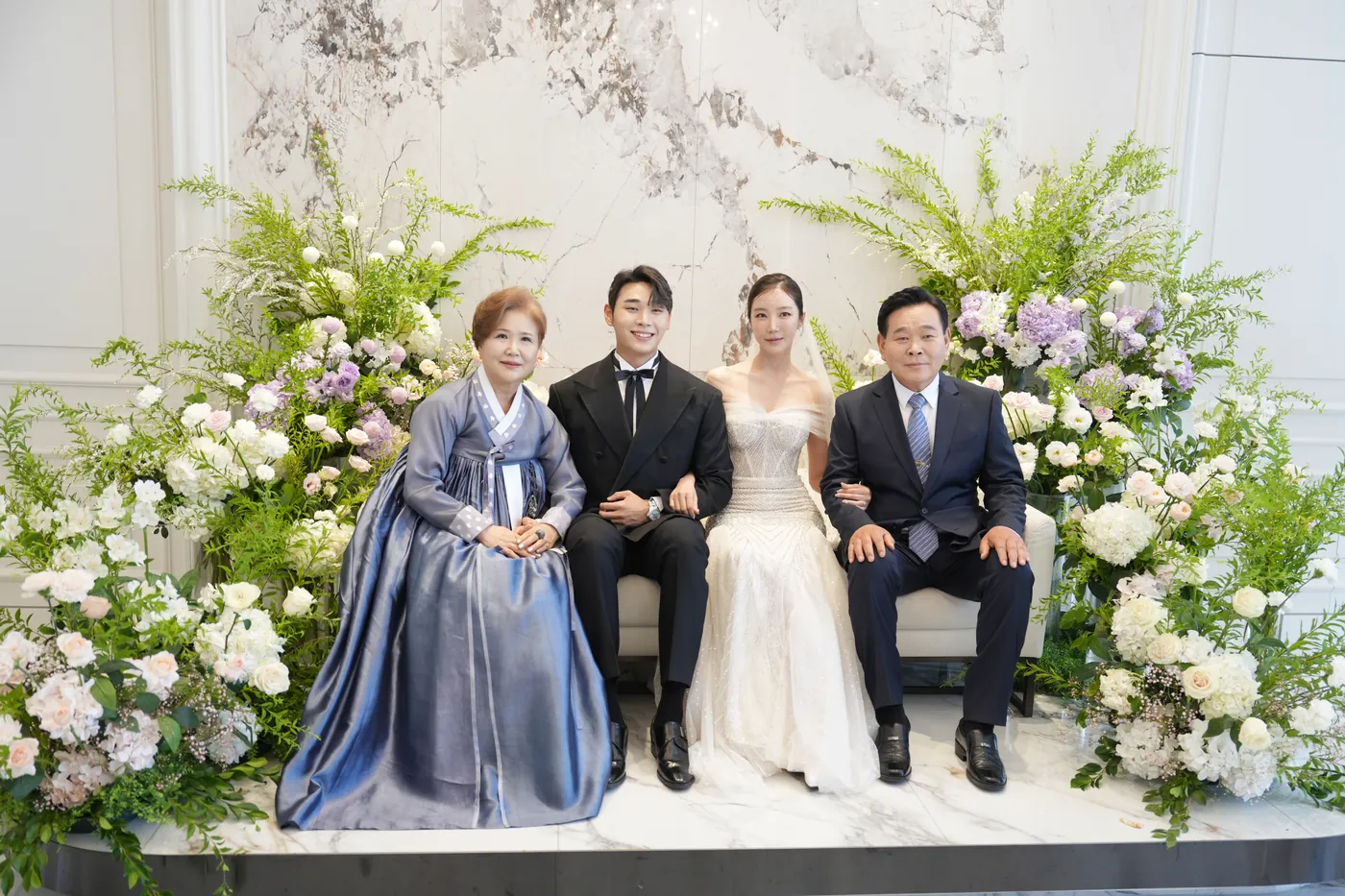
For group shots, this order is quicker:
It helps to know that closed eyes, expressions, and posture are not things a photographer can reshoot or compensate for afterward; my terms say so plainly. That is why choosing well among several frames of the same pose matters so much.
Pass three: let the use set the count
Collecting favorites makes the number grow without limit. It is easier to work the other way: list where the photos will go, then add up what each use needs.
Say you want three framed prints, two thank-you images, twenty photo-book pages, and five posts. That is thirty photos. At my rate:
Not everything needs retouching. The larger a photo will be printed and the longer it will hang, the more retouching shows; for images you will only share on a phone, check whether the original already looks good enough. If your photographer works with a package that includes a fixed number of edits, divide that number across the same list so none are wasted and none run short.
When you send the list, and after
Four questions to ask any photographer
Ask these before you start selecting, or better, while you are still choosing a photographer. Your plan depends on the answers.
My own answers are published on the studio page and the booking and refund terms. The full timeline from first message to final files is in this guide to booking a wedding photographer in Korea.
In short
Booking information
Wedding photography inquiries
Looking for a woman photographer for your ceremony, or already booked someone and need a second shooter? Send me the venue and the date and I will confirm availability right away.
Services by Botonglee