Planning a Pre-Wedding Photoshoot in Seoul? Count Outfits and Locations Before You Ask for a Quote
Couples planning wedding photos in Korea usually end up choosing between three routes. A full studio package bundles the studio, the gown, hair and makeup and the photographer. A self shoot means renting a space and photographing yourselves with a tripod and a remote. And in between sits what Koreans call a "semi-self wedding": you choose and bring your own outfits, hair and makeup, flowers and props, and you hire a photographer only for the shooting and the retouching.
The semi-self route is popular for a simple reason. You wear what you actually want to wear, and you still get photos of the two of you together, framed and lit by someone standing behind the camera.
The hard part comes when quotes arrive. Every photographer names packages differently and includes different things, so two quotes rarely line up. It gets much easier if you reverse the order: decide your outfits and locations first, turn them into hours, and only then ask for prices.
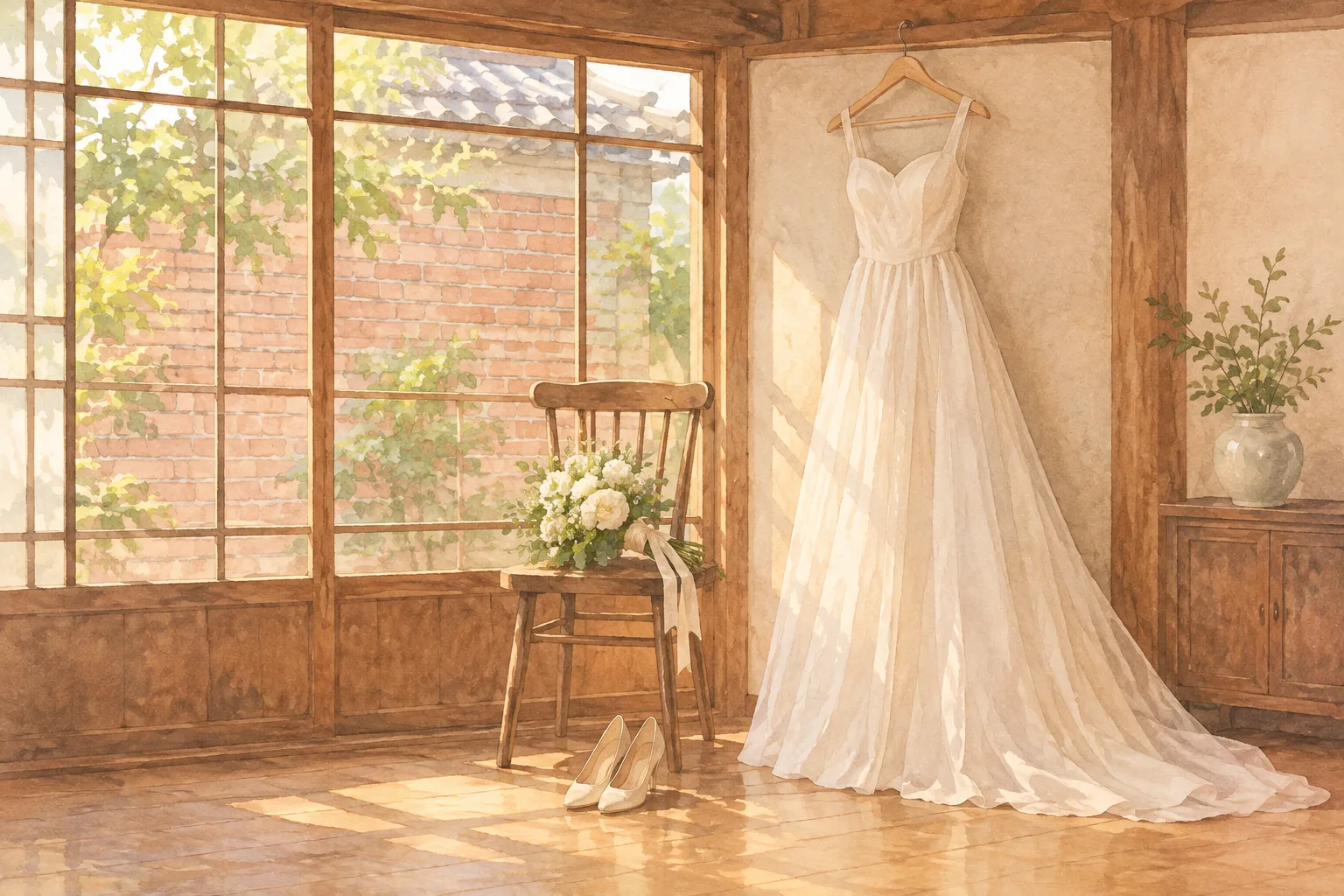
An illustration made for this post.
Three routes, and what actually differs
If you are leaning toward a self shoot, only the rental rate matters. At Botong Lee Studio that is 15,000 KRW per hour for two people, with a two-hour minimum, so 30,000 KRW to start. Lights and a tripod are in the studio, but you need to bring a flash trigger and a remote release that fit your own camera body. I wrote a separate guide on how to use those two hours: a two-hour plan for a self portrait session in a rental studio.
The rest of this post is about the semi-self route, where you hire a photographer.
1. Decide how many outfits and how many locations
When a photographer charges by the hour, the clock keeps running while you change, while hair gets redone and while everyone moves between places. Time without a camera raised is still paid time.
So your hours are built from three things.
That is why the first question to ask a photographer is not about price. Ask this: "How many minutes do you plan per outfit, and does that include changing time?" With that answer you can multiply by your own number of looks and locations and estimate the hours yourself.
One more practical point: with hourly pricing, arriving with makeup already finished is the cheapest way to start. If you need to change into your outfit on site before the first frame, ask whether that preparation counts as shooting time.
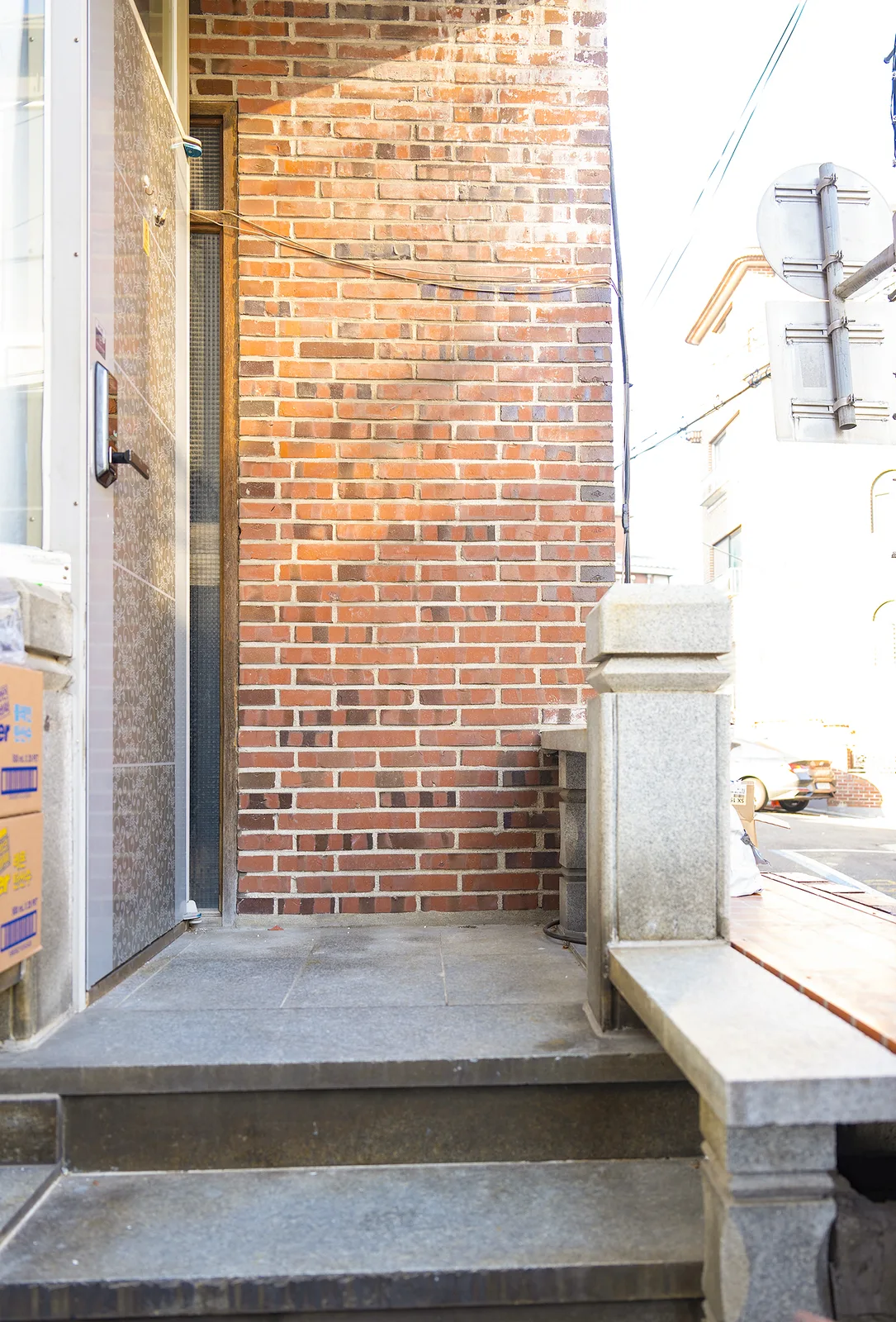
The entrance of the studio house. The red brick wall and stone steps let you add an outdoor-feeling frame or two without traveling anywhere.
2. Ask for three numbers in every quote
Package names like "basic" and "premium" do not let you compare two photographers. These three numbers do, whoever you ask.
Add one more question: when do you receive the unedited files, and when do you receive the retouched ones? If these photos are going on your wedding invitation, that date matters as much as the price. Section 5 shows how to work it out.
These are my published numbers.
The shooting fee is paid 100% upfront. Retouching is settled separately once you have chosen how many photos you want.
3. Worked examples, indoor and outdoor
Plugging the published rates into a few common plans:
The third line shows the useful part. The cost of adding an outdoor location is the time it takes to get there and back. You shoot the same two hours either way; going outside adds the travel. So the question to ask yourselves is simple: is that outdoor scene worth its round trip?
Retouching scales with your choices. Ten photos cost 70,000 KRW, twenty cost 140,000 KRW. A plan with one hour in the studio, one hour outdoors and twenty retouched photos therefore comes to 210,000 KRW for shooting plus 140,000 KRW for retouching, 350,000 KRW in total.
To decide how many to retouch, start from where each photo will be used: a handful for a mobile invitation, one for the welcome board at the venue, a few for frames at home. The count follows from that list. I described a quick way to sort hundreds of unedited files in which wedding photos to have retouched; the same order works for a pre-wedding shoot.
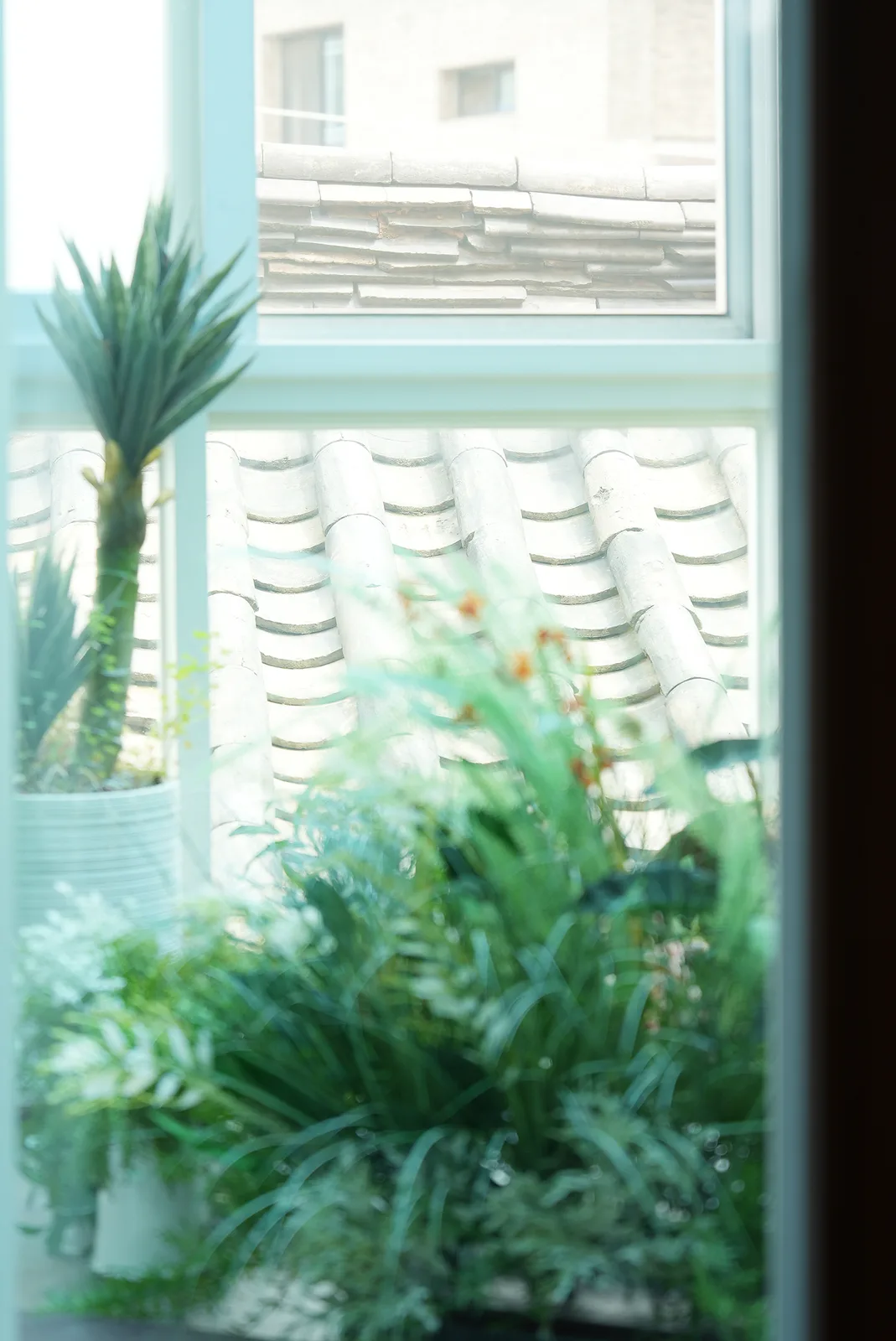
The greenhouse room at the back of the studio, which gets natural light during the day.
4. If you go outdoors, check where weather and refunds clash
Rain is the biggest risk in any outdoor shoot, and there is a trap many couples miss when booking: forecasts become more reliable as the date approaches, while refunds shrink as the date approaches.
Self-wedding shoots with me follow the same refund schedule as studio rentals.
By the time a rain forecast is reasonably trustworthy, two or three days out, the refund is already 30% or less. So for any shoot that includes an outdoor location, settle two things before you book.
Botong Lee Studio is an old detached house with an entrance, a small yard, a wooden staircase, a living room, a yellow kitchen, a room with windows on two sides and a greenhouse, so indoor scenes alone can still give you variety. Agree on the rain plan when you book.
Plan for light too. Natural light inside the studio is best around 9 in the morning and again late in the afternoon (around 5 p.m. in September and October). In Seoul the sun sets before 5:30 p.m. by mid-November and earlier still in December, so if you are adding an outdoor location in winter, put it first and save the indoor scenes for later.
5. Need the photos for your invitation? Count backward
Many couples want these photos on a mobile wedding invitation. If that is you, pick the shoot date by counting back from the day the invitation goes out.
My delivery timeline:
Seven days plus six weeks is seven weeks, and you also need time to choose. Put the shoot at least eight weeks before the date you need the invitation photos, and you stay comfortably inside the deadlines. Because the retouching clock starts when you send your request, any delay in choosing pushes everything back by the same amount.
Unedited files are kept for six months after the shoot and then deleted, so save your own copy within the download window.
Basic retouching covers color and white balance, exposure and contrast, light skin blemish cleanup, and straightening and cropping. Body or face reshaping, removing or combining people and objects, and background changes are not part of basic retouching; I quote those first and go ahead only with your agreement. After the retouched photos arrive, you can request one round of changes within seven days.
6. What to bring: your list, not the photographer's
In a semi-self shoot the photographer brings the camera, the lights and the retouching. Everything else is on you.
If you shoot at Botong Lee Studio, a few practical notes. There is no separate changing room; you change in the studio bathroom. There is a full-length mirror in the space so you can check the whole silhouette afterwards. Backdrops come in bold primary colors and black, and there is also a large white backdrop cloth. If you need a specific color, check with me before booking.
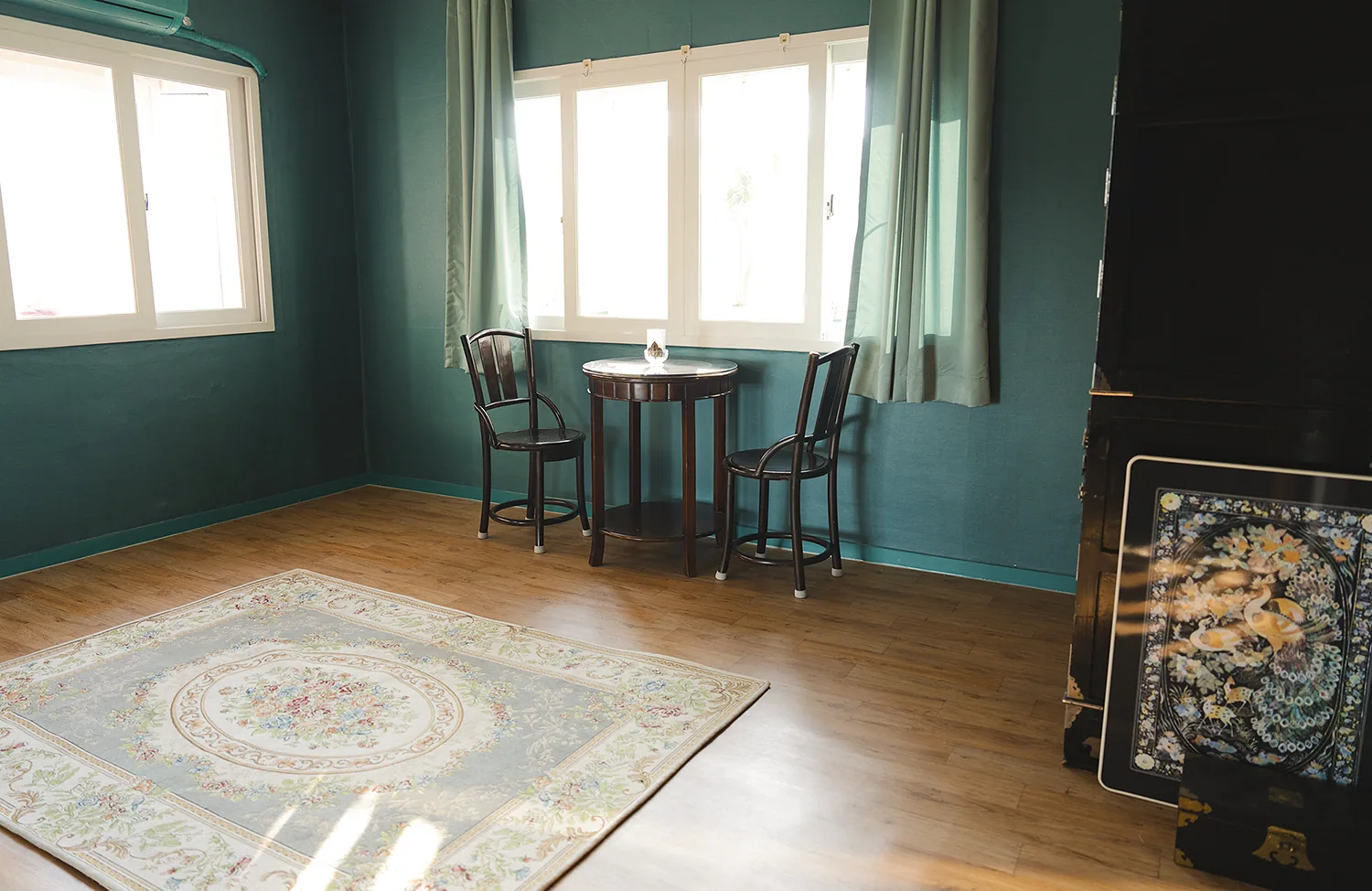
The room with windows on two sides, a good spot for frames of two people sitting face to face.
If you would like to shoot with me
Botong Lee Studio is the ground floor of an old detached house about a five-minute walk from exit 3 of Hansung University station on Seoul Subway Line 4. One team uses the whole 17-pyeong space (about 56 square meters) at a time, and I take on semi-self wedding shoots that combine indoor and outdoor scenes, case by case. I look at gown lines and color with the eye of someone who worked as a fashion designer for fifteen years.
When you get in touch, send your preferred date, the number of outfits, whether you want an outdoor location and roughly where, and a few reference photos. I will reply with a price that includes travel time before anything is confirmed. Weekends fill up with wedding ceremonies, so it helps to check dates early.
All rates and refund rules are public on the studio page and in the booking and refund terms. If you are also hiring someone for the ceremony itself, this guide to booking a wedding photographer in Korea covers that timeline.
Booking information
Pre-wedding photoshoot inquiries
Send your preferred date, the number of outfits and whether you want an outdoor location, and I will confirm the price including travel time before you book.
In short
Services by Botonglee