Custom T-Shirts: Print on Blanks or Make Them From Scratch? Decide Whether You Want a New Graphic or a New Shirt
Search for "custom T-shirts" and you get two very different kinds of businesses mixed together. Some take a ready-made blank T-shirt and print your logo on it. Others start from the fabric and make a new shirt for you.
The two routes differ in price, in lead time and in the shirt you end up holding. Neither is better in general. The answer depends on what you actually want to change.
I have spent fifteen years designing clothes and running production for brands. Below I use one project as the reference point: a unisex short-sleeve T-shirt I took from first sample through to finished production. Here is how to choose between the two routes, and, if you make your own, what to decide and in what order.
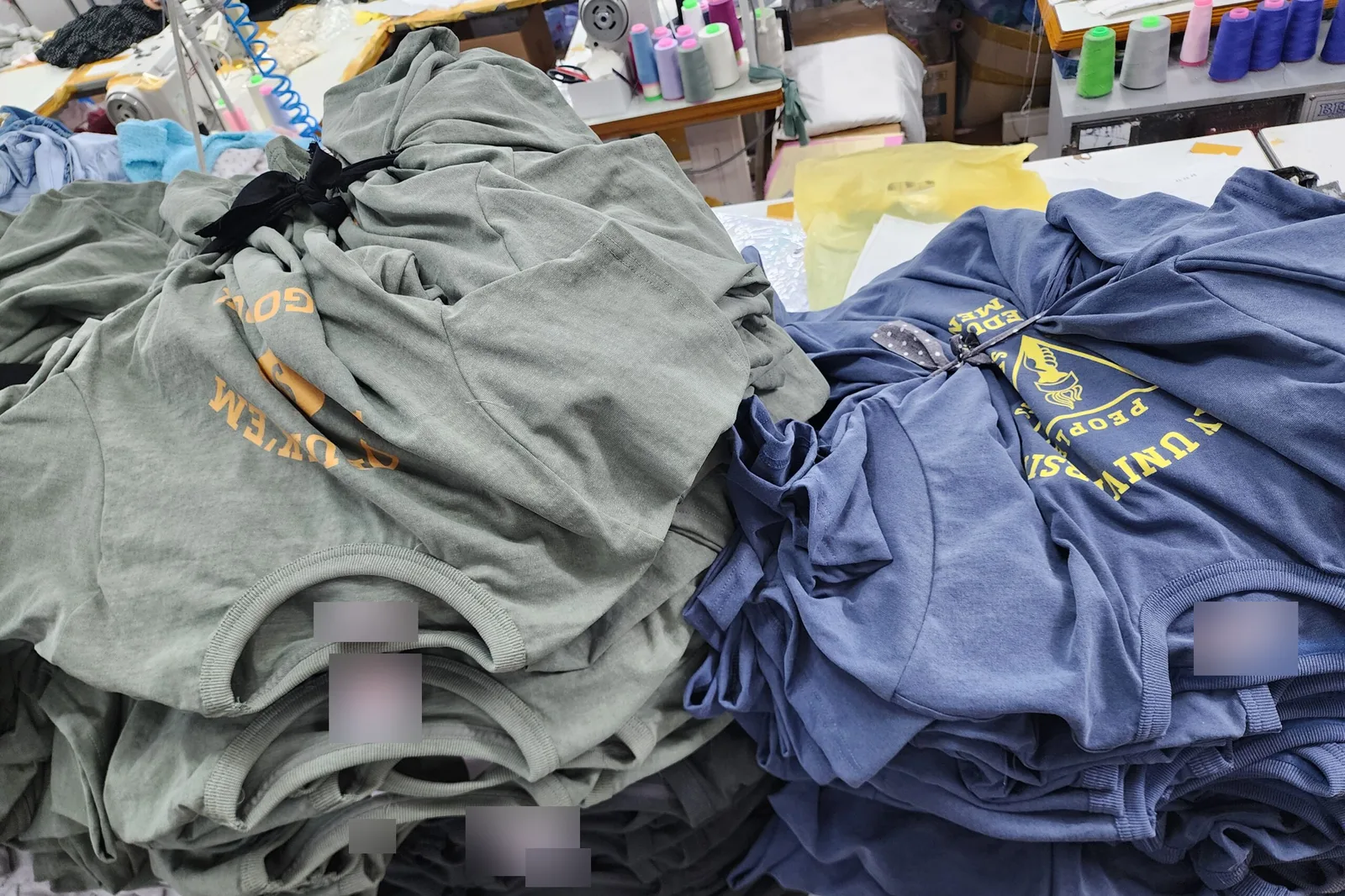
First question: is the graphic the only thing you want to change?
Printing on blanks means the fabric, weight, color, fit, neckline and size range are already fixed. What you choose is which blank to buy and what goes where on it.
Making from scratch (cut and sew) means you decide each of those yourself. You choose a fabric, have a pattern made, try on a sample, correct it, and then go into production.
Three questions settle most cases.
- Is there a blank on the market you would call "good enough"? If you already like the weight, fit and color of an existing blank, there is little reason to build a new shirt. If instead you keep saying "a little heavier", "a slightly dropped shoulder", or "nobody sells this color", that is your reason to go custom.
- Will you sell the shirt, or hand it out? For an event or a team, the graphic is the point. If the shirt will carry your brand name and sit in your shop, things change. When your shirt is the same body as everyone else's with a different print on it, the only difference a customer can compare is the print.
- How many, and by when? That one gets its own section.
Check the answer against quantity and timeline
A custom shirt can be made as a single piece. But sample and pattern costs are spread across the run, so in my experience a unit price you can actually sell at starts from about 20 pieces. The more pieces, the lower the cost per shirt.
Timing separates the two routes even more clearly. Going custom, a sample takes around two weeks on average, and main production takes another two to three weeks. Both can stretch depending on fabric and trims supply and on how busy the factory is. Add the time to pick fabric and correct the sample, and six weeks is a safer plan. A woven brand label for the back neck also takes one to two weeks to make, so order it at the sample stage or it will hold up production.
Printing on blanks skips sampling and sewing because the shirt already exists. If your event is less than a month away, the custom route is tight.
In short:
- Event or team shirts, needed within a month, graphic-led — print on blanks.
- Shirts sold under your own brand, meant to stand apart in fabric, fit or color, likely to be reordered — make them from scratch.
When you compare quotes, do not stop at the total per shirt. Ask for fabric, trims, sewing labor and printing as separate lines. I explain how to read a quote line by line in how to compare clothing manufacturing quotes.
Putting your own label on a blank: leave the origin marking alone
Many people who print on blanks also want their own brand label at the back neck. There is one thing to be careful about, especially if you are selling in Korea.
The neck label on a blank often states the country where the shirt was made. If you cut that label out and sew in only your own, you have removed the original country-of-origin marking. Under Korean customs rules, removing or altering an origin marking counts as damaging or changing it, and can lead to a correction order or a fine. In a joint government crackdown on label swapping that ran from February to May this year, 193 businesses were caught.
So the order is:
- Leave the original origin marking as it is.
- Add your brand separately. That can be an additional label, or a print on the inside of the neck.
- If you are unsure how you are allowed to do it, ask a Korea Customs Service origin consultation or a licensed customs broker before you start.
If you are selling, the shirt and the product page also need fiber content and care instructions, not just origin. I cover what goes where in Korea's clothing label requirements.
If you go custom: what to decide, in order
My usual sequence on a garment looks like this: product planning, collecting references, design, sourcing fabric swatches, choosing the sample fabric, ordering the sample pattern, making the sample, the sample meeting, corrections and confirming quantities, sampling the prints or embroidery, ordering the main fabric, cutting, finishing work, sewing, inspection and delivery.
That looks long, but on a T-shirt the decisions you make yourself come down to five.
1. Fabric: start with the yarn count
The first numbers you will hear when choosing T-shirt fabric are "20s" and "30s". They describe how thick the cotton yarn is, and the higher the number, the finer the yarn. A 30s jersey is thin and light, good for summer or for layering, but it can be see-through. A 20s jersey is a middle weight and is the most common choice for year-round tees and team shirts. 16s and lower are heavier and more solid.
Two fabrics with the same count can still feel quite different, so treat the number as a starting point and decide with a swatch in your hand. When swatches arrive, do three things:
- Lay it on your palm and feel the weight and hand.
- Hold it up to the light and see how much shows through. Check white and pale colors especially.
- Stretch it gently and let go to see whether it springs back.
If you own a T-shirt you love, that single shirt is your best reference. It lets you say "a little heavier than this" or "soft like this", and the factory knows exactly what you mean.
2. Neckline: reinforce the part that stretches first
On an old T-shirt, the first thing to go is usually the neckline. Because the shirt I mentioned was unisex, I put durability first and taped the inside of the neckline so it would hold its shape better.
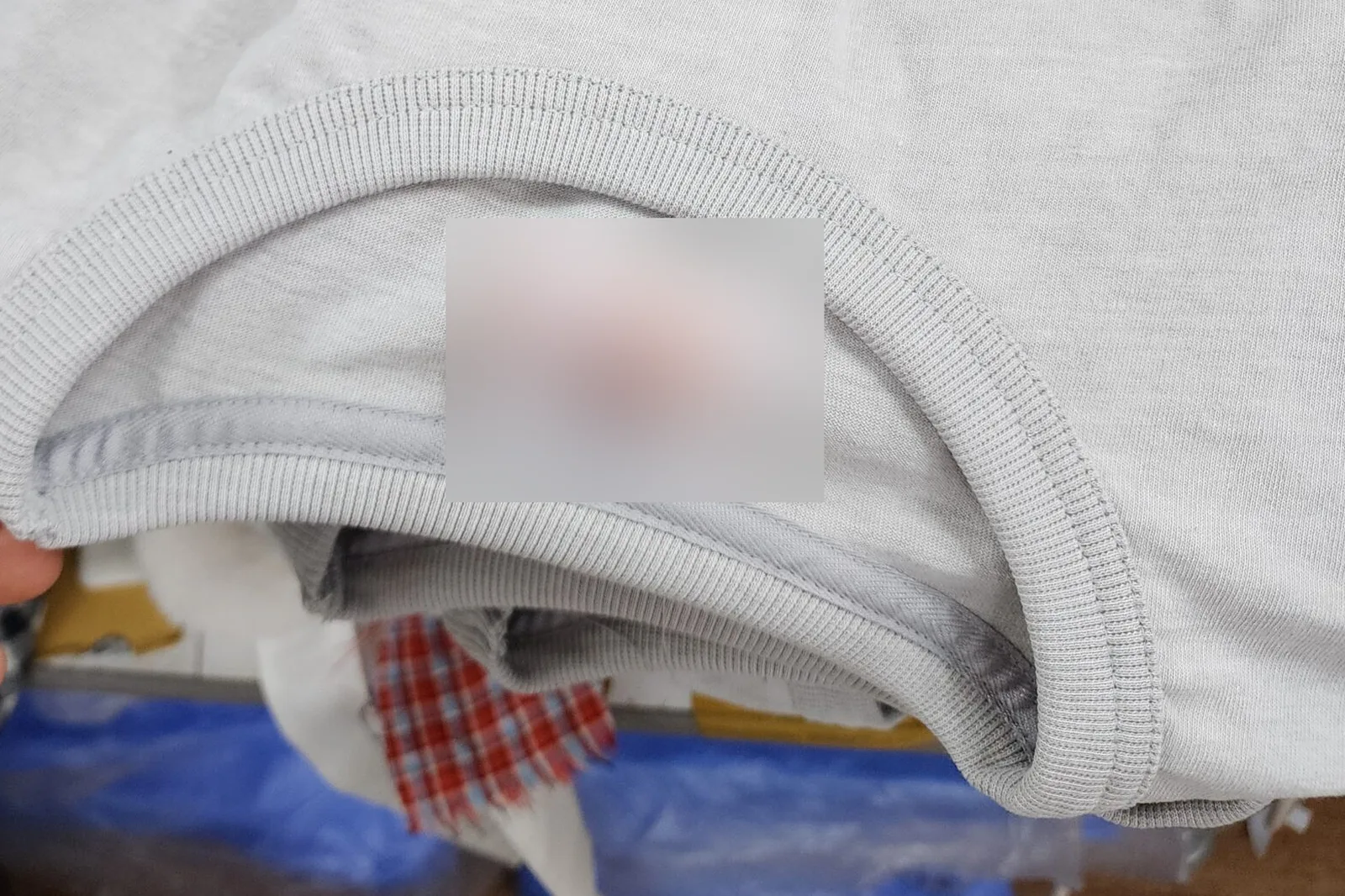
The width and weight of the rib at the neck, and whether to add tape inside, belong on the work order. What to write and how to send it to a factory is in how to write a garment work order.
3. Color: dye the fabric, or dye the finished shirt?
There are two ways to get color. You can cut and sew from fabric that is already dyed, or you can make the shirt first and then dye and wash the whole garment. The washed, vintage-looking "pigment-dyed T-shirt" is the second kind.
Pigment dyeing coats the surface of the fibers with color rather than dyeing into them. You get a soft, slightly faded look, and in exchange each shirt can come out a little different in shade. On that unisex shirt I used a pigment wash for the vintage texture and color, and repeated the color tests several times so the fade would look natural.
If you go with pigment dye, take care of two things:
- Say on the product page, before anyone buys, that each piece may vary slightly in color. That is a property of the process, not a defect, and customers should know that up front.
- The finished garment goes through water, so measure for your size chart after washing is done. Washing a sample once and measuring it again is cheap reassurance. Where to put the tape is in how to measure clothes for a size chart.
4. Print: decide with the sample in front of you
Broadly, a logo or graphic goes on in one of three ways.
- Screen printing — a separate screen is made for each color. More colors mean more screens and higher cost, and larger runs bring the cost per shirt down. The large front graphic on that unisex shirt was screen printed so it would stay sharp and last.
- Digital printing without screens — good for graphics with many colors and for small runs. The hand-feel and how it looks after washing differ from screen printing, so check on a sample.
- Embroidery — looks raised and tidy, but very small lettering and many-colored artwork are hard to stitch well.
What changes most often is not the method but the size and placement. A graphic looks different on a screen than on a body, so I make the sample first and then size and position the artwork against the real garment. If you are pigment-dyeing the finished shirt, check on the sample how the print reads on that fabric as well. It is fine if your artwork is not print-ready. Graphics for printing and embroidery can be redrawn.
5. Sizing: for unisex, expect more than one sample
A unisex T-shirt has to fit both men and women in the same size. For that shirt I set a wide range from XS to XL and corrected the fit across three rounds of sampling.
How many sample rounds to plan for, and who to try them on, is covered in how many sample rounds to plan.
Think about the reorder from day one
The brand came back with a reorder two weeks after delivery. This is where a custom shirt pays off. The pattern and the graded pattern for each size already exist, so you do not pay for them again, and the work order is on file.
That is why I suggest one more question when you first choose a fabric: "Will I be able to get this same fabric again next time?" If a shirt sells well and the fabric has been discontinued when you want more, you are back to choosing fabric and sampling again.
What to include in your first inquiry
Whichever route you take, these five things get you a faster answer:
- Quantity — even just a total if you have not split it by size.
- The date you need them — your event date, if there is one.
- A reference — a T-shirt you wear now, or a few similar photos.
- Your artwork — a hand sketch or a reference image is fine if you have no file.
- Whether you will sell the shirts or hand them out.
If you work with me, you can send just an image, send a work order, or ask me to start from the design. I can make a single piece, and I quote the sample cost and the cost per shirt as separate figures. I make clothes in Seoul and send finished orders overseas by air or sea freight.
Request a clothing production quote · More answers are in the clothing production FAQ.
Services by Botonglee